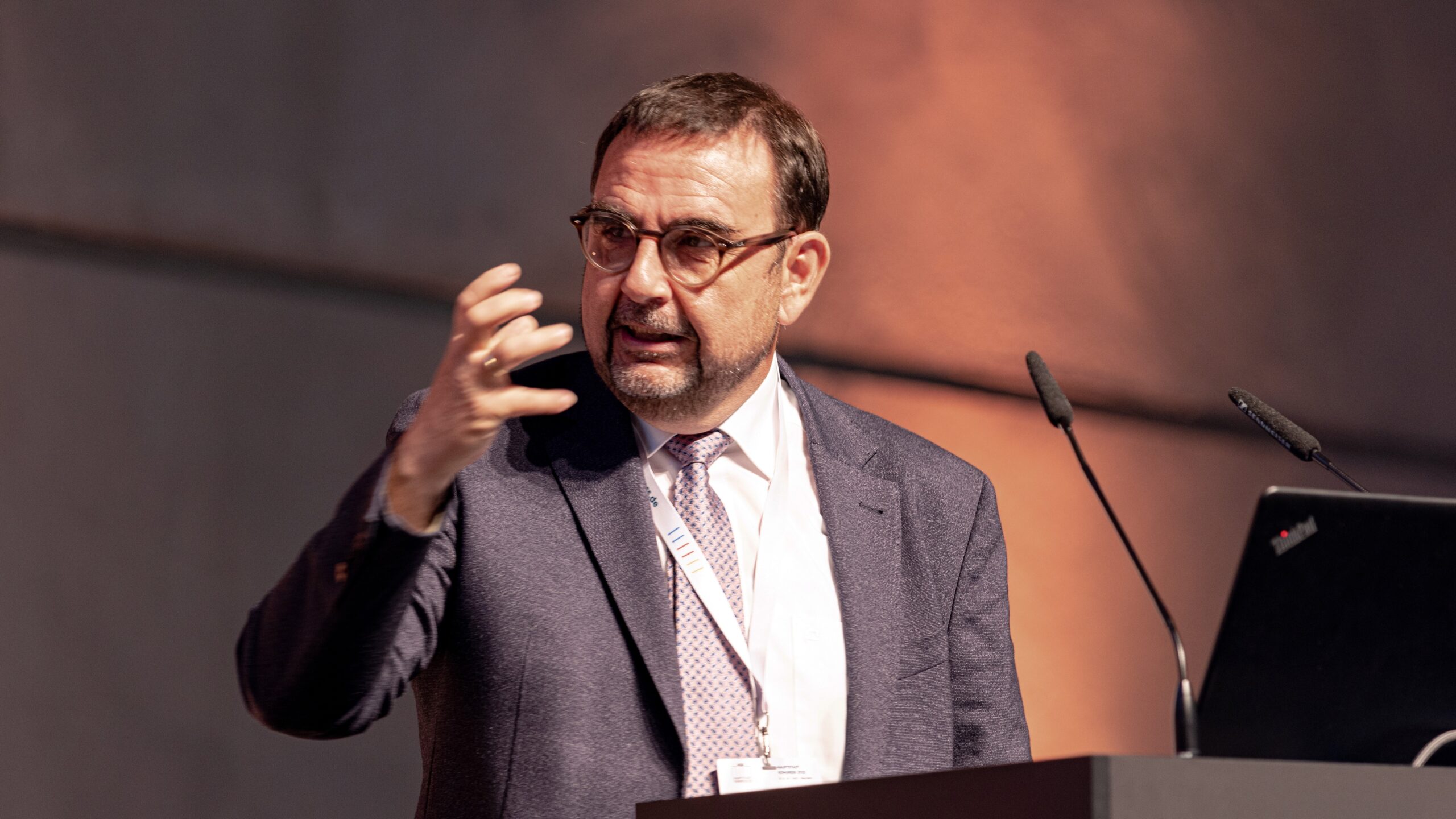
CSU parliamentary group leader Klaus Holetschek
By Kasa Fue – Own work, CC BY-SA 4.0, https://commons.wikimedia.org/w/index.php?curid=120196629
Senior figures in Bavaria’s governing centre-right Christian Social Union (CSU) have suggested that a partial ban targeting the right-wing Alternative für Deutschland’s (AfD) Thuringia branch should not be ruled out, as the party continues to gain support in opinion polls.
Speaking at a CSU parliamentary group meeting on Wednesday, July 8th, group leader Klaus Holetschek argued that while banning the AfD nationwide would not be effective, authorities should closely monitor individual regional branches, particularly the party’s organisation in Thuringia.
Sie kriegen Panik! Die CSU verkündet gerade, sie könnte sich ein Verbot unserer AfD zumindest in Thüringen vorstellen.
— Markus Frohnmaier (@Frohnmaier_AfD) July 10, 2026
Was für ein Verständnis von Demokratie ist es eigentlich, die stärkste Partei mit 40% einfach verbieten zu wollen?
Das wird niemals funktionieren. Die Bürger…
He accused the AfD of spreading conspiracy theories and “hatred,” undermining trust in democratic institutions.
Deputy CSU parliamentary leader Winfried Bausback said the “events of last weekend in Erfurt” had shown that “our democracy is in great danger,” adding that “radical forces are trying to take power in order to then undermine democracy from within.”
This is a bizarre statement, given the fact that the AfD’s party congress in Erfurt, the capital of Thuringia, was overshadowed by left-wing parties’ efforts to prevent the congress from happening, as well as by the physical assaults on right-wing journalists by left-wing extremists.
If anyone was undemocratic, it was the Left.
Recent weeks have seen renewed calls by mainstream parties and establishment organisations for a nationwide ban on the AfD, which has become the country’s most popular party mainly due to its anti-immigration and anti-Green Deal stance.
In a post on X, the party’s Bundestag member Markus Frohnmaier accused the governing parties of panicking over the AfD’s electoral success and questioned what kind of democracy would seek to ban a party polling at 40% in Thuringia.
Recent polling suggests the party’s momentum has continued across eastern Germany. It has opened up a commanding lead in Thuringia, Brandenburg, Mecklenburg-Vorpommern, and Saxony-Anhalt. In the latter, surveys indicate it could form a government following the state elections in September.