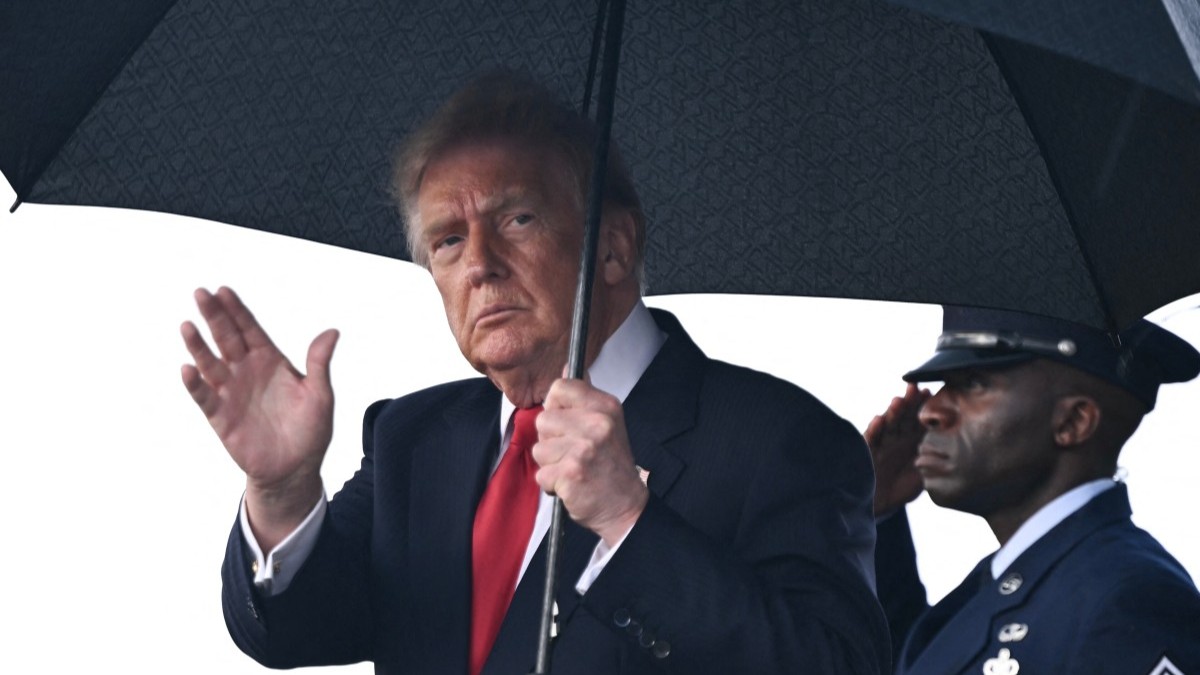
Donald Trump received Volodymyr Zelensky and Benjamin Netanyahu separately at the White House on Tuesday, July 28th, in a day of diplomacy with greater significance than usual.
The U.S. president described both meetings as positive, although he offered few details about their content. The meeting with the Ukrainian president, short and with no presser afterwards, had at least one significant aspect: it happened on the same day as the talks with the Israeli PM.
This is clearly not accidental: Washington brought together on the same day two wars that emerged from different conflicts and are now beginning to be presented as parts of a much larger confrontation.
Zelensky arrived to request greater military support, particularly air-defence systems and the capacity to produce Patriot interceptors in Ukraine. He also discussed with Trump the possibility of reviving negotiations with Russia, although from a position strengthened by further arms deliveries.
Netanyahu came with a different agenda. The regional war with Iran, Israel’s security and the extent of U.S. involvement dominated a meeting also marked by differences between the two leaders over the duration and objectives of the campaign.
There was originally no reason to connect the two conflicts. The war in Ukraine arose from the confrontation between Russia and the government in Kyiv following the 2022 invasion. The confrontation between Israel and Iran is rooted in decades of regional rivalry, Iran’s nuclear programme and Tehran’s network of proxies across the Middle East. Their causes, immediate actors and possible solutions are not the same.
Despite this, Western discourse is progressively integrating them into a single architecture. Russia and Iran are presented as parts of the same hostile bloc; Ukraine and Israel as forward positions in the same Western defence.
Military cooperation between Moscow and Tehran facilitates that narrative, but it does not automatically turn two distinct wars into a single conflict. The connection is also a political decision.
The risk is that this interpretation removes any limits that may have existed until now. Every new front can be justified as part of a general struggle between the West and the rest, a category vague enough to include Russia, Iran, and eventually China under the same threat. Diplomacy then becomes subordinate to bloc cohesion, and any separate negotiation can be interpreted as a strategic concession.
For the European Union, this transformation is particularly dangerous. An escalation with Iran threatens maritime routes, energy supplies, and European economic stability. At the same time, the continuation of the war in Ukraine requires increased military spending, continued financial support for Kyiv and the reinforcement of the eastern flank. From both directions, the only result is greater exhaustion.
Brussels therefore bears the costs of both scenarios, while continuing to lack an independent strategy. The EU finances weapons, approves sanctions and adapts its industrial priorities to decisions taken primarily in Washington. It can discuss the details, but it does not appear to control either the final objectives or the conditions for stopping the escalation. Autonomy to pay, dependence to decide.
Trump’s meetings with Zelensky and Netanyahu do not prove that a world war organised around two closed blocs already exists. They do show that the political framework for interpreting it in those terms is being constructed.
Europe should ask itself where that logic begins and ends. Otherwise, it may end up participating in an ever-expanding confrontation without having defined which interests of its own it is defending, which risks it is prepared to assume and, above all, how it intends to get out.