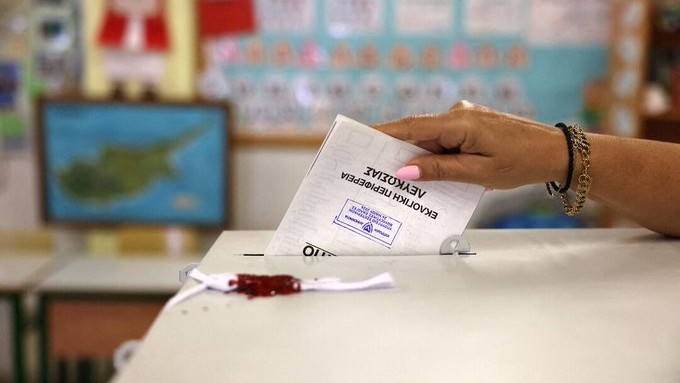
Cyprus’ parliamentary elections did not bring a political earthquake, but they did confirm that the country’s political landscape is changing. Voters largely stayed with the main parties, giving DISY (Democratic Rally) and AKEL (Progressive Party of Working People) a stronger-than-expected showing, while at the same time reshaping the smaller-party field around them.
The elections took place in a political climate marked by public frustration over corruption scandals, the rising cost of living, and declining trust in institutions. Yet despite this dissatisfaction, the electorate did not move decisively toward political rupture. Instead, the results reflected a more cautious and measured recalibration of the political system.
The two dominant parties ultimately proved more resilient than many analysts had predicted. Both DISY and AKEL managed not only to preserve but also slightly improve their electoral performance despite the increasingly fragmented environment. Their results suggest that the traditional pillars of Cypriot politics remain intact, even as the broader political landscape becomes more fluid and less predictable.
The outcome also says something important about the political instincts of Cypriot society itself. Cyprus remains, broadly speaking, a conservative country politically, even beyond ideological labels. Once again, voters appeared to prioritise stability, predictability, and institutional continuity over dramatic political change. While frustration with parts of the political establishment is clearly visible, the electorate did not express a revolutionary mood or a desire to dismantle the existing political order altogether.
The rise of ELAM
At the same time, the elections confirmed nationalist ELAM’s transformation into a firmly established political force. In the 2026 parliamentary elections, ELAM elected eight MPs, doubling its representation compared with the previous parliamentary term. The result consolidates its position as the third-largest force in parliament and establishes it not only as a permanent feature of Cypriot politics, but also as a potential party of power and parliamentary kingmaker.
ELAM’s rise has been gradual rather than sudden, but these elections confirmed that the party is no longer simply a protest movement at the margins of politics. Its growing support reflects concerns over migration, national identity, and broader dissatisfaction with the traditional political class. Much like similar nationalist parties elsewhere in Europe, ELAM has managed to move from outsider status toward political normalisation.
Together, DISY, ELAM, and the centre-right Democratic Party (DIKO) account for more than 50% of the electorate, underlining the enduring strength of the Right and centre-right in Cypriot political life. This is particularly notable at a time when several European countries are experiencing deep fragmentation and instability within their traditional political systems.
Fewer parties enter parliament
Much of the pre-election discussion focused on the prospect of a fragmented parliament filled with small parties, creating legislative instability.” In reality, the opposite occurred. The new parliament will contain fewer parties than the previous legislature, six instead of nine. This could ultimately facilitate coalition-building and parliamentary cooperation, whether regarding the election of the next Speaker, legislative initiatives, reforms, or broader policymaking.
The elections nevertheless reshaped the smaller-party landscape in a significant way. Historic parties such as EDEK (Socialist Party) failed to secure parliamentary representation, marking a symbolic turning point for one of the Republic’s longstanding political movements. For decades, EDEK occupied an important place within Cyprus’ political and ideological life, often participating in coalition politics and presidential alliances. Its exclusion from parliament therefore carries political symbolism beyond its electoral numbers.
The Greens and DIPA (Democratic Alignment) also remained outside parliament, highlighting the difficulties increasingly faced by smaller centrist and traditional parties that struggle to maintain a distinct political identity in a more polarised environment. Many voters appear less willing than in the past to support intermediary parties without a clearly differentiated political message.
New formations emerge
At the same time, new formations such as ALMA and Amesi Dimokratia (Direct Democracy) managed to enter parliament, reflecting an appetite among parts of the electorate for alternative political expressions outside the established party structure. Whether these newer movements can evolve into durable parliamentary actors remains uncertain, but their success demonstrates that voter loyalties are becoming less fixed than in previous decades.
The outcome also shows that voter frustration alone is not enough to overturn the political order. In moments of uncertainty, parties with a clear message, a coherent ideological direction and a recognizable identity still have an advantage. Even those associated with the public distrust that has accumulated in recent years were able to benefit when they presented voters with a more defined political narrative.
Another significant point of the election was that voters did not reward some of the most active MPs of the outgoing parliament, such as Stavros Papadouris of the Greens. This development points to a broader tendency within the electorate to criticise more readily than to recognise parliamentary work, reflecting limited public awareness, or even indifference, when it comes to the actual legislative performance of individual MPs.
Non-participation signals lack of voter confidence
One of the most significant results, however, came from outside the parliamentary system altogether. More than 188,000 eligible voters chose abstention. In many ways, this remains one of the defining features of contemporary Cypriot politics. Although the political system itself avoided fragmentation and instability, a substantial part of society continues to express detachment, disappointment, or lack of confidence through non-participation rather than through support for anti-system parties.
This contradiction perhaps defines the elections more than anything else. Cyprus remains politically stable by broader European standards, and the electorate still appears attached to institutional continuity. Yet beneath that stability, there is also visible fatigue with the political establishment, weaker party loyalties, and a growing search for alternative political representation.
Overall, the elections point more toward gradual political reconfiguration than systemic rupture. The traditional centre of Cypriot politics remains comparatively stable by European standards, yet the surrounding political ecosystem is changing. Some historic parties are disappearing, new actors are emerging, and political loyalties are becoming increasingly flexible. Cyprus may not be experiencing political upheaval, but it is quietly entering a new electoral era.