The response to COVID-19 was not merely a public-health operation. It also involved an unprecedented exercise of state power through lockdowns, school closures, restrictions on movement, vaccine passports, mandates, and the suppression of dissenting opinions.
Many of these measures were presented as necessary applications of scientific knowledge. Officials claimed to be following the evidence on the origins of the virus, its transmission, and the policies required to contain it, with “trust the science” becoming a universal counterargument to any attempts to challenge the prevalent narrative and policies.
The final report of the U.S. House Select Subcommittee on the Coronavirus Pandemic challenges much of that institutional confidence. Although it principally examines the American response, many of the policies it investigates were also adopted across Europe and other Western democracies.
The report does not claim that SARS-CoV-2 was deliberately designed or released as a biological weapon. It concludes, however, that the virus probably emerged through a laboratory or research-related accident in Wuhan.
It also notes that no infected animal has been verified at Wuhan’s Huanan market or anywhere in its supply chain. In previous zoonotic outbreaks, investigators identified infected animals, early cases involving people exposed to them, and ancestral forms of the virus. Comparable evidence has not been found for COVID-19.
Pangolins, presented early in the pandemic as a possible intermediate host, did not settle the question. Robert Garry, one of the authors of the influential paper The Proximal Origin of SARS-CoV-2, later acknowledged that coronavirus sequences found in pangolins could not establish whether the pandemic virus had emerged naturally or through laboratory research.
The problem was not simply that authorities may have reached the wrong conclusion. A hypothesis that remained scientifically plausible was frequently dismissed as a conspiracy theory, while those who raised it faced censorship and reputational attacks.
Emails examined by the subcommittee show that scientists who initially regarded a laboratory origin as possible subsequently concentrated on trying to disprove it. Kristian Andersen, the lead author of Proximal Origin, wrote in February 2020 that his group had focused on refuting laboratory theories even though the available evidence remained inconclusive.
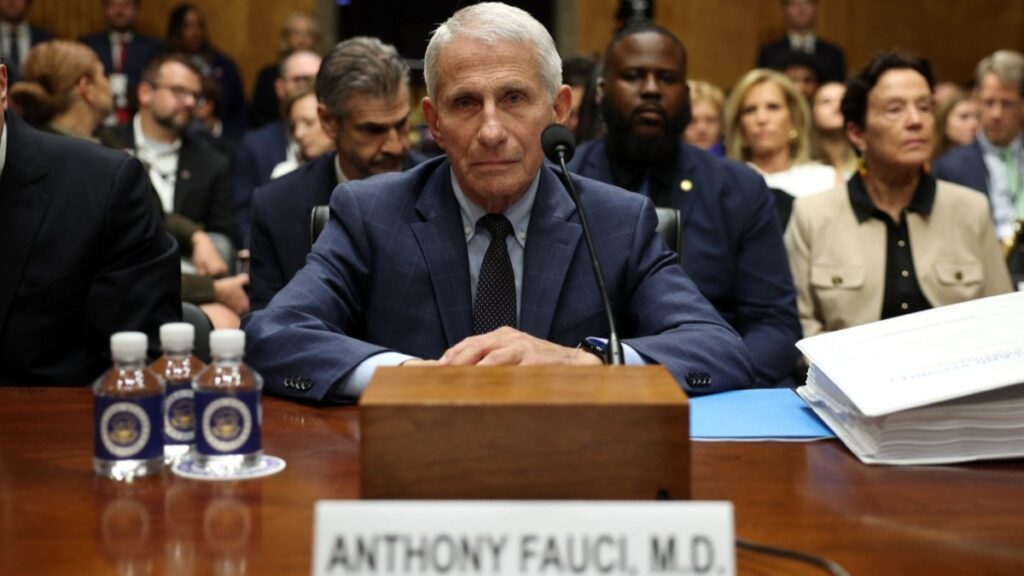
The report also found that Anthony Fauci and other senior scientific figures encouraged the production of a peer-reviewed paper examining the origins of the virus. Fauci later cited Proximal Origin publicly as evidence supporting a natural explanation.
Science was too often treated not as a method of inquiry but as an argument from authority. Legitimate questions were portrayed as dangers to public health rather than matters for open investigation.
The same problem emerged with social distancing. The six-foot rule—approximately 1.8 metres—shaped the operation of schools, shops, churches, businesses and public services.
The report concludes that there was no quantitative scientific evidence supporting that particular distance. Fauci told investigators that the rule was an empirical decision that “sort of just appeared,” rather than the result of controlled comparisons between different distances.
Governments and private institutions nevertheless turned it into a near-universal requirement. The consequences included reduced business capacity, prolonged school closures, the punishing of anyone who dissented, and the erosion of ordinary social life.
Prolonged lockdowns also receive heavy criticism in the report. The investigation links them to economic damage, mental health problems, delayed medical treatment, educational losses, physical deterioration, and disruptions to childhood development. Its central principle is straightforward: the response to a disease must not inflict more harm than the disease it is intended to combat.
The report argues that officials also marginalised alternative strategies. These included the Great Barrington Declaration’s proposal for “focused protection,” under which restrictions would be lifted for those at comparatively low risk while greater protection was directed towards vulnerable groups. The declaration did not advocate deliberately infecting people or allowing the virus to spread entirely unchecked. Nevertheless, senior officials sought what National Institutes of Health director Francis Collins called a “quick and devastating published take down” of its premises.
COVID-19 vaccines require an important distinction. The report says that they reduced the risk of severe illness and death and “undoubtedly saved millions of lives.” It describes Operation Warp Speed, the programme that accelerated their development, as a major success.
But it also concludes that officials exaggerated what the vaccines could accomplish. Although vaccination initially reduced infection and transmission, particularly against early variants, it did not provide complete or durable protection against either.
Political leaders nevertheless continued to portray vaccination as a means of preventing people from contracting and spreading the virus. That argument was then used to justify workplace mandates, vaccine passports, and restrictions on the unvaccinated.
A medical intervention that benefited many patients became, in some jurisdictions, a credential for participation in public life. Those who questioned that transformation were often treated not as participants in a scientific debate but as a threat to society. Coercion increasingly displaced informed consent.
The report also argues that American officials gave insufficient weight to immunity acquired through previous infection. Evidence emerged that recovered patients possessed substantial protection against reinfection and serious disease, yet many vaccine mandates made no allowance for natural immunity.
The deepest failure of the pandemic was therefore institutional. Governments and health agencies too often presented provisional judgements as settled truths. Media organisations and digital platforms helped restrict debate about policies whose scientific foundations remained uncertain.
The report documents pressure from the Biden administration on social media companies to remove or limit COVID-related content. It also warns that restrictions on fundamental freedoms damaged trust in public health institutions.
The virus was real, as were its victims. The vaccines saved lives. None of that means every measure adopted in response was scientifically justified, proportionate, or legitimate.
Nor does the American report resolve every uncertainty. Its laboratory-origin conclusion remains an assessment of probability, not definitive proof. We may never know precisely how the virus first entered the human population.
The question now is what safeguards can prevent governments and public health institutions from again demanding obedience before they possess sufficient evidence. Restoring trust will require more than assurances from the same authorities. It will require transparency, accountability and a willingness to tolerate scientific disagreement before the next emergency arrives. Something Europeans have been waiting for in vain from the Ursula von der Leyen-led Commission.