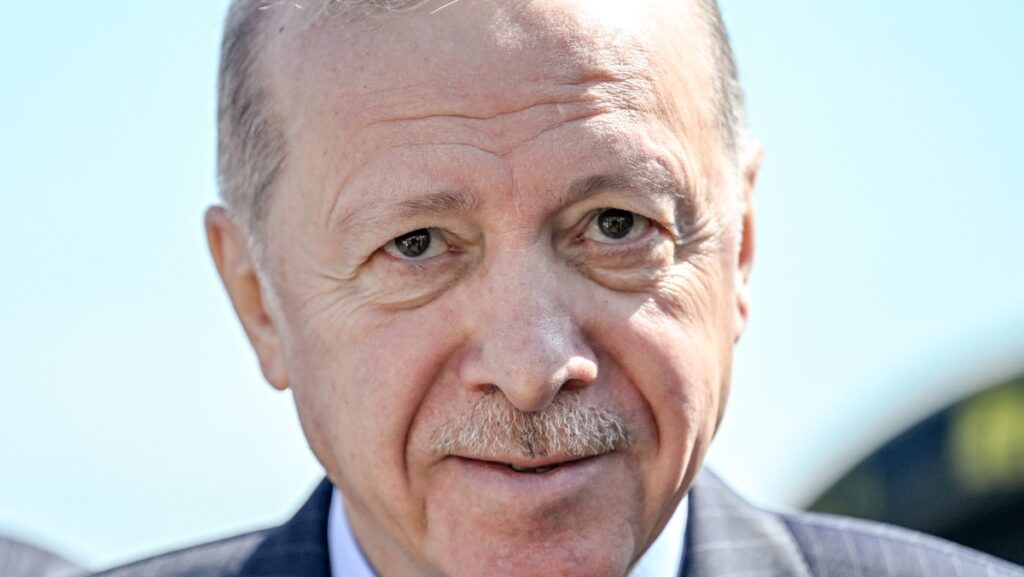
Turkey’s President Recep Tayyip Erdoğan in Istanbul, on April 24, 2026. (Photo by Ozan KOSE / AFP)
Ozan KOSE / AFP
In a recent speech, Turkish President Recep Tayyip Erdoğan outlined Turkey’s foreign and security policy in clear terms. He stated that Turkey’s security perimeter extends beyond its borders—reaching into Syria, Lebanon, Cyprus, and the Eastern Mediterranean. Erdoğan stressed that Turkey would not accept faits accomplis or threats to its “brothers,” promising a firm response to any violations of Turkish and Turkish Cypriot rights. He also referenced broader regional dynamics, highlighting strategic competition.
This address formalizes Turkey’s forward defense doctrine. Rather than limiting its security to recognized borders, Ankara seeks to shape its neighborhood through political, military, and diplomatic means. The goal is to create a protective buffer and address threats proactively, reflecting Turkey’s view of its vital interests in a volatile region.
For Greece, the emphasis on Cyprus is particularly significant. In Turkish strategic thinking, Cyprus represents a key geostrategic asset overlooking important maritime routes, energy zones, and access toward Syria and Lebanon. Any strengthening of ties between the Republic of Cyprus, Greece, and partners such as Israel or Egypt is seen in Ankara as affecting Turkish interests.
Erdoğan’s warnings of a “clear and sharp response” highlight tensions over maritime zones and the Eastern Mediterranean. Turkey contests certain Greek and Cypriot claims regarding Exclusive Economic Zones (EEZ), which hold potential energy resources. These differences have led to naval activities, diplomatic friction, and competing claims. A resolution acceptable to all parties would help reduce risks to Greek interests, including supply lines and the Aegean.
Turkey also pursues wider regional influence through actions in Libya, the Balkans, and elsewhere. While some of these moves reflect legitimate security and economic interests—such as protecting supply routes or supporting allied groups—they contribute to unease among neighbors.
A notable feature of Turkish policy is its long-term, methodical approach. In Syria, Ankara has gradually built influence by working with local actors, adapting alliances, and positioning itself to act when opportunities arise. Similar patterns appear in Libya and through political-economic engagement in the Balkans.
This disciplined patience demonstrates Turkey as a serious regional actor. While its assertiveness sometimes raises concerns, it also stems from genuine threats Turkey perceives along its borders and in its near abroad. Dismissing these statements overlooks Turkey’s consistent record of turning strategic patience into tangible gains.
For long-term peace in the Eastern Mediterranean, a balanced approach is needed. Rather than confrontation, the focus should be on deterrence combined with diplomacy. Key elements could include:
Such measures raise the costs of destabilizing actions while offering Turkey incentives for cooperation. Turkey’s legitimate security concerns — including border threats and energy access — deserve acknowledgment, but they must be pursued within accepted international norms.
Turkey under Erdoğan has become a capable regional power with ambitious objectives. Its forward defense approach shifts from a purely defensive stance to greater power projection. While this may enhance Ankara’s sense of security, it generates challenges for neighbors, particularly Greece.
Underestimating Turkey’s determination and strategic patience would be unwise, as shown in Syria, Libya, and the Mediterranean. At the same time, lasting stability requires checking destabilizing moves without closing the door to dialogue. Greece deserves allied support in defending its rights, while all parties benefit from realistic balance and pragmatic engagement.
Only through firm yet constructive policies can the region move away from periodic crises toward genuine cooperation and shared prosperity.