Europe says it has turned the page on Russian energy, but 2025 data tell a different story: the European Union continues to import gas from Russia —above all in the form of LNG— and a fraction of crude thanks to exemptions on the Druzhba pipeline. In July, the five largest buyers transferred 1.100 billion euros to Russian suppliers; more than two-thirds was gas via TurkStream or LNG carriers. Hungary (485 M€) topped the list, followed by France (239 M€, all LNG), Slovakia (169 M€), Belgium (102 M€), and Spain (66 M€). One month earlier, the EU-wide total was 1.470 M€.
The European Commission wants to completely eliminate imports of Russian gas, oil, and nuclear materials by the end of 2027, with effect from January 1, 2028. Still, real flows and long-term contracts show the “switch-off” will be gradual. The roadmap presented on May 6th sets the overall framework, and the June 17th legal proposal adds regulatory teeth to curb even Russian LNG and cut “spot” purchases by the end of 2025.
The shift is not only of the supplier but also of the model: less pipeline gas, more LNG. And here the price problem arises. U.S. LNG—the centerpiece of the switch—usually carries a premium over Russian pipeline gas and, at various moments, also over part of the Russian LNG that reaches Europe. In public debate, up to 40% differentials have been cited, heavily dependent on market conditions, route, and contract.
Eurostat’s numbers confirm the new balance. In the first quarter of 2025, the United States was the EU’s top LNG supplier (50.7%), with Russia second (17%). In pipeline gas, Norway led with 52.6%, ahead of Algeria (19.4%) and Russia (11.1%). The share of Russian oil fell from 27% pre-war to roughly 3% in 2024, while Russian coal has been banned since 2022.
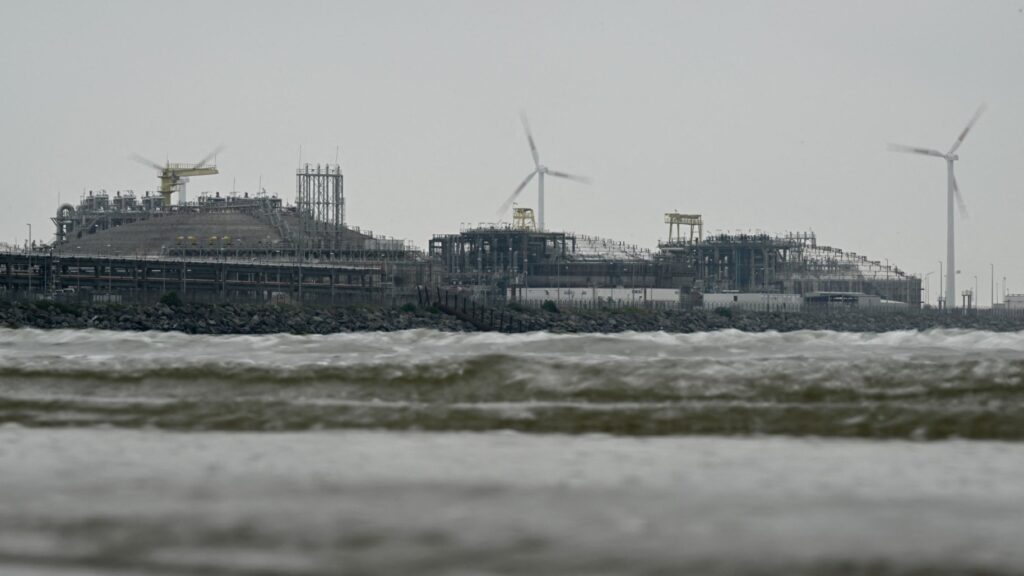
The LNG map reveals the gateways and the inertias that complicate the exit timetable. France (Dunkirk) and Belgium (Zeebrugge) operate as entry and re-export nodes toward Germany and the Netherlands; Spain maintains purchases, lower than in 2024, a record year for Russian LNG in Europe, while the Netherlands appears as a regular recipient.
Russian crude enters mainly through the southern branch of Druzhba and moves toward Hungary and Slovakia. TurkStream, the only major direct route still operating, shapes Central Europe’s supply: after maintenance in June, flows rebounded in July, a sign that dependence has not disappeared.
Country by country, the 2025 picture is uneven. Hungary and Slovakia refine Russian crude via Druzhba, and Budapest ranks as the top monthly payer. France is now the largest gateway for Russian LNG, with some re-exported to Northern Europe. Belgium acts as a logistics hub with transshipment contracts under the scrutiny of the new rules. Spain has reduced its exposure to Russian LNG compared to 2024, while the United States gains share as a supplier. The Netherlands and Germany show limited direct exposure, but receive Russian molecules via re-exports and regional swaps.
The Commission’s legal engineering—beyond political slogans—combines enhanced origin traceability to prevent opaque blends, a ban on “spot” contracts for Russian gas at the end of 2025, limits on the use of European LNG infrastructure by Russian counterparts, and, above all, a legal framing that allows the package to be approved by a qualified majority. That design avoids a single-country veto and is key in the face of resistance from Budapest and Bratislava.
The fine print is that the shift carries costs and risks. The LNG premium over pipeline gas can tighten household tariffs and industrial inputs, and long-term regasification and supply contracts tie up traders and terminals well into the next decade. Even with the law approved in 2025, the presence of Russian LNG will decline in phases, not overnight.
Brussels insists that Europe will “not return” to Russian gas and that replacing U.S. But the question that will dominate Brussels until 2027 is no longer from whom Europe buys, but at what price: if the LNG premium, at times close to 40% versus Russian pipeline gas, becomes entrenched, the EU will gain political autonomy at the cost of greater pressure on industry and households.