As I have previously argued, Hungary’s constitutional challenges have never been reducible to Viktor Orbán’s tenure in government. It was a major misunderstanding on the part of Western and liberal elites to reduce the complexities of Hungarian politics to various iterations of calling Orbán a corrupt dictator. This simplistic narrative, of course, relieved them of the burden of engaging with the intricate realities of Hungarian politics and constitutionalism. My thesis, by contrast, has been that the defining feature of the Hungarian political system since the 1989 democratic transition has been an exceptionally majoritarian constitutional order. Orbán mastered this institutional architecture and reinforced it after 2010, but he did not invent its underlying logic.
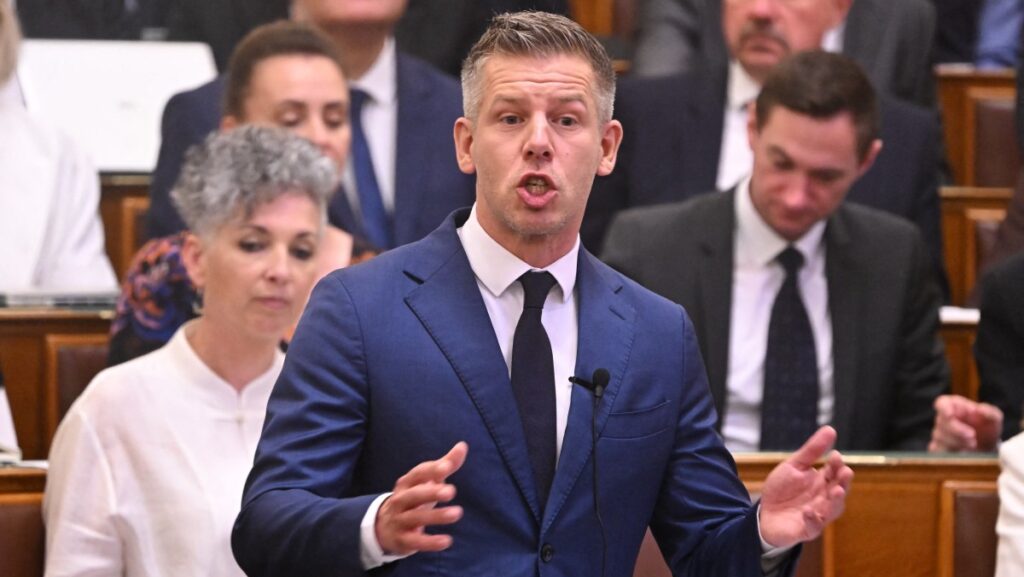
The real constitutional question after the April 2026 election was therefore never simply whether the Orbán era would end. It was whether the new Tisza government would deliberately restrain the extraordinary powers inherited from its post-1990 predecessors, or discover that those powers were simply too attractive to surrender. In my previous article, I left this question open, giving Péter Magyar the benefit of the doubt. Yet, by announcing ‘Operation Purgatory Fire.’ a series of sweeping amendments to the Basic Law and other core administrative statutes, designed to dismantle the previous order, Péter Magyar has given a definitive answer. He has chosen the path of complete escalation.
Naturally, Magyar and his supporters justify ‘Operation Purgatory Fire’ as an extraordinary necessity, as a prerequisite for forging a new constitutional order and ushering in a new generation of civil servants after 16 years of Fidesz rule. Indeed, in the April election, 3.4 million voters (53.2%) backed Magyar’s Tisza Party, and hundreds of thousands remain passionate zealots for his cause. In this regard, the prime minister is technically correct when he claims to be fulfilling a democratic mandate. Yet not even a majoritarian system does legitimize a ‘dictatorship of the majority.’ Two critical questions must therefore be examined: Is Péter Magyar’s government merely the most radical version of Hungary’s pre-existing hyper-majoritarian order? And if so, is his rule now bending, or even breaking, the foundational rules of democracy itself?
A rushed ritual of consensus
An administration’s earliest constitutional amendments already disclose its underlying constitutional philosophy. In this light, the Magyar government’s proposed 16th and 17th Amendments to Hungary’s Basic Law deserve scrutiny far beyond their individual provisions.
The process of amending the constitution has been striking. In its election manifesto, the Tisza Party promised a constitutional renewal rooted in broad public participation and national reconciliation. Yet, the 16th Amendment, proposed on May 20, bypassed any such public process and was rushed through Parliament in just three weeks, passing on June 15. The 17th Amendment, announced on June 22, was accompanied by an online ‘public consultation’ that served as a mere fig leaf: the consultation concluded on June 27, with the results published on June 30. The nearly North Korean-style consensus of this ‘consultation’ was never in doubt. By engaging exclusively with Tisza loyalists, Magyar has violated his promise of national reconciliation through the very process he adopted. More alarming, however, is the substance of these amendments.
The Lex more-than-Orbán: the 16th Amendment
The 16th Amendment’s most consequential provision imposes a lifetime term limit of eight years on the prime minister. Overtly retroactive, it counts every premier’s tenure since 1990. This immediately bars Viktor Orbán, serving for a total of 20 years, from ever returning to office. However, it also encapsulates former socialist prime ministers: Péter Medgyessy and Gordon Bajnai are now limited to a maximum of four more years, while Ferenc Gyurcsány is entitled to only three and a half. Given that both Gyurcsány and Bajnai are under the age of 65 and have spent considerable political energy attempting a comeback, this amendment effectively decapitates the senior leadership of the old social-liberal opposition. (We also wish the nearly century-old former Prime Minister Péter Boross continued good health.)
Magyar’s strategy is transparent: liquidate both the Fidesz leadership and the old left-wing guard to secure his centrist party’s hegemony on both flanks. That an elder statesman can successfully return from retirement is no historical anomaly; Konrad Adenauer became the first chancellor of West Germany at age 74 and governed for 14 years, and his tenure is still regarded as one of the most successful in German history.
Almost no parliamentary democracy in the world features a term limit for the head of government. Unlike presidential systems, executive power in a parliamentary system is shared with a cabinet and remains fundamentally dependent on maintaining a parliamentary majority. A term limit is alien to this logic. One of the few exceptions is Thailand, which introduced an eight-year limit in its 2017 constitution—though its Constitutional Court explicitly barred any retroactive application. In Hungary, the legally orthodox method to introduce such a provision (nonsensical though it may be) would have been to apply it prospectively from the 2030 elections, meaning the incumbent prime minister could not be barred until 2038.
The constitutional guillotine: the 17th Amendment
The 17th Amendment is the core of ‘Operation Purgatory Fire,’ a sweeping assault on the remnants of the Fidesz state. While it contains numerous provisions, three interventions across the branches of government stand out.
The most prominent provision is the immediate removal of the president of the republic, Tamás Sulyok, who was elected by the Fidesz-KDNP parliamentary majority in 2024 to a five-year term. Magyar spent immense political capital during the campaign publicly chastising the head of state, demanding his resignation by May 31. When Sulyok refused to step down, the government deployed the constitutional axe, explicitly writing into the bill:
On the day following the entry into force of [the 17th Amendment], the term of office of the incumbent President of the Republic shall terminate.
That the government chose this crude mechanism is remarkable. They possessed two legitimate alternatives: reforming the presidency into a popularly elected office or triggering the standard impeachment procedure outlined in the Basic Law. For purely political reasons, however, the government preferred immediate liquidation over orderly, lawful procedures.
The legislative branch is similarly targeted by a new twelve-year term limit for members of parliament. Conveniently, no sitting Tisza MP is affected—only the opposition. Fidesz and the KDNP, having dominated front-line politics since 1990, stand to lose their entire senior rank-and-file. The right-wing Mi Hazánk (Our Homeland) would lose half of its parliamentary group, including its leader. The blow falls equally hard on the political Left, disqualifying most of its veteran figures and rendering a leftist resurgence nearly impossible. Even prominent anti-Orbán figures like the green politician Ákos Hadházy are barred. When criticisms emerged, Magyar shrugged them off, suggesting to the cheers of his supporters that an eight-year limit for MPs might be even better.
The judiciary has not been spared. The 17th Amendment reintroduces a mandatory retirement age of 70 for Constitutional Court judges. This effectively removes the chief justice and three other judges, handing Magyar the opportunity to flip the political balance of the court within his first term.
At this juncture, our initial question is answered. Péter Magyar is wielding his parliamentary supermajority without institutional self-restraint, showing no respect for constitutional offices, traditions, or political culture. He justifies this by pointing to a majoritarian mandate to rewrite the rules of the game. The broader question remains: while claiming to restore “political normalcy” and the rule of law, is he not merely dismantling it on an unprecedented scale?
The logic of the scorched earth
‘Operation Purgatory Fire’ is not the language of national reconciliation. Even if one were to accept the premise that the previous Orbán government was an autocracy, transitions to democracy do not occur via purgatorial fires. No such scorched-earth policy was announced even by the Allied powers occupying post-war Germany. Rebuilding a stable, democratic society requires painful political compromises with the former ruling elite. Creating a permanent caste of political outcasts ensures they will never integrate into the new order; instead, they will seek to break it.
Magyar has made no attempt to involve opposition forces in his constitutional architecture; indeed, he barely consults his own parliamentary group. Instead, his measures are surgically and admittedly targeted at destroying his rivals: primarily Fidesz-KDNP, but also Mi Hazánk and the old Left. Rather than achieving stability, this guarantees that should Tisza ever lose power, Magyar’s constitutional edifice will be ruthlessly swept aside by the next victors.
Dismantling the rule of law at an unprecedented scale
Concerns about Péter Magyar’s rampage against the institutions of the republic go far beyond the Fidesz camp. András Schiffer, the former leader of the green party LMP and one of the most vocal critics of the constitutional overhauls enacted by the Orbán governments in the 2010s, points out that the new term limits on MPs and the prime minister are clearly designed to decapitate the current and any future opposition to the Tisza government. Although his own party included similar term limits in its 2010 election manifesto, Schiffer notes that those were never meant to be applied retroactively, as the 16th Amendment is, and would not have exclusively benefited a single political party. He also observes that after winning the 2010 elections, Orbán never tried to remove the incumbent President of the Republic László Sólyom, even amidst tight deadlines and fierce political clashes; instead, he simply waited for Sólyom’s term to expire.
Political analyst Gábor Török similarly compares the sweeping changes to the Constitutional Court, the result of reintroducing a mandatory retirement age, to the aftermath of Viktor Orbán’s 2010 supermajority. Back then, Fidesz-KDNP expanded the number of judges from ten to fifteen, giving themselves the opportunity to immediately elect five new judges. Even Amnesty International Hungary has been alarmed by the constitutional coup aimed at unseating President Tamás Sulyok. Unsurprisingly, the NGO did not defend Sulyok’s political record; rather, they argued that even an unpopular officeholder is entitled to the procedural guarantees associated with constitutional office and that the impeachment procedure is the only appropriate mechanism provided for by the Basic Law.
The sheer volume of these rushed changes, coupled with outright breaches of constitutional principles, has ultimately alarmed 42 Hungarian legal and social-science academics. Many of these scholars have long been associated with rule-of-law criticisms of the Orbán system, and they recently published a joint intervention on Verfassungsblog., ironically a platform highly critical of Viktor Orbán. The open letter argues that Hungary’s new parliamentary supermajority should exercise constitutional self-restraint when replacing officeholders inherited from the previous regime. While acknowledging that personnel changes are legitimate after such an electoral victory, the authors emphasize three core principles: avoiding legal manipulation or constitutional ‘tricks’; refraining from making hasty structural changes to the constitution under the guise of urgent personnel reform; and ensuring that new appointments are made through transparent procedures. In their view, only such a self-limiting approach can truly strengthen the rule of law and rebuild credible, independent institutions.
Constitutional continuity vs. total politics
Péter Magyar responded to these academic and legal critiques with characteristic derision, doubling down on his policies. When asked how any future officeholder, be it the new president or incoming Constitutional Court judges, could trust they would not be summarily removed by a future majority, Magyar replied: “They can be sure to stay if they respect the people, who voiced their will in the April 2026 elections.” An answer truly according to Jacobin taste.
This statement reveals a fundamental inversion of constitutional governance. Independent constitutional offices exist precisely to outlast shifts in parliamentary majorities. Presidents, constitutional judges, and central bank governors are given fixed, overlapping terms not because they are expected to be politically neutral in every action, but because institutional continuity is itself a core constitutional value. Their legitimacy derives from the permanent framework of constitutional law, not the shifting tides of electoral confidence.
The emerging logic of the Tisza government shifts this paradigm completely. If independent offices serve at the pleasure of the governing majority, they cease to be stabilizing institutions and become mere extensions of partisan warfare. While this total politicization serves Magyar’s immediate tactical needs, it fundamentally degrades the state. Instead of insulating institutions from political cycles, it hitches the continuity of the legal order to the outcome of the latest election.
The true constitutional challenge facing Hungary has never been the mere replacement of one ruling elite with another. Péter Magyar’s promise is already too short-sighted; and in practice, he is altering the very nature of Hungarian constitutionalism. In doing so, he may well overplay his hand, turning his administration into the final, convulsive chapter of a 36-year cycle of constitutional escalation.
The political rationale behind these sweeping changes appears to be a strategy of permanent mobilization, a continuous campaign against internal enemies designed to keep his opponents permanently off-balance. This buys the government time to avoid more intractable issues, such as reviving economic growth. Yet, ironically, this strategy has already set Magyar on a collision course with Brussels.
The new prime minister has already hit two major institutional walls. First, his attempt to bully EU Commissioner Olivér Várhelyi into resigning prompted a hidden intervention from Commission President Ursula von der Leyen and EPP leader Manfred Weber. Second, in his haste to prepare Hungary for the euro, Magyar’s attempts to arbitrarily remove the governor of the Hungarian National Bank drew a stern rebuke from European Central Bank President Christine Lagarde.
Péter Magyar’s Tisza Party sits comfortably within the European People’s Party. In time, the EPP may well realize that their premature celebrations over Viktor Orbán’s electoral defeat came at a very high political price.