In the United Kingdom, a contested 2025 report—whose methodology has since been seriously questioned—claims a fourfold increase in 18-34-year-olds attending church at least once a month, with 20% of young men under 34 regularly attending compared to just 4% six years ago.
Yet, it is still hard to deny an interest in Christianity and a—very quiet—revival. At Easter 2026, 21,000 adults and young people were baptised in France, a 20% increase compared to 2025, which already saw a 32% rise in baptisms compared to the year before. For comparison, in 2021 there were around 4,100 adult baptisms.
Around 45% of young people in Spain (aged 15–29) identify as Catholic. This marks a dramatic shift in recent years, with Catholic identification among Spanish youth rising by nearly 50% compared to 2020.
A similar trend is seen in Denmark. But the question is, why have young men begun attending church?
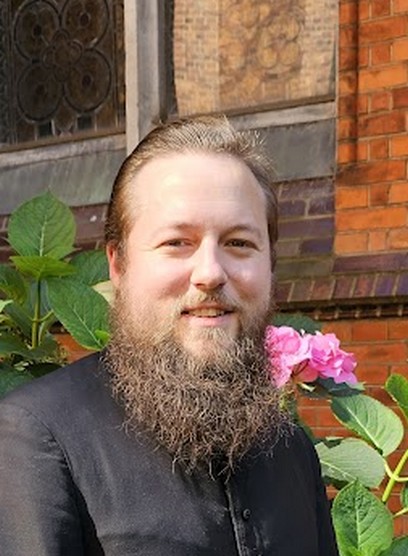
For Catholic priest Daniel Steiner Ebert, who is based in Denmark, it is about a lack of depth in life:
“Our society has presented people with an empty life for a long time. Christianity was boring; we tried that, so people wanted to try something else, and for a while everyone wanted to be Buddhists, New Age, and others tried sex, drugs, and rock’n’roll. But none of these things involve depth. Even Buddhism as a philosophy offers emptiness—the goal is to become one with nothingness, and that conflicts with humanity’s self-perception because, deep down, we know that we are more than nothing. People sense that you cannot live with an idea of nothing. Human beings are seekers; they are religious, and that pushes people toward an encounter with Christianity.”
An opinion poll showed that the majority of French catechumens were interested in religion following a trial in life or some form of illness, while others had had a religious experience. Others sought the church following an experience of beauty.
Father Daniel Steiner Ebert believes these trends are expressions of rebellion rooted in young people’s own life experiences.
“They have grown up with secular parents. They have tasted the secular fruit and, through their own experience, have found it wanting. They come from a generation that has been heavily affected by misfortune. How many have not been touched by divorce in their families? We live in a society where mental illness and general mental health have never been so bad, and the younger generation feels the consequences of this in their own lives.”
He adds that the answers previous generations gave to these problems do not work.
“Human beings search for answers. Previous generations gave poor answers, stemming from the dictatorship of relativism, expressed by saying: it is good if it is true for you; it just isn’t true for me. That is superficial.”
A break with the progressive
According to Fr. Ebert, young men are driving the renewed interest in Christianity because the secular world has run a remarkable indoctrination programme targeting women. An unhealthy form of feminism has sought to eradicate women and traditional femininity, and many women have become dazzled by this ideology and trapped by its influence, Fr. Ebert said.
“It is a toxic feminism that also attacks men. It tells women to break free from men, which is very anti-Christian. God tells us that it is not healthy for human beings to be alone. But men are left behind while society buys into the idea that men are stupid pigs.”
When society attacks the masculine, many men withdraw and seek something else—unfortunately, sometimes toward extreme forms of masculinity, particularly online, represented by online influencers such as Andrew Tate. However, others continue seeking and find Christianity, adds the priest.
“Christianity involves sacrificial love—sacrificing oneself for others. That is where true masculinity lies.”
“It is deeply built into men. Women, of course, also make sacrifices, but it takes a different form. Boys love playing cops and robbers and soldiers, where it is about fighting evil and sacrificing oneself. And that is precisely what Christianity points to: sacrificing yourself for what you love.”
In Catholic circles, there is a discussion about how many men have turned away from the Church because it has become feminised, particularly among American Catholic writers. Ebert is receptive to that analysis.
“The clergy have probably been influenced by secular society, and not all priests have had the courage to go against the current. Many have spoken more about uncontroversial topics than controversial ones. But more priests in the Catholic Church are now beginning to see that this doesn’t work and that one must say things as they are and be loyal to the Gospel. For a long time, people have not dared to speak about hell, for example, even though Jesus is the one who speaks most about it in Scripture. There were other sides to Jesus than the gentle flower-loving man. That has been ignored—and thus an incomplete image of the Lord has been preached—but gradually a shift is being seen.”
This shift is happening at the same time as many young people are showing greater interest in more traditional forms of Christianity. Young people are particularly drawn to Catholicism and Orthodoxy, as these demand more of believers in the form of sacraments and fasting, which appeals to those looking for more discipline.
Many younger Catholics are enthusiastic about the Mass in the Extraordinary Form (the Traditional Latin Mass or Tridentine Mass), and Fr. Ebert is not surprised.
“The trend has something to do with beauty. You hear that beauty is relative, but that is not true—it is objective, and it reflects God’s beauty. No one watches a sunset and thinks how terrible it was to look at. Classical music is universal because beauty is objective. So when young people attend the traditional Mass, it is about worship being the best it can be—authentic and serious—and wanting beauty to be an element of the liturgy. That particularly attracts a generation that has grown up in a society lacking in beauty.”
Faith in a secular society
The growing interest in Christianity is also present in Denmark. A Verian survey, conducted by Danish newspaper Berlingske Tidende in 2025, established that at least 10% of young Danes between 18 and 35 regularly attend church. This is true of only 7% of those aged 36 to 59. At the same time, the survey shows that young people are the group that attends church most frequently. According to the survey, 7% of 18–35-year-olds say they regularly go to church. In 2010, a similar survey showed that only 3% of Danes in that age group attended church. The number of churchgoers has more than doubled.
The priest believes that the interest is not as high as in other places experiencing a quiet revival, partly because of the ‘Law of Jante’, a Scandinavian norm that pushes conformism.
“In Denmark, there is the eternal Law of Jante, which is a dictatorship that constantly pushes people down, and it affects the faith community. It means that it is still dangerous to talk about faith in Denmark. Even though younger generations want to, there is a culture, carried by older generations, that says religion is not something you have in public. Society is actually somewhat schizophrenic since we have a folk church that is a state church—and thus public—but it shouldn’t be too public.”
But is it important to speak publicly? Previous Danish church minister Morten Dahlin has stated that as long as one believes, it does not matter whether one is a regular churchgoer.
“To believe but not go to church is self-contradictory,” Fr. Ebert says:
“If you are a Christian, you are a Christian in all your actions, not just in private. Everyone is weak and subject to sin, but to be a Christian is to take up the fight and struggle alongside the Lord and His grace. It should not be a great secret that one is a Christian. Our ancestors have time and again given their lives for it as martyrs. It is very anti-Christian behaviour to think that faith is entirely private.”
The faith of young Christians is about a break with the culture, he continues:
“Danish culture is no longer a Christian culture, even though we are built on Christian values. Denmark is heavily influenced by socialism, and we have drifted away from true Christianity and handed everything over to the state. That creates a cold society where people do not help their fellow human beings, because that is left to the state. It is a dead system.”
Fr. Ebert adds that Jesus teaches us that individual people must help one another here and now, and not just leave it to someone else. He continues:
“We say we are Christians, but there would be an outcry if anyone questioned abortion. It is simply not a discussion in Denmark, even though there are now around 15,000 abortions a year. It is in no way a Christian country. On top of that, we are a consumer society that tells people they are entitled to something simply because they want it. That is a very different mindset from the original Christian culture.”
The quiet revival is largely about young people’s search for something more than what the current culture contains. The question, however, is whether the quiet revival will hold among the young people who have found faith.
“Christianity is not a political idea, so it will only hold if they have had an encounter with the living God and understood that Jesus truly rose from the dead and saved us—then I believe it will hold.”
For the young men who have become interested in Christianity and are seeking meaning and more positive role models outside of politics, the priest offers a rallying call:
“Look to St. Joseph. He is the embodiment of the perfect man—apart from Jesus, of course—and if the modern man allows himself to be inspired by Joseph, that is the way out of where we are in society today. He had the perfect relationship with the Virgin Mary and his family. His priorities and willingness to sacrifice were decisive, and we can learn from that.”