Greece is facing a serious problem of illegal mass migration.
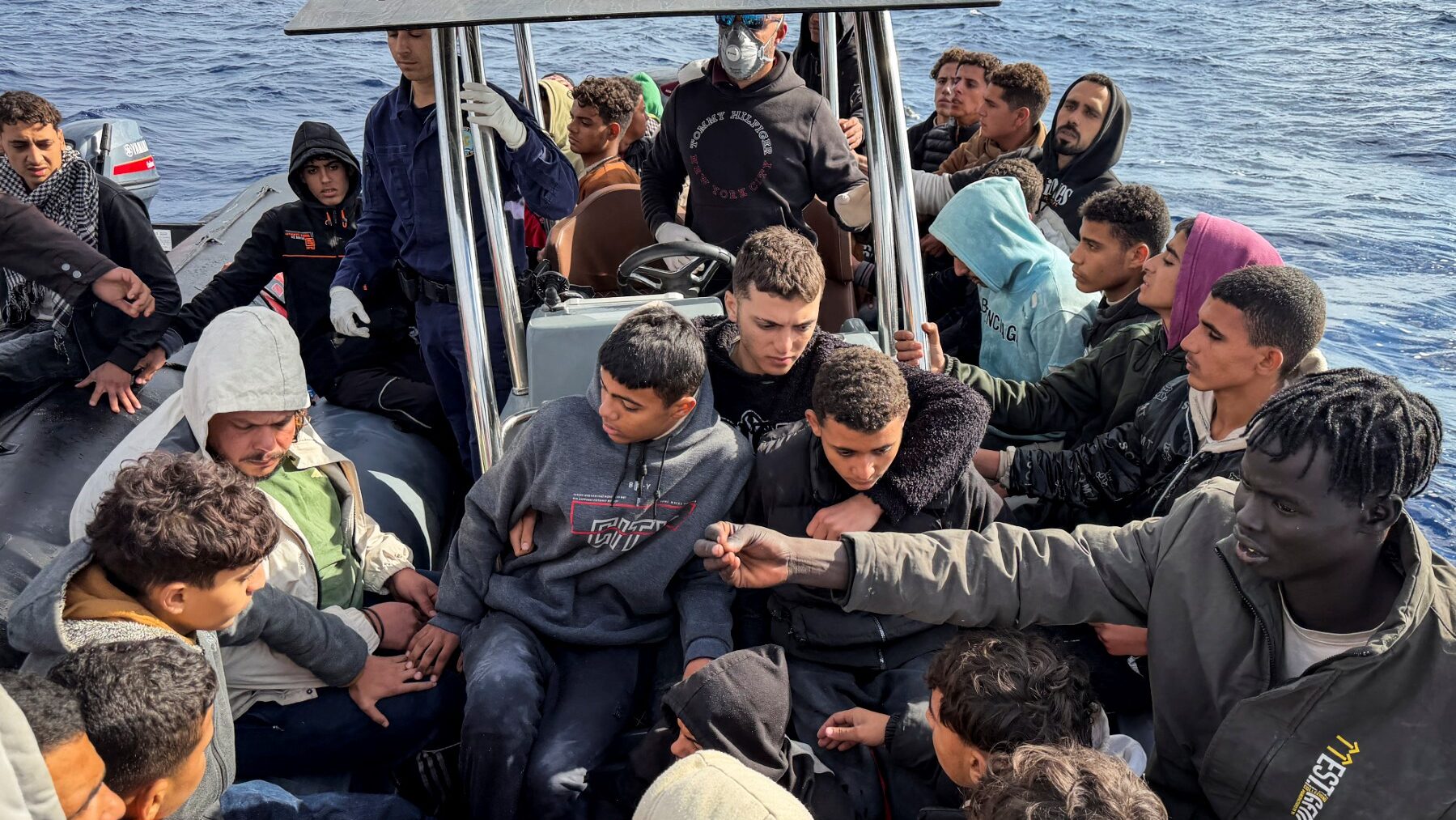
Tens of thousands of people—mostly military-age, Muslim men—from the Middle East, South Asia, and Africa enter the country illegally every year by both land and sea.
According to the Greek media, the island of Crete is now the main destination for migrants reaching Greece. It eclipses the eastern Aegean Sea islands that bore the brunt of the 2015 migration crisis. During this time, an estimated million people who entered from Turkey had transited the country on their way to other European Union states. A single day last in May saw 600 arrivals.
Last year, some 19,800 people (mostly from Sudan, Egypt and Bangladesh) made landfall on Crete, 47% of the national total.
This migration phenomenon has been researched for years by the Greek academic researcher, Ioannis Kolovos. He holds a Ph.D. from the Department of Balkan, Slavic and Oriental Studies of the University of Macedonia in Thessaloniki. His research focuses on nationalism as well as both Greece and Europe’s populist, right-wing parties. He has also written several books on Greece’s immigration policy and on multiculturalism.
In an interview with europeanconservative.com, Kolovos analyzed Greece’s mass migration problem and the concept of nationalism, amongst other issues.
Tell us about the current demographic landscape in Greece.
Greece currently has a resident population of 10.5 million people. Unfortunately, the country’s demographic trends are quite negative: the population is aging and the birth rate is below replacement level. In my opinion, this poses the greatest threat for Greece today. The low birth-rate of 1.3 children per woman, which is well below the 2.1 needed for mere replacement, means that the local population is slowly but steadily dying out. The situation is exacerbated by the fact that several hundreds of thousands young Greeks left during Greece’s debt crisis in the 2010s in an effort to find a better future, mainly in other European countries.
Thus, Greece is faced with a two-pronged problem: an ageing and declining native population, as well as an increasing and younger immigrant population who settles in the country and is de facto replacing the locals.
In recent years, according to official data, how many migrants entered Greece illegally?
In the last three years (2023-2025) more than 150,000 people have been recorded to have entered Greece illegally. More specifically:
- 46,095 entered in 2023
- 59,176 entered in 2024, and
- 48,298 entered in 2025.
Of course, there is surely an unknown number of people who entered Greece without detection and thus are not included in the aforementioned data. As I have already noted, successive Greek governments, both of the center-left and of the center-right,have failed to tackle illegal immigration and have even rewarded it by launching several legalization efforts.
Do you think mass Islamic migration and Islamization are serious threats Greece faces today?
The increased illegal immigration—which is mainly Muslim—results in the gradual settlement in Greece of populations culturally distant from the locals. Thus, large parts of them will not be able to integrate in Greek society. It should be noted that all Greek governments of the last 35 years have mishandled the issue of illegal immigration. This has turned Greece from an almost homogeneous country, both ethnically and religiously, to a country where about 10% of the population is non-Greek.
Do you think legalizing illegal migrants is an effective solution?
It probably is the worst solution as it basically rewards breaking the law. It rewards those who entered the country illegally, those who remained in the country illegally, and those who employ people who are illegally in the country. This turns the country into a magnet for more illegal immigration. That’s why one legalization is always followed by another one after a few years, and then another one etc. So far in Greece, since the mid-90s, we have had no less than five legalization initiatives.
Do you think the Greek public is fully aware of the scope of the problem? If not, why not?
The public is aware. There are numerous opinion polls, even from two decades ago, which show that the majority of Greeks favor a very restrictive policy and the repatriation of illegal immigrants. Very recently, an opinion poll found that 55.3% of Greeks favored the creation of return hubs in Africa for illegal immigrants. Unfortunately, most Greeks do not have immigration policy as their main voting criterion. This results in mainstream parties getting away with half-measures towards illegal immigration—or even with pro-immigration measures.
What are some of the reasons some people seem indifferent to the dangers posed by mass migration?
It is not that they do not understand the dangers. It is that the majority may not be directly affected. People who live in ghettoized parts of central Athens are well-aware of the problem. People in other parts of Athens or in other parts of the country consider immigration as less urgent of a problem and they vote based on the state of the economy or based on the employment rate. This is understandable, to some extent, as people need employment to be able to make a living, but the issue of immigration and that of demographic decline will, in the long run, turn out to be much more important, as they threaten the very existence of the Greek nation in the future.
What do you think should be done to tackle the problem of mass or illegal migration?
This is a very big discussion as we will have to deal with several parameters of a situation that has been festering for decades. In a nutshell, anyone who has entered Greece illegally—or who has stayed illegally—should not have the right to apply for asylum and should not have the right to work. Their only ‘right’ would be that of a one-way ticket back to their country of origin. Until their repatriation, they should ideally be kept apart from the country’s legal inhabitants—citizens, visitors, or just residents.
You have done academic research on different forms of Greek nationalism. How would you define nationalism? Does a nation need a sensible amount of nationalism to survive?
In general, nationalism is defined both as a sentiment of national belonging and as an ideology which derives from that sentiment. This ideology treats the nation as being the principle with the highest value. As a ‘nation,’ we define a group of people who are connected through the links of shared ancestry, shared language, shared religion, and shared culture. The more links this group has in common, the tighter the national bond that binds the group together is.
If the nation is viewed as an extended form of ‘family,’ then nationalism is a good thing because it nurtures the links that keep the group together, thus enhancing solidarity in a national context. We should also keep in mind that, from an evolutionary point-of-view, our minds are hard-wired to operate through a group preference mentality. Of course, nationalism should not be coupled with fanaticism because it then may lead to excesses—but this applies to every ideology or religion.
In today’s political climate, how do you think the concept of nationalism is treated by the cultural or political elites in the EU?
Nationalism has been demonized by local and EU elites and has been falsely equated with extremism or fascism. Both Greek and EU elites promote a multicultural and cosmopolitan worldview which, in order to succeed, forces the weakening of national cultures and thus the weakening of all the aforementioned links that bond a nation together.
Do you think the broader public agrees with the way the political establishment sees nationalism?
The Greek public is quite nationalist, even if the majority of Greeks would not use the term ‘nationalism’ to describe their stance. They are proud of being Greek first and foremost. They are proud of their national identity and show a high respect for values such as family, religion, and national culture.
If you were the PM, what would you change in the administration of the country and its handling of the mass migration problem?
I would change the cosmopolitan worldview of the country’s elite which considers multiculturalism as a boon while, in reality, it has resulted in social fragmentation, parallel societies, a decrease in social cohesion and a weakening of the sense of national belonging and of national consciousness. Immigrant integration will be successful only when it involves very small numbers of immigrants who, at the same time, are not culturally distant from the native population. In the case of Greece, none of these preconditions has ever been met. And throughout Europe, the lesson to be learned is that no matter which integration policy has been followed (in the UK, in Sweden, in the Netherlands, in Belgium, in France or in Germany), they have all failed because they did not meet the two aforementioned criteria: very small numbers and cultural proximity. Wishful thinking should not be the guide for a country’s immigration policy. I just hope that this realization has not come too late for Europe.