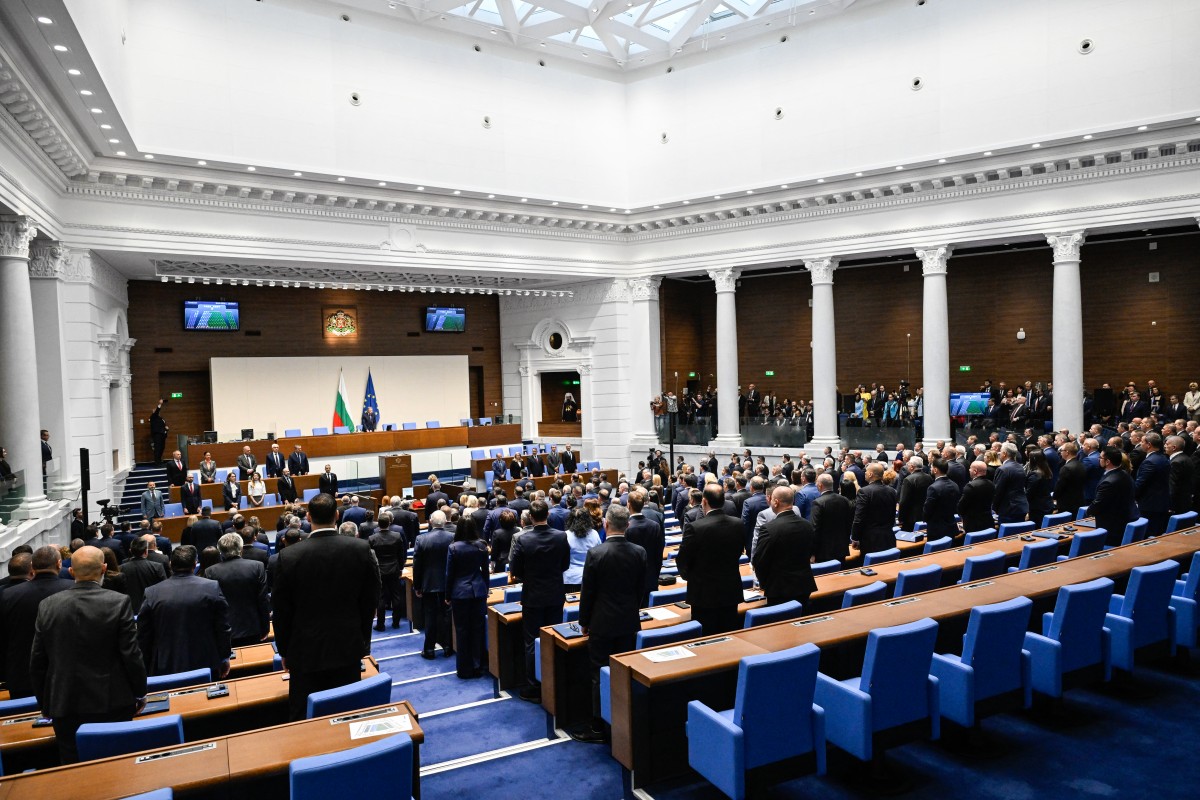
Bulgaria’s newly elected parliament opened on Thursday, April 30th amid signs of deepening political fragmentation, as the opposition split into two separate parliamentary groups—weakening its ability to challenge the dominant ruling force.
The reformist alliance between We Continue the Change (WCC) and Democratic Bulgaria (DB), which had campaigned together in the April 19th snap elections, has now formally divided. WCC will hold 16 seats, while DB will control 21 in the 240-member legislature.
Before the breakup, DB had pushed for a full merger of the two political forces, arguing that a unified opposition was necessary to counter the dominance of Progressive Bulgaria. However, WCC leadership resisted the proposal, citing ideological differences and organisational independence.
Asserting that the split was now “in the past,” WCC leader Assen Vassilev said the division reflected differing political identities, stating that
people more deeply into the right and won’t vote in sync with us because they find our politics too on the left…now every party can develop its own identity.
However, WCC MEP Nikola Minchev criticised the decision as “unserious,” warning that opposition unity was essential to prevent “Progressive Bulgaria from taking control of all the power.”
Despite the split, both parties confirmed they would cooperate on selecting a joint candidate for this year’s presidential election and may coordinate on justice reform legislation.
In the April 19th elections Progressive Bulgaria—led by former president Rumen Radev—emerged as the clear winner with 44.6% of the vote, securing a parliamentary majority and strengthening its position as the dominant political force.