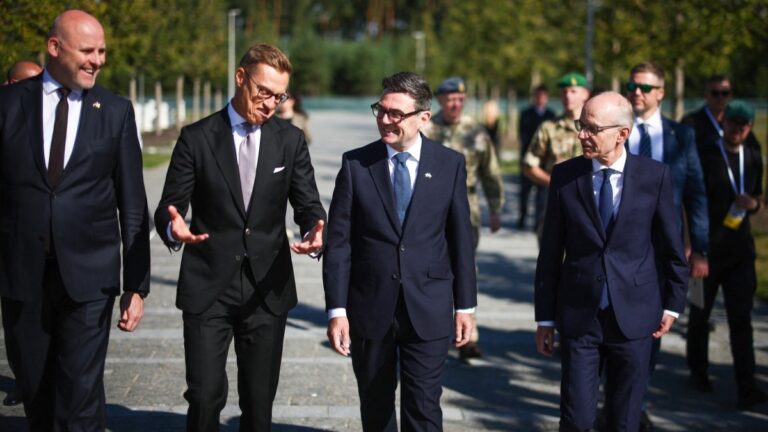
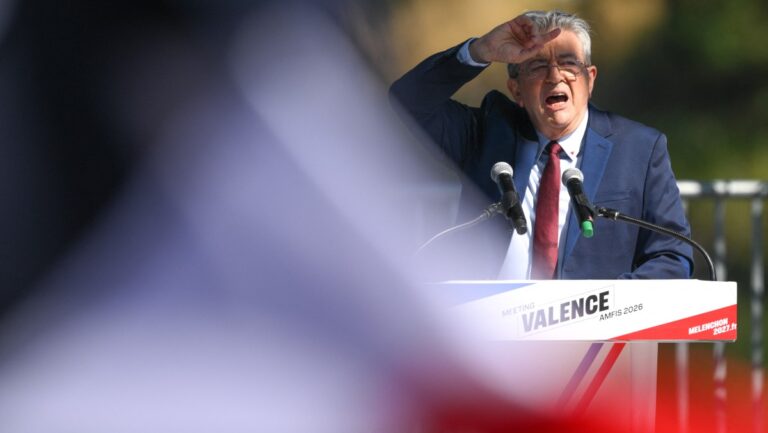
Jean-Luc Mélenchon is gaining ground as France’s 2027 presidential race takes shape, exploiting a divided Left and sluggish centrist campaigns. Still deeply unpopular, the chameleon-like Insoumis leader may yet prove far more dangerous than his current ceiling suggests.
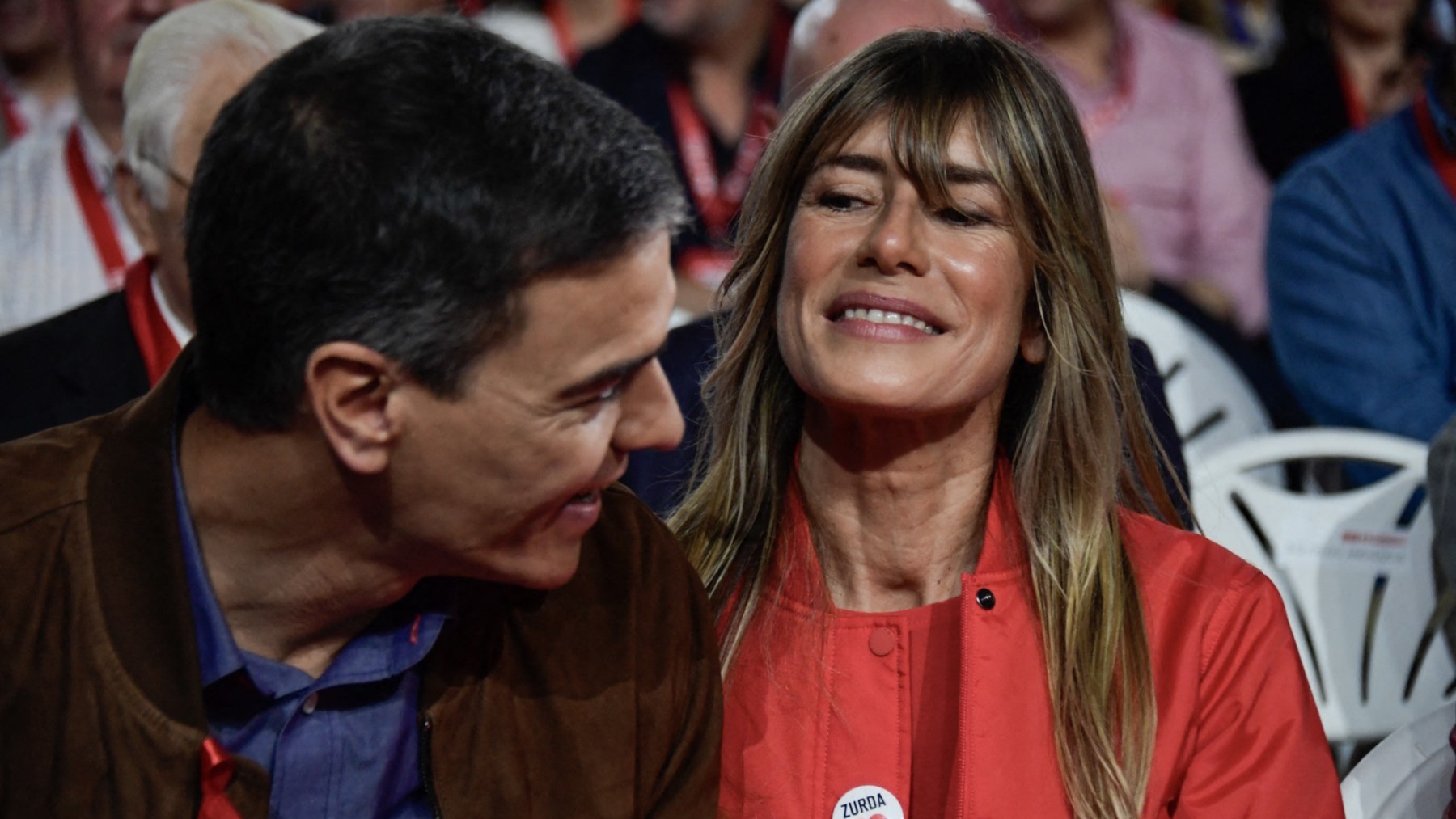
Spain’s prime minister Pedro Sánchez (L) sits with his wife Begoña Gómez as they attend the 41st congress of the Spanish Socialist Workers Party (PSOE) in Seville, on December 1, 2024.
CRISTINA QUICLER / AFP
The legal pressure surrounding Begoña Gómez, the wife of Spanish Prime Minister Pedro Sánchez, has intensified. Lawyers representing the private accusations in the investigation led by Madrid judge Juan Carlos Peinado are seeking a total sentence of 24 years in prison for Gómez on four charges: embezzlement of public funds, influence peddling, business corruption and misappropriation.
The request, filed by the activist group Hazte Oír on behalf of the unified private accusations, also asks the court to confiscate Gómez’s passport as a precautionary measure because of what it describes as a potential “flight risk” following her recent official trip to China. María Cristina Álvarez, a former aide working in the prime minister’s office and one of Gómez’s closest collaborators, faces a demand for 22 and a half years in prison. Businessman Juan Carlos Barrabés, who also appears in the case, faces six years.
While no trial has yet been formally opened, the filing marks a political turning point.
Until now, Sánchez had attempted to frame the different corruption scandals surrounding his government as separate cases affecting the Socialist Party, former ministers or lower-ranking officials. The investigation into his wife changes that equation. For the first time, the allegations are aimed directly at the president’s closest personal circle.
The case comes at a particularly difficult moment for Sánchez. Over the past year, his government has already been weakened by several corruption investigations involving members of the Socialist Party and figures close to the administration, including the so-called Koldo case, which centres on alleged commissions linked to public contracts during and after the pandemic.
According to the prosecutors’ filing, Gómez’s professional career changed dramatically after Sánchez became prime minister in June 2018.
Before then, they argue, she had worked mainly in the private sector, in fundraising, consulting and marketing. The accusation claims that, shortly after Sánchez entered office, Gómez requested leave from her previous employer in order to gain access to “circles of power and influence” that could help her professional advancement.
The filing then describes a rapid expansion of Gómez’s institutional and professional network. In 2018 she was appointed director of the IE Africa Center, and later developed ties with the United Nations World Tourism Organization and with Wakalua, an innovation platform linked to Globalia and businessman Juan Carlos Barrabés. At the same time, she remained active at Madrid’s Complutense University and also promoted the creation of a special university chair.
This is one of the central elements of the case. The private accusations argue that Gómez obtained academic and institutional positions without holding a university degree and without going through the competitive selection procedures normally required in Spain’s public university system. They argue that her access to these positions was made possible not by professional merit, but by her status as the prime minister’s wife.
Sánchez has so far responded with silence. The prime minister’s office insists that he will not comment on ongoing judicial proceedings and argues that his family and political circle are the target of a politically motivated campaign.
But the political cost is growing. Sánchez built much of his public image on the idea that his Socialist government represented a moral break with the corruption scandals that damaged previous Spanish administrations. He repeatedly presented himself as the leader of democratic “regeneration” in Spain.
That argument is now increasingly difficult to sustain. Spain’s coalition government still survives thanks to a fragile parliamentary majority and the support of regional and left-wing allies who, for now, are unwilling to force early elections. But each new judicial step increases the pressure.