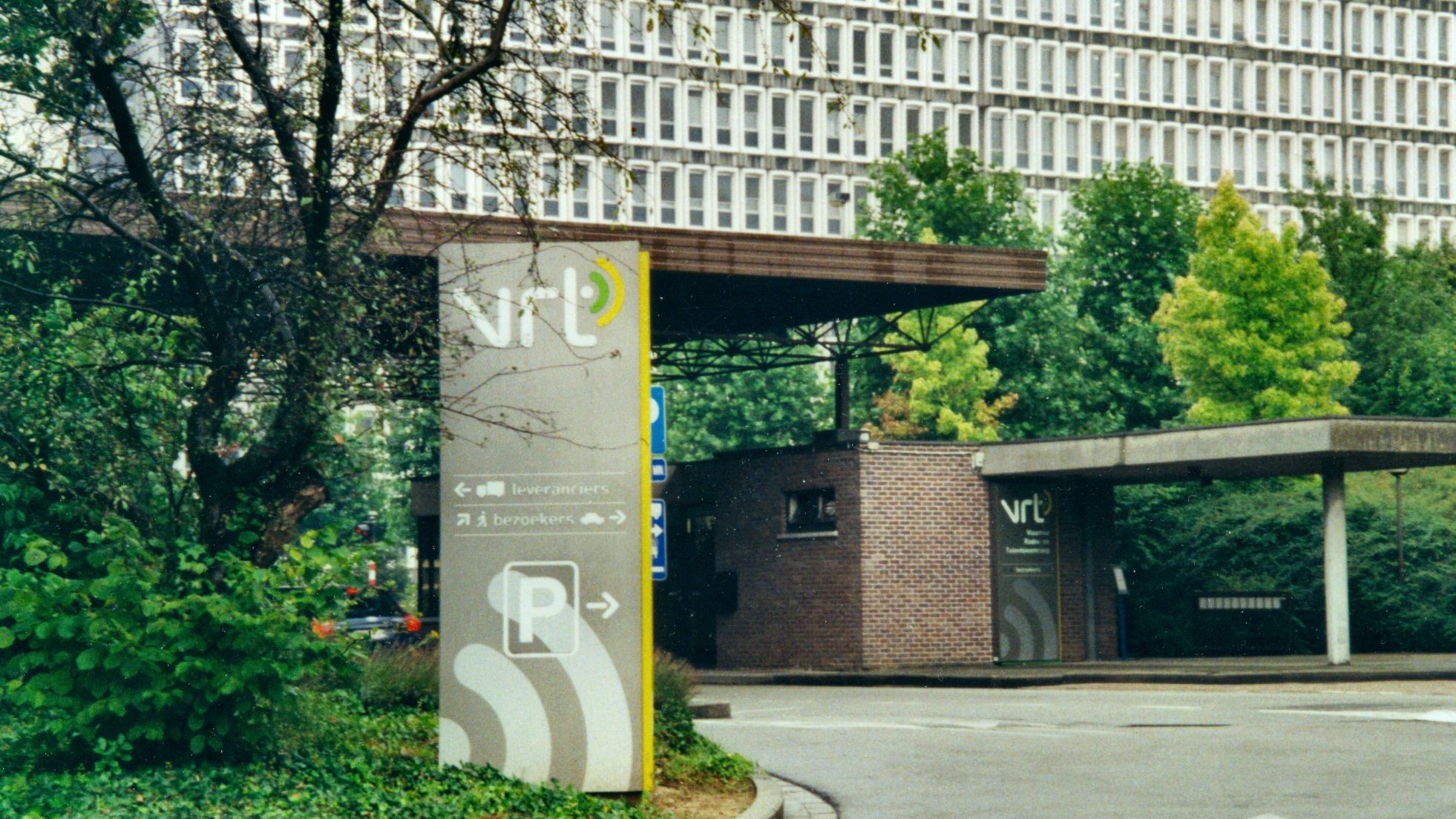
The Brussels headquarters of VRT, the Flemish-language public broadcaster in Belgium
Public Domain, https://commons.wikimedia.org/w/index.php?curid=531161
Belgium’s public broadcaster VRT is facing mounting pressure after accusations that it deliberately withheld sensitive data from a survey on attitudes towards women and LGBT people in Flanders.
The row erupted following a heated exchange on the VRT current affairs programme De Afspraak, where philosopher Maarten Boudry accused the broadcaster of suppressing findings linked to respondents’ migrant backgrounds.
The controversy centres on ‘De Foto van Vlaanderen,’ a large-scale survey commissioned by VRT, in which more than 2,000 Flemish residents aged 12 and above were questioned about social attitudes.
The most alarming finding showed that 17% of respondents aged between 12 and 17 agreed with the statement that men are allowed to hit women. Among those aged 18–24 and 25–44, the figure stood at 16%.
VRT argued that this is mainly down to the “manosphere,” an online network of influencers who promote “toxic masculinity” as an ideal.
However, during the broadcast, Boudry argued that cultural and religious factors should not be ignored in explaining such results. Referring to Islam, he said there exists “a holy book in which it literally states that a man may hit a woman” before producing what he claimed was an internal VRT document not intended for public circulation.
According to Boudry, the note revealed that VRT researchers had gathered data relating to respondents’ origins but instructed journalists not to include the figures in reporting because the sample was deemed statistically unreliable.
“This is how you conceal crucial information and make an honest public debate impossible,” right-wing Vlaams Belang politician Kristof Slagmulder wrote on X, calling the affair “an absolute disgrace.”
Dit moet je gewoon zien: een absolute schande! 😡 👇
— Kristof Slagmulder (@kslagmulder) May 20, 2026
Binnen de VRT is gevraagd om in het debat over haat tegenover vrouwen en de holebigemeenschap bewust geen cijfers te vermelden over daders met een buitenlandse herkomst. 🤯
Zo verzwijg je cruciale informatie en maak je een… pic.twitter.com/B4S4C2aIsj
The controversy has reignited concerns in Belgium over impartiality and transparency at the taxpayer-funded broadcaster. Vlaams Belang accused the channel of breaching its duty of impartiality.
The party’s parliamentary leader in the Flemish parliament, Chris Janssens, said that if VRT had indeed instructed journalists to suppress findings concerning respondents of foreign origin, it would amount to “a violation of the legal obligations of the public broadcaster.”
Vlaams Belang representatives on VRT’s board have demanded an extraordinary meeting to investigate whether the broadcaster manipulated information and failed in its obligation to remain politically neutral.
VRT strongly denied any attempt to conceal politically inconvenient findings. In a statement, the broadcaster insisted that its research department only publishes statistically reliable conclusions and that the subgroup of respondents with foreign backgrounds was too small and diverse to support meaningful analysis.
Nevertheless, Flemish Media Minister Cieltje Van Achter called on VRT to publish the full study in the interest of “maximum transparency.”
The case is not an isolated incident. It comes in the context of what right-wing critics have long argued: that public broadcasters in Western Europe—and in particular in France, Germany, and the United Kingdom—are left-leaning and have a tendency to omit negative stories about the effects of mass migration.