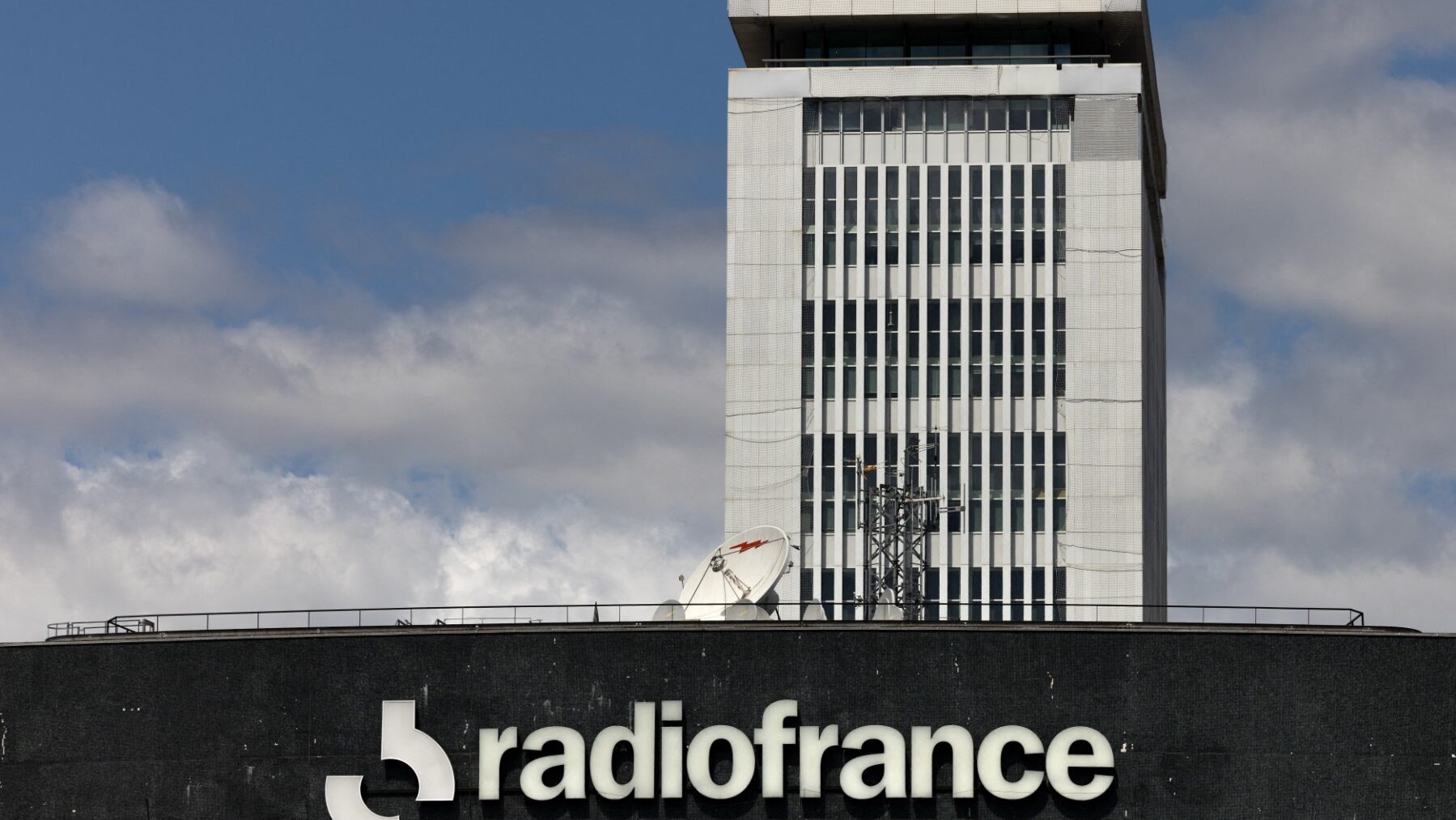
View of the Radio France headquarters in Paris on July 8, 2025.
JOEL SAGET / AFP
The French independent media regulator, ARCOM, has just criticised two of the main public radio stations, France Inter and France Info, for their allocation of airtime to the Rassemblement National: up to 70% of the airtime normally allocated to France’s main opposition party was granted between midnight and 6am.
This is not the first time that the Radio France group has been criticised for its ideological bias. Investigations are multiplying, the indicators are becoming increasingly precise, but the situation is not changing—indeed, it is getting worse.
With the presidential campaign fast approaching and given that all the tools exist to avoid this sort of situation, this negligence—not to say this misconduct—raises serious questions. The representation of the various political forces is measured every quarter: this system, backed by numbers, has previously refuted the accusations of certain media outlets which claimed that the conservative broadcaster CNews did not give the Left a sufficient platform.
This time, the latest findings conclude that the airtime quota for the RN is indeed being met, but … at a time when the French are sleeping and not listening to the radio. During the day, the visibility of France’s leading party plummets to around 9%. For the first time, ARCOM has intervened, arguing that overall volume alone is insufficient: the broadcast schedule is a key criterion to be taken into account. A few minutes at 8 a.m. are not worth the same as a few minutes at 3 a.m.
Radio France’s management cites “good faith” and a “technical error.” It is not a case of “intentional misconduct,” and the malfunction is “being resolved.” Radio France acknowledges the imbalance and cites “a fault in the internal accounting tool that did not allow for the distinction” between time slots to be seen, mixing up nights and days.
It is not deliberate, Radio France insists, but, surprisingly, it is only the RN that suffers from this tool’s failure. The justification, which looks good on paper, seems hard to accept. “Radio France has been broadcasting the RN at night for years. They are in denial and have never wanted to change this situation,” reports a public broadcasting executive interviewed by Le Point. Perseverare diabolicum. This suspicion of deliberate obstinacy is more than credible: ARCOM notes in its decision that it had already alerted Radio France by letter in October 2025 and again in February 2026, “firmly” asking the broadcaster to change its approach.
This warning comes just as a new opinion poll, conducted by the polling firm Cluster17 in partnership with Le Point, appears in the press. For the first time in a poll of this kind, the top five most popular figures among the French public are entirely made up of figures from the RN, its allies, and Reconquête. At the top of the list is RN president Jordan Bardella, with 38% favourable opinions, closely followed by Marine Le Pen at 37%. Next come Eric Ciotti, president of the Union of the Right for the Republic (allied with the RN), and Identité-Libertés MEP Marion Maréchal, both at 26%. Rounding out the top five is Sarah Knafo, MEP for Reconquête, with 25%. The first figure from the Left comes in sixth place.
Comparing these results with the ARCOM revelations leads to two conclusions. First, the disconnect between the public media and the actual state of French public opinion shows no sign of improving. Despite the mounting scandals that clearly highlight their progressive bias the trend towards a growing divide between a journalistic elite pushing its left-wing agenda and the public is only intensifying. Furthermore, despite the outright censorship employed by these media outlets in an attempt to stifle the voice of the national Right, the latter continues its inexorable rise.