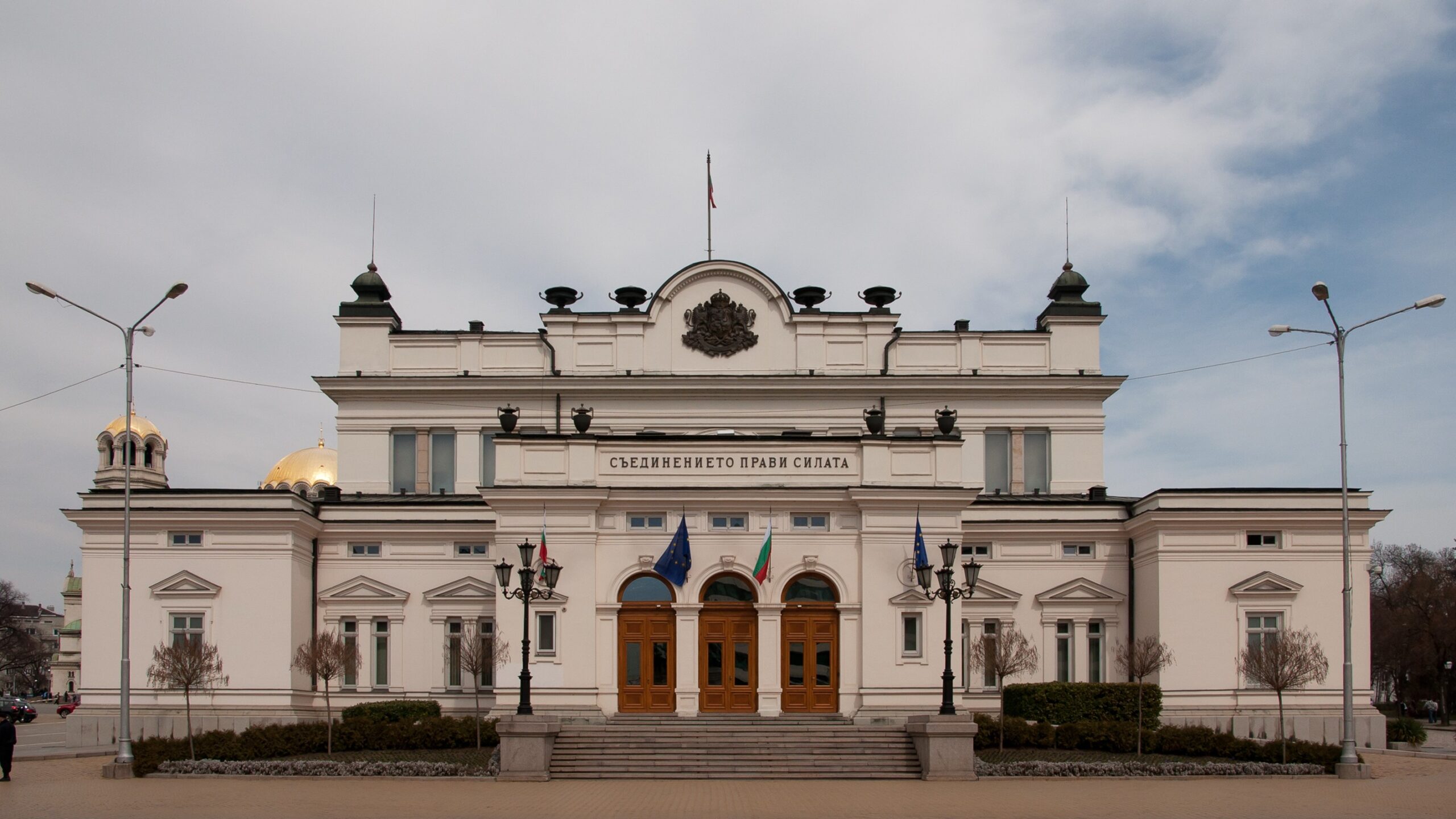
Bulgarians will go to the polls on Sunday, April 19th, in their eighth parliamentary election in five years, underscoring a prolonged period of political instability that has eroded public trust.
The vote is widely viewed as a defining moment for the Balkan nation of 6.5 million, where successive governments have failed to last more than a year since 2021.
The latest snap election follows the resignation of a pro-EU, centre-right-led administration late last year, after mass protests against corruption and rising economic pressures.
At the forefront of the race is 62-year-old former president and former air force general Rumen Radev, who stepped down in January after nine years in the job to lead the newly formed Progressive Bulgaria coalition.
Polls indicate his Eurosceptic party could secure around 33–34% of the vote, placing him well ahead of rivals, including former prime minister Boyko Borisov’s centre-right GERB party, which trails at roughly 18–20%.
Bulgaria, Alpha Research poll:
— Europe Elects (@EuropeElects) April 17, 2026
PB-*: 34% (+3)
GERB-SDS-EPP: 20% (-1)
PP-DB-RE|EPP: 12% (+1)
DPS-NN-NI: 9% (-1)
V-ESN: 6% (-1)
BSPOL-S&D: 4%
Siyanie-G/EFA: 3%
Velichie-*: 3%
MECh-*: 3%
ITN-ECR: 2% (+1)
APS-RE: 1%
SB→ECR: 1% (-1)
+/- vs. 19-26 March 2026
Fieldwork: 13-15 April… pic.twitter.com/CVPzKglXGE
Radev, one of the most popular politicians in Bulgaria, has positioned himself as an anti-establishment figure promising to fight corruption, dismantle what he calls an “oligarchic governance model,” and restore stability.
His message appears to resonate with voters weary of repeated elections and political deadlock.
Turnout has declined steadily in recent years, reflecting widespread frustration with what many perceive as a “revolving-door” system of governance.
“People want a real change,” political analyst Viktor Kostov tells europeanconservative.com. “He is a recognisable, old face but with a new party. This combination obviously helps him.”
The former president has been likened to outgoing Hungarian Prime Minister Viktor Orbán, with his criticism of EU overreach and the introduction of the euro, his opposition to sending military aid to Ukraine, his desire to have a pragmatic relationship with Russia, as well as his rejection of pro-LGBT policies.
Bulgaria joined the euro zone at the beginning of this year, but public frustration over rising prices has fuelled scepticism towards Brussels.
“The coalition-makers introduced the euro in Bulgaria without asking you. And now, when you pay your bills, always remember which politicians promised you that you would be in the ‘club of the rich’,” Radev said earlier this week, responding to public frustration at rising bills.
Despite his strong polling position, Radev is unlikely to secure an outright majority. Coalition-building is expected to be complex, particularly as he has ruled out cooperation with both GERB and the pro-EU, neoliberal We Continue the Change/Democratic Bulgaria (PP-DB) alliance.
“The biggest chance is for a stable coalition not to happen,” Kostov warned. “Radev will not be able to form a government on his own.”
Radev’s potential coalition partners—the Socialist Party, the conservative We Are Such a People (ITN) party, and the national-conservative, pro-Russian Revival—may not gain enough seats to form a stable government, or not make it into parliament at all.
An alternative pro-European coalition, including GERB and PP-DB, remains politically sensitive due to the animosity between the two parties.