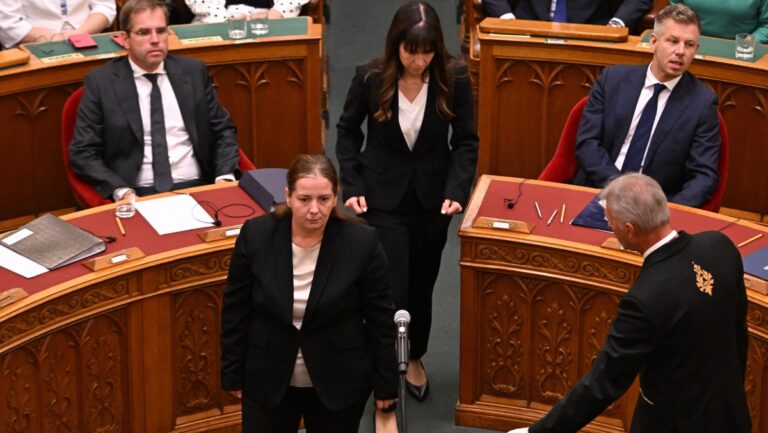
The French National Assembly has dropped the most controversial part of a child protection bill that would have lifted the seal of confession in cases of violence against minors.
The provision, which sought to challenge sacramental secrecy, was the focal point of heated debates over the past few days in the Assembly during examination of the legislation aimed at protecting children and combating violence in schools. The bill was finally adopted on June 1 without this measure.
This draft law stems from the work of the parliamentary commission of inquiry set up following the scandal at the Catholic school Notre-Dame de Bétharram, in southwestern France, where abusive acts of rare violence were committed over several decades. The rapporteurs, Renaissance MP Violette Spillebout and LFI MP Paul Vannier, had set out to draw institutional conclusions from the revelations concerning the physical, psychological, and sexual abuse committed over decades in several schools. The draft bill aimed, in particular, to strengthen controls, improve compensation for victims, extend certain limitation periods and reinforce reporting obligations.
It is in this context that an old issue has resurfaced: that of the seal of confession. The most contested clause explicitly provided that ministers of religion could no longer invoke the seal of confession to avoid the obligation to report sexual abuse committed against minors.
To understand the intensity of the reactions, it is important to remember that the seal of confession constitutes a special case among the various professional secrets recognised by French law. Medical confidentiality, solicitor-client privilege, and journalistic confidentiality already have certain legal exceptions. Catholic sacramental secrecy, however, is unique: it is not merely a professional rule but a constituent element of a sacrament. Canon law regards it as absolutely inviolable. A priest who reveals the content of a confession faces excommunication latae sententiae, that is to say, immediately. For the Catholic Church, this is therefore not merely a privilege granted to a profession but a fundamental theological requirement. In confession, the priest acts in persona Christi, in the person of Christ—independently of the work of human justice.
The French Bishops’ Conference firmly opposed the proposed provision. Catholic leaders emphasised that they support measures designed to better protect minors but that they regard this challenge to sacramental secrecy as an infringement of freedom of worship and freedom of conscience. They also argued that the confessional could sometimes be the first place where victims or perpetrators of violence speak out and that the removal of confidentiality could, paradoxically, reduce the freedom to speak out.
Debates in the National Assembly quickly took a heated turn. Beyond legal considerations, the exchanges revealed a deeper ideological clash over the place of Catholicism in French society. Several right-wing MPs and members of the Rassemblement National denounced a measure they deemed practically useless and symbolically directed against the Catholic Church. The bill’s proponents, on the other hand, believed that no exceptions should remain when it comes to protecting child victims of sexual abuse.
Certain public statements further heightened tensions. The most widely commented on was that of Louis Sarkozy, who declared on RMC: “The secrecy of confession has become the secrecy of impunity” before adding: “If that means breaking a 1,000-year-old sacrament, then we will break it.” The son of the former president is known for his blunt statements and controversial stances, which have ruffled feathers among both right-wing and left-wing voters alike. His much-quoted remark was perceived by many Catholics as a sign of a lack of understanding of the very meaning of the sacrament of reconciliation and as a deliberate attempt to enter into conflict with the Church.
Following the debates, the provision was ultimately withdrawn. The text was adopted unanimously but without the lifting of the seal of confession—a sign that even among the supporters of the original bill, there was no consensus on this point.
This episode appears to reveal a recurring trend in French public debate. The questioning of the seal of confession has resurfaced regularly over the past several years. It was already included in certain recommendations made following the 2021 report by the CIASE commission of inquiry into abuse within the Church and had resurfaced in parliamentary proceedings in 2025. On each occasion, the issue resurfaces as a political perennial, far beyond its concrete impact on the fight against sexual violence.
Many observers see this as an expression of particular mistrust towards the Catholic Church. Whilst the French education system is also implicated in comparable scandals, its methods and staff are never subject to such direct scrutiny. Catholicism, on the other hand, is perceived as a convenient target, justifying all manner of attacks.
Whilst the Bétharram affair remains a scandal of exceptional gravity, due to the scale and duration of the abuse committed there, as well as the suspicious involvement of former Prime Minister François Bayrou in covering up the facts, the political and media focus on Catholic schools contrasts with the still limited attention paid to other recent cases. The scandal in the Parisian after-school sector, involving dozens of youth workers implicated in the rape and abuse of very young children, has led parliamentarians to extend some of the new monitoring obligations to all facilities catering for minors; yet these cases remain relatively absent from public debate compared to the Bétharram case.
It is to be welcomed that, following days of intense debate, the contested measure against the secrecy of the confessional was ultimately rejected. A majority of MPs ultimately concluded that the fight against violence did not justify calling into question a centuries-old principle that is fundamental to the identity of the Catholic Church: God’s justice is not meant to be subject to human justice.