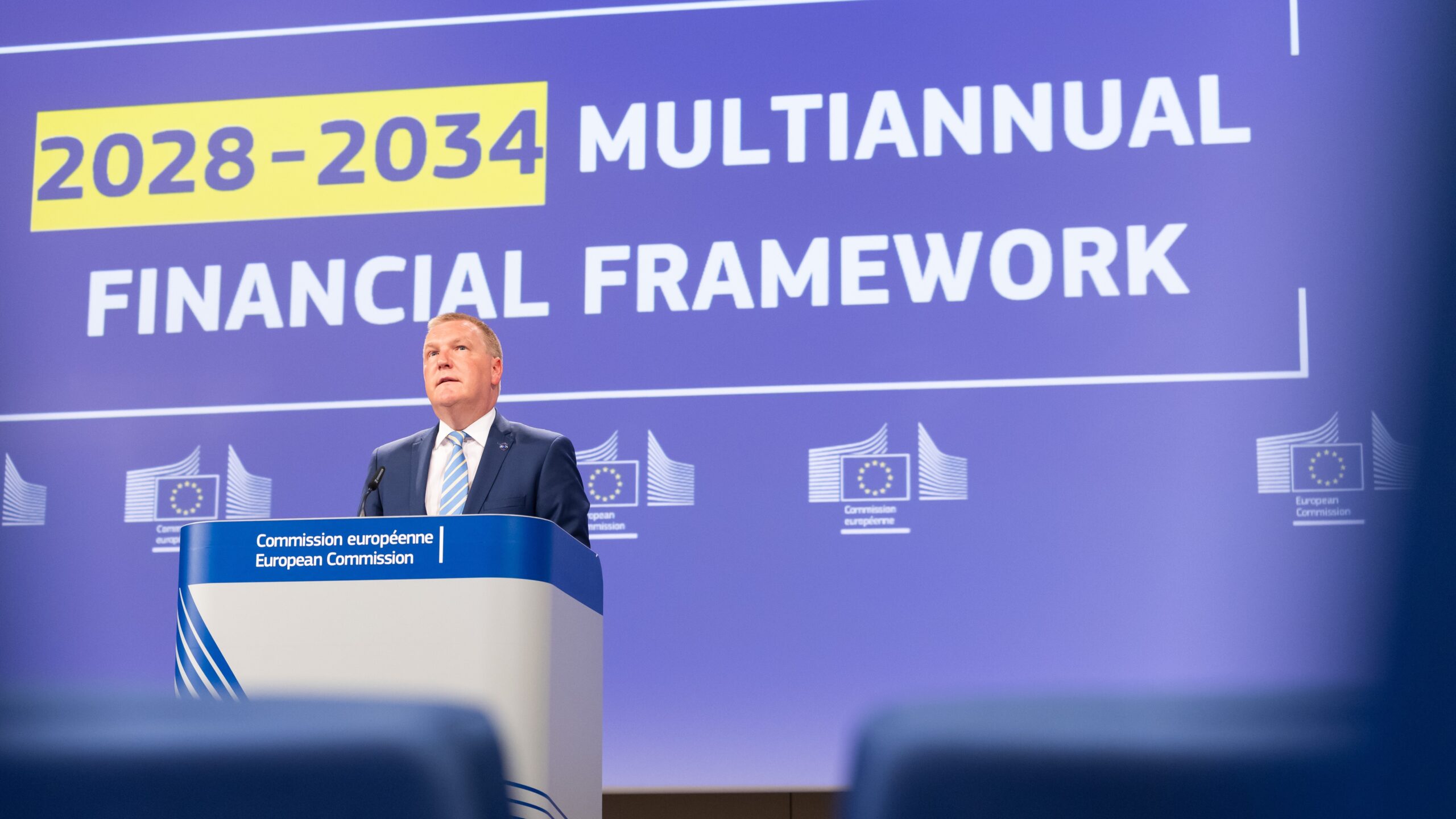
The EU budget talks about the bloc’s next Multiannual Financial Framework (MFF) for 2028-2034 might have hit a much bigger roadblock than Brussels realized as it pushes for a record budget of over €2 trillion, needed for rearmament and Ukraine support.
Although the EU Commission really wants to seal a preliminary deal on the next seven-year budget before the end of this year—before national elections, such as in France next April, could end all dreams of significantly expanding its financial power—the current impasse in the Council starts to look almost impossible to break now.
According to an unnamed diplomat talking to Politico, several net contributors (wealthy countries that pay more into the budget than what they receive) are ready to just walk away from the negotiations and risk a “no-deal scenario” going into 2028 unless the others agree to significantly reduce the size of the draft budget.
As we explained before, the so-called “frugal countries” (Germany, the Netherlands, and the Nordics, primarily) are mostly on board with the Commission’s plan to beef up joint defense spending and allocate even more money towards Ukraine’s war effort, but refuse to nearly double the current MFF just for that.
Instead, they are eyeing a middle-ground of around €1.6 trillion, keeping rearmament funds in exchange for slashing some of the cohesion and agricultural funds. Something that poorer, south-eastern member states, net beneficiaries of the budget, would never agree to.
However, the senior official who had been granted anonymity to speak freely noted that even net beneficiaries would end up saving money if there was no deal before the end of the current budgetary period.
“Everybody would lose in a no-deal scenario,” the diplomat said. “But one of the oddities of these negotiations, that the net recipients haven’t realized yet, is that for the net contributors, a world without an MFF is by far the least costly option.”
“In a no-agreement scenario, net contributors would pay between €500 and €600 billion less than compared to the Commission’s proposal.”
This is possible due to the simple reason that, if no agreement is reached before the deadline, the maximum ceiling for the final year of the previous MFF carries over to the next period, to 2028 and beyond. Meaning a total of about 1.4 trillion over seven years—600 billion less than the draft currently on the table.
Now, although this would theoretically be cheaper for net beneficiaries as well, cohesion funds could still end up reduced in the long run. Certain items, such as administrative costs, humanitarian aid, or security and foreign policy funds, are legally protected, but cohesion isn’t and could easily expire while other costs grow year on year. Extending the lifetime of current cohesion funds needs a qualified majority backing in the Council, which wealthier member states can easily block.
Of course, playing the long game might still lead to nowhere. As we said earlier, Brussels’ biggest concern right now is the French presidential election next April. If National Rally’s Jordan Bardella, the current poll-favorite, ends up claiming Macron’s seat, he has already promised to cut France’s contributions to the common budget in half. Meaning the entire discussion will have to start over from scratch, and the Commission can say goodbye to its centralizing geopolitical ambitions.