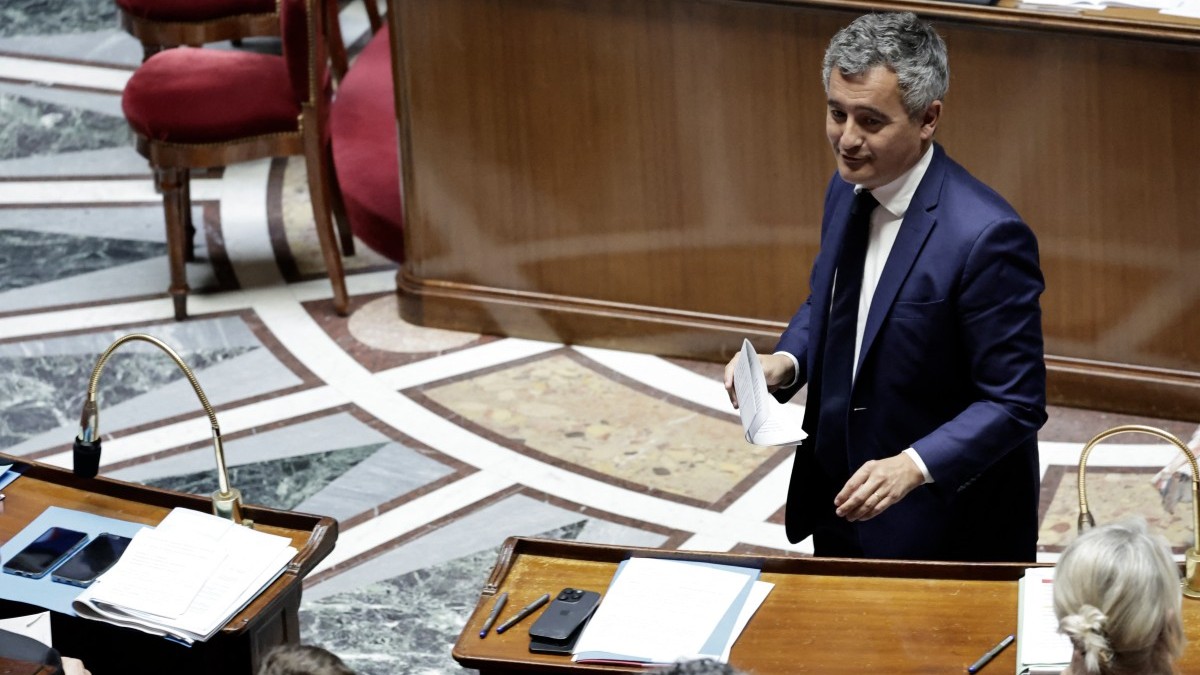
France’s Justice Minister Gérald Darmanin arrives to speak during the examination of the draft bill on the protection of minors at The National Assembly, in Paris on July 15, 2026.
STEPHANE DE SAKUTIN / AFP
The Lyhanna case–the rape and murder of an eleven-year-old girl by a man against whom several complaints of rape had been lodged prior to the tragedy, none of which had ever been investigated–sent shockwaves through France in early June. At the time, Justice Minister Gérald Darmanin had promised a major review of ongoing cases of sexual assault involving minors. The time has now come to take stock.
The justice minister had given magistrates and investigators until July 14th to review “all complaints involving children”, thereby providing “a comprehensive overview”. Prosecutors’ offices have generally met the deadlines and worked tirelessly to comb through all the complaints already received.
On Wednesday, July 15th, Darmanin was able to officially announce to the National Assembly the completion of the census of 85,047 complaints of sexual violence against minors across the whole of France—well above the 70,000 initially mentioned in early June.
69,626 cases were already known and have been re-evaluated—amid fears that, amongst them, there might be other potential ‘Lyhanna’ cases, that is to say, identified but unprosecuted sex offenders who could endanger the lives of other children. A further 15,000 new complaints were added to this total. 1,350 investigations were launched. 675 people were imprisoned.
Amidst this sea of tragedies, 970 priority cases were identified: cases involving exclusively child victims, identified perpetrators who had already been convicted, multiple victims, or situations where the victim and their abuser remained in close proximity…
The figures are staggering. The operation has revealed glaring shortcomings in the handling of these cases by both the police and the judiciary. The number of cases recorded in the judicial software does not reflect the total number of complaints filed over the last three years concerning sexual violence against minors. A number of these cases are still with police stations and gendarmerie units, as no court decision has yet been made on them. The public prosecutors’ offices’ review has highlighted the backlog within the public authorities. In Nanterre, west of Paris, for example, the review has increased the number of complaints requiring close scrutiny from nearly 400 identified by the software to over 2,000 awaiting processing.
The public prosecutors’ offices are relieved that the priority cases requiring urgent attention are, after all, not as ‘numerous’ as that–around ten per department, which nevertheless probably represents just as many shattered little lives.
Both public prosecutors’ offices and government departments are pleased that this massive operation in transparency and communication, followed by a colossal trawl through police archives, has been successfully completed. The crackdown has led to the identification of new offenders, with 675 people being imprisoned within a short timeframe. So much the better for the victims. But the system cannot function perpetually in overdrive under media pressure.
What steps should be taken for the future? The immediate conclusions remain unclear. The mobilisation of police and judicial resources has been at the expense of other cases. In the Gard department, the public prosecutor notes that, as officers worked the sex abuse cases, the local police was able to make fewer arrests at drug-dealing hotspots. Drug trafficking has clearly benefited from this diversion of attention. Another side effect is either to be welcomed—or lamented: the Lyhanna case has encouraged people to speak out and led to a rise in the number of complaints filed, further clogging up the system. Concerns now centre on the operation’s impact on the entire criminal justice system. “It’s all very well to investigate the facts, but it’s even better to bring them to trial,” says the Bordeaux public prosecutor with concern.
The scale of the phenomenon suggests that this is not merely a crisis of police and judicial backlogs, but rather a crisis of society and of childhood betrayed.