Italy’s conservative prime minister and Denmark’s centre-left leader said tighter returns policies alone are “not enough”, arguing that respect for European laws must go hand in hand with respect for European values.
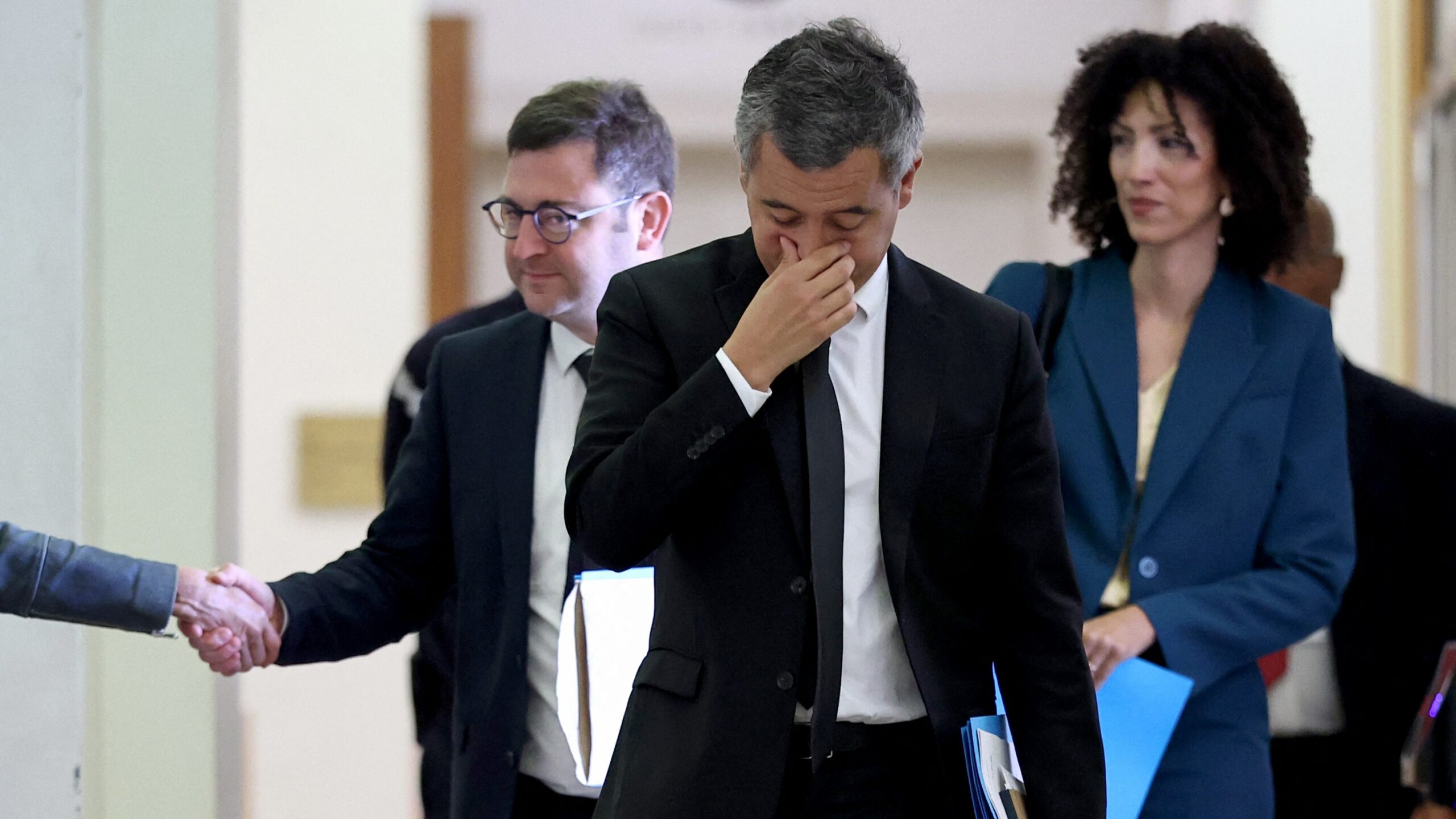
France’s Justice Minister Gérald Darmanin (C) arrives to attend a hearing regarding the Lyhanna case before the Senate’s Law Committee in Paris on June 9, 2026.
SIMON WOHLFAHRT / AFP
The death of 11-year-old Lyhanna, in circumstances that starkly highlight the failure of the French police and judicial system. is putting pressure on the minister for justice. The minister, after offering his apologies, has announced his intention to review tens of thousands of complaints of rape and sexual abuse of children—a public relations exercise that is more irritating than convincing.
A classic reaction from an executive branch caught red-handed in a case of culpable incompetence, Justice Minister Gérald Darmanin is panicking as revelations mount regarding the chain of failures within the judicial system that allowed Jérôme Barella to carry out his crime, abducting, raping and killing little Lyhanna in the Gers. In an attempt to extricate himself from this predicament, having ruled out any possibility of his resignation—which the left-wing opposition had demanded—the minister has opted for a communication blitz.
In an interview, he announced that 70,000 complaints of sexual violence involving children would be re-examined by the public prosecutors in every French department. “Not a single senior magistrate will go on holiday until I have met with every single public prosecutor,” the minister declared in a thunderous statement. The latter have “until 14 July” to review “all complaints involving children.” Among them is an initial complaint against Barella, which was dismissed in 2024.
Discontent is mounting: on social media, parallel investigations are flourishing and bringing a host of revelations that are scandalising public opinion, such as this document detailing the career progression of the Auch public prosecutor, who is guilty of failing to bring charges against Barella after a complaint was filed regarding the rape of a child of Lyhanna’s age. Her promotion was signed the day after the administrative inquiry into the little girl’s death was opened—even though the proceedings had begun long before, the coincidence of the facts is deeply disturbing.
Across France, rallies are being organised outside courthouses in protest against the failings of the judicial system—a view shared by many professionals.
According to Antoine Brillatz, president of the Bar of Tours, interviewed on local media ICI, “these individual failings are made possible by a system that is failing.” He points out that in France the ratio is three prosecutors per 100,000 inhabitants, compared to a European average of twelve, which leads to “an unmanageable backlog of cases on desks.”
For its part, the High Council of the Judiciary—notoriously known for the strongly left-wing leanings of its members and for its corporatism—is attempting to defend itself and condemns the disgrace that is currently, in their view unjustly, befalling magistrates, whilst calling for greater resources.
The ministry’s announcement regarding the handling of 70,000 complaints—excessive and unrealistic—is explained by the scale of the stakes. Unresolved court cases are like ticking time bombs in the public eye, which could explode at the ballot box in the next elections, but that is not all: given the proliferation of these public scandals, Darmanin cites an “enormous” risk that parents whose children have been victims of sexual violence, feeling that the justice system has failed to listen to them, might decide to “take justice into their own hands.”
In the coming days, the minister intends to summon all chief prosecutors individually to review potential shortcomings observed within their administrative jurisdictions.