Maria Shahbaz
Alliance Defending Freedom International
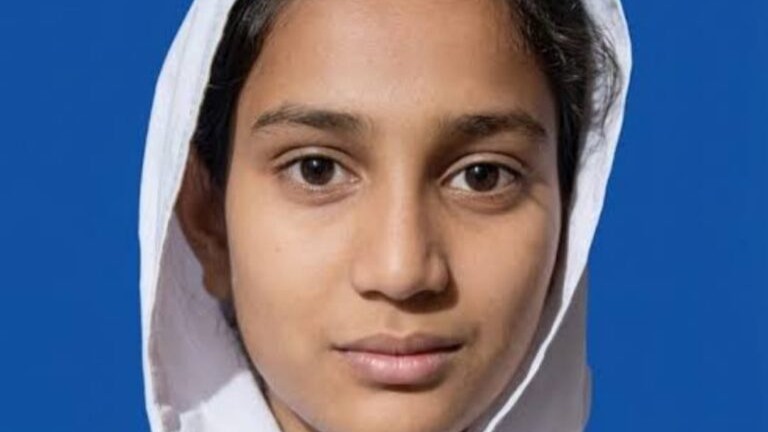
The European Parliament adopted a resolution last week condemning the abduction, forced conversion and child marriage of Maria Shahbaz, a Christian girl from Lahore whose case has become a symbol of the risks faced by girls from Pakistan’s religious minorities.
Maria was 13 when she was abducted in July 2025 by Shehryar Ahmad, a 30-year-old man who allegedly forced her to convert to Islam and marry him. Her family challenged the marriage, presenting official documents indicating that she was a minor and arguing that the marriage papers had been falsified. Pakistan’s Federal Constitutional Court nevertheless upheld the marriage and returned her to Ahmad.
The ruling triggered protests by Christian organisations, women’s groups and human rights activists. Demonstrators gathered outside the Karachi Press Club, while Church leaders and civil society representatives organised protests and public interventions in Lahore and southern Punjab. Participants carried signs demanding justice for Maria and an end to forced conversions and child marriage.
The case also mobilised the Pakistani Christian diaspora. In June, members of the community demonstrated in Groningen’s Grote Markt, carrying banners reading “Justice for Maria Shahbaz”, “Save Our Daughters” and “Protect Minority Girls in Pakistan”. Organisers called on the Dutch authorities and European institutions to raise the case with Islamabad and examine Pakistan’s compliance with the conditions attached to its European trade preferences.
Public pressure led Pakistan’s federal government to establish a 37-member consultative committee, including Catholic and Protestant bishops, to review the case and propose safeguards against forced conversions and marriages. Rights groups and Church representatives have welcomed the response cautiously, while stressing that its value will depend on whether its recommendations are implemented.
Against that background, Parliament called on the Pakistani authorities to guarantee Maria’s immediate protection, access to her family, legal representation and independent psychological support. It also demanded a “thorough, transparent and impartial review” of the case and asked that human rights organisations be allowed to monitor her situation.
The resolution extends beyond one individual case. It describes a persistent pattern of abduction, forced conversion and forced marriage affecting underage girls from Christian, Hindu and other religious minority communities.
Citing United Nations figures for 2025, Parliament noted that around 75% of women and girls subjected to forced conversion through marriage were Hindu and 25% were Christian. MEPs urged Pakistan to establish a national mechanism to receive complaints from families of abducted or forcibly converted girls, backed by safe shelters, legal aid, psychological counselling and reintegration programmes.
Alliance Defending Freedom International, which is supporting Maria’s legal case, welcomed the resolution. The organisation said she was awaiting a new hearing after the Federal Constitutional Court failed to verify her age.
“No child should be entrapped in a sham marriage, nor stripped of their basic rights or religious freedom,” ADF stated.
Tehmina Arora, ADF International’s director of advocacy for Asia, described Maria’s case as part of an alarming wider pattern in which underage girls are abducted, coerced into marriage and deprived of their personal and religious freedom.
The resolution also links minority protection to Pakistan’s participation in the EU’s GSP+ preferential trade scheme. The programme provides favourable access to the European market in exchange for implementing 27 international conventions covering human rights, labour standards, environmental protection and governance.
Concerns about Pakistan’s compliance had already been raised in January by ECR lawmaker Emmanouil Fragkos, who asked whether the Commission would review or suspend the country’s GSP+ status over wider rule-of-law concerns.
In its reply, the Commission confirmed that Pakistan remained under continuous monitoring. A GSP+ monitoring mission visited the country in late 2025, and its findings will inform the European assessment of Pakistan’s future status under the scheme.
The resolution is therefore more than a symbolic declaration. It combines protection for one child with institutional demands, judicial scrutiny and possible trade consequences. It also establishes a principle that should be applied consistently: the rights of minors and religious minorities cannot depend on political convenience, whether the abuse occurs in Pakistan or closer to home.