NICOLAS TUCAT / AFP
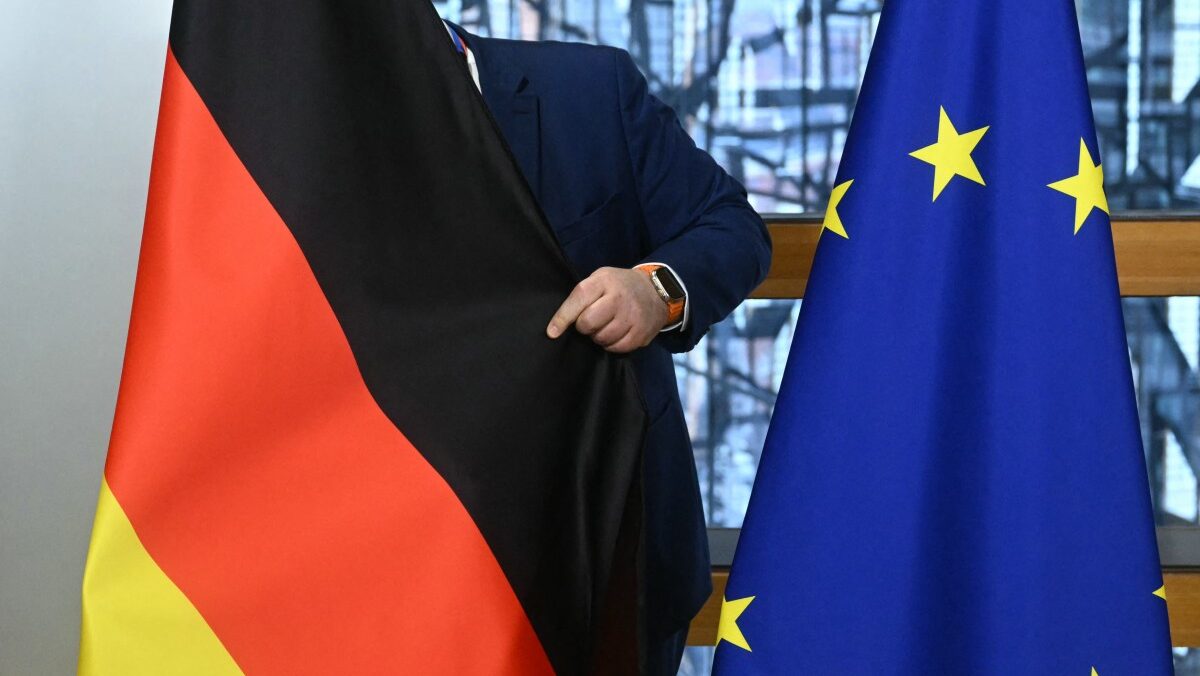
Germany has thrown a spanner into Brussels’ plans for a much bigger EU budget by demanding that it be cut by €400 billion.
Chancellor Friedrich Merz’s government says the European Commission’s proposed budget for 2028-2034—worth almost €2 trillion—is simply “unaffordable.” The money would fund Brussels’ priorities over the next seven years, including defence, competitiveness, industrial policy, border security, foreign affairs, agriculture and regional development.
Germany’s message is simple: the money has to come from somewhere. And as the EU’s biggest net contributor, Berlin has decided it is no longer willing to keep paying ever more.
According to an internal government document seen by Reuters, Germany says agreement on the budget is “not possible” in its current form. That is more than just a negotiating tactic. The EU’s long-term budget must be approved unanimously by all 27 member states, giving Germany an effective veto.
Even if Brussels accepted Germany’s demand for a €400 billion cut, the budget would still be around 27% larger than the current 2021-2027 spending plan. Germany’s annual contribution would still rise to more than €50 billion.
The real argument, then, is not whether the EU should spend more money. It is over how much more Brussels can demand before national governments have to explain the bill to their own taxpayers.
That is where Europe’s farmers enter the picture.
Over the past two years, farmers have mounted one of the most successful protest movements Brussels has faced. Tractors blocked roads and city centres across Europe. Farmers protested against the EU’s green policies, opposed the Mercosur trade deal, and warned that family farms were becoming impossible to run. The demonstrations forced both the Commission and national governments to pay attention.
As a result, agriculture has become one of the hardest parts of the budget negotiations.
Brussels wants to spend more on defence, Ukraine and industrial competitiveness. In theory, one obvious place to find the money would be the Common Agricultural Policy, which remains one of the EU’s biggest spending programmes.
In practice, however, few governments want to risk another wave of farmer protests. Brussels can cope with criticism. It is much harder to ignore tractors blocking Europe’s capitals.
That political reality is already shaping the negotiations.
The Cypriot presidency of the Council has proposed cutting the Commission’s plans by only about 2%—around €32.8 billion—far short of the €400 billion Germany wants. The proposal would largely protect spending on agriculture and regional development, leaving most of the cuts to fall on defence, competitiveness and foreign policy.
The negotiations reveal a contradiction at the heart of the EU’s ambitions.
Brussels says Europe must spend far more to prepare for a more dangerous world. Yet when governments begin dividing up the money, many are more concerned with protecting the spending programmes that could cost them votes at home.
That shows the limits of Brussels’ vision of a more strategically independent Europe. However ambitious the Commission’s plans may be, the EU’s budget is still shaped by national politics, domestic interests and governments’ fear of voter backlash.
Germany wants to keep spending under control. France, Poland, Greece and several other countries want to protect farm subsidies and regional funding. The Commission wants a larger budget, while the European Parliament is likely to argue for even more spending.
The result is likely to be a long and difficult negotiation.
One thing is already clear. Europe’s farmers have shown they still have enough political influence to shape EU policy. And Germany has reminded Brussels that grand ambitions are much easier to announce than they are to pay for.