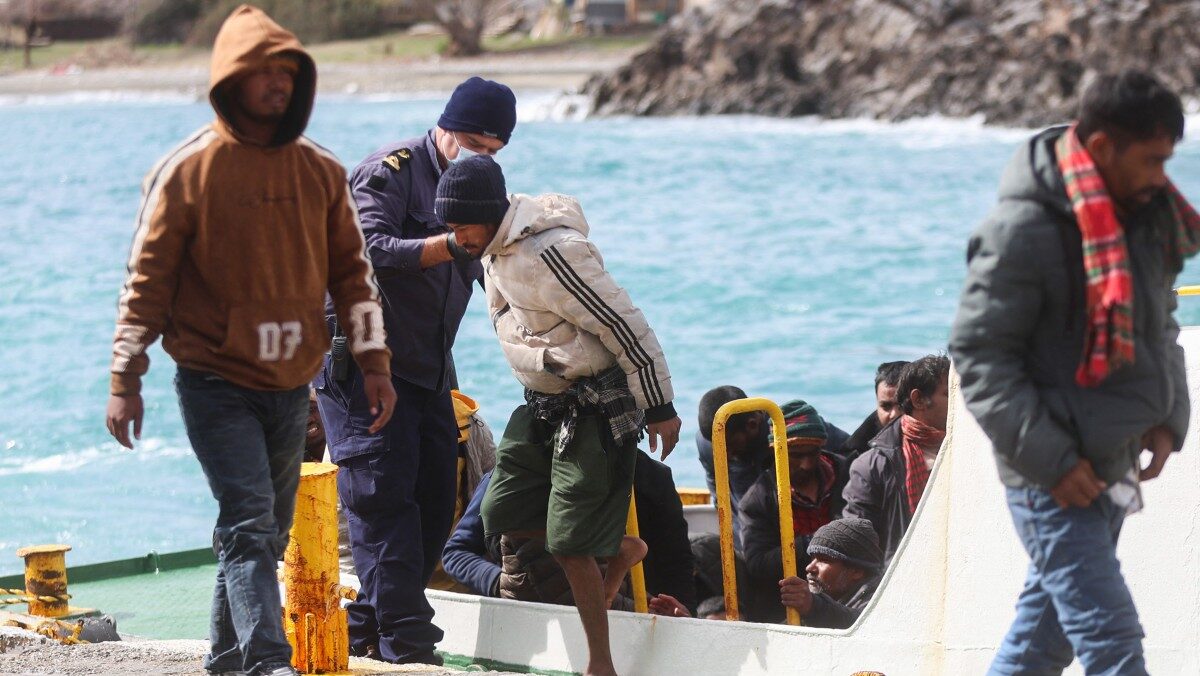
Migrants disembark at the port of Kali Limenes, in Heraklion, southern Crete, on February 21, 2026.
Costas METAXAKIS / AFP
The Greek Ministry of Migration and Asylum is pressing ahead with plans to establish a temporary migrant detention center at a former factory in Iraklio, Crete, despite an official urban planning report concluding that the proposed site violates zoning regulations and growing opposition from local residents.
The urban planning report was commissioned after residents from nearby villages objected to the facility. The center is intended to house migrants arriving on Crete from North Africa. If completed, it would become the island’s second migrant reception center, alongside an existing one outside Hania.
Greek officials argue that the new facility is needed to house migrants in an organized reception center, ensure legal procedures are followed, and ease pressure on Crete’s tourism industry.
Residents say the planning report vindicates their concerns and have urged the ministry to abandon the project, warning they are prepared to seek court injunctions if construction goes ahead.
The dispute reflects wider tensions across Europe over the siting of migrant accommodation. In the Netherlands, for example, locals staged prolonged protests against a migrant reception center that was approved despite their objections. Asylum seekers housed there were later linked to a number of violent crimes and sexual assaults, reinforcing many locals’ concerns.
The plans also come as Greece continues to tighten its migration policy. On June 9, lawmakers approved legislation allowing the faster removal of failed asylum seekers. Under the new rules, rejected applicants could be transferred to ‘return hubs’ outside the EU before being repatriated.
The legislation reflects Athens’ wider push to strengthen border management, accelerate returns, and work with European partners on new arrangements for migrant removals.