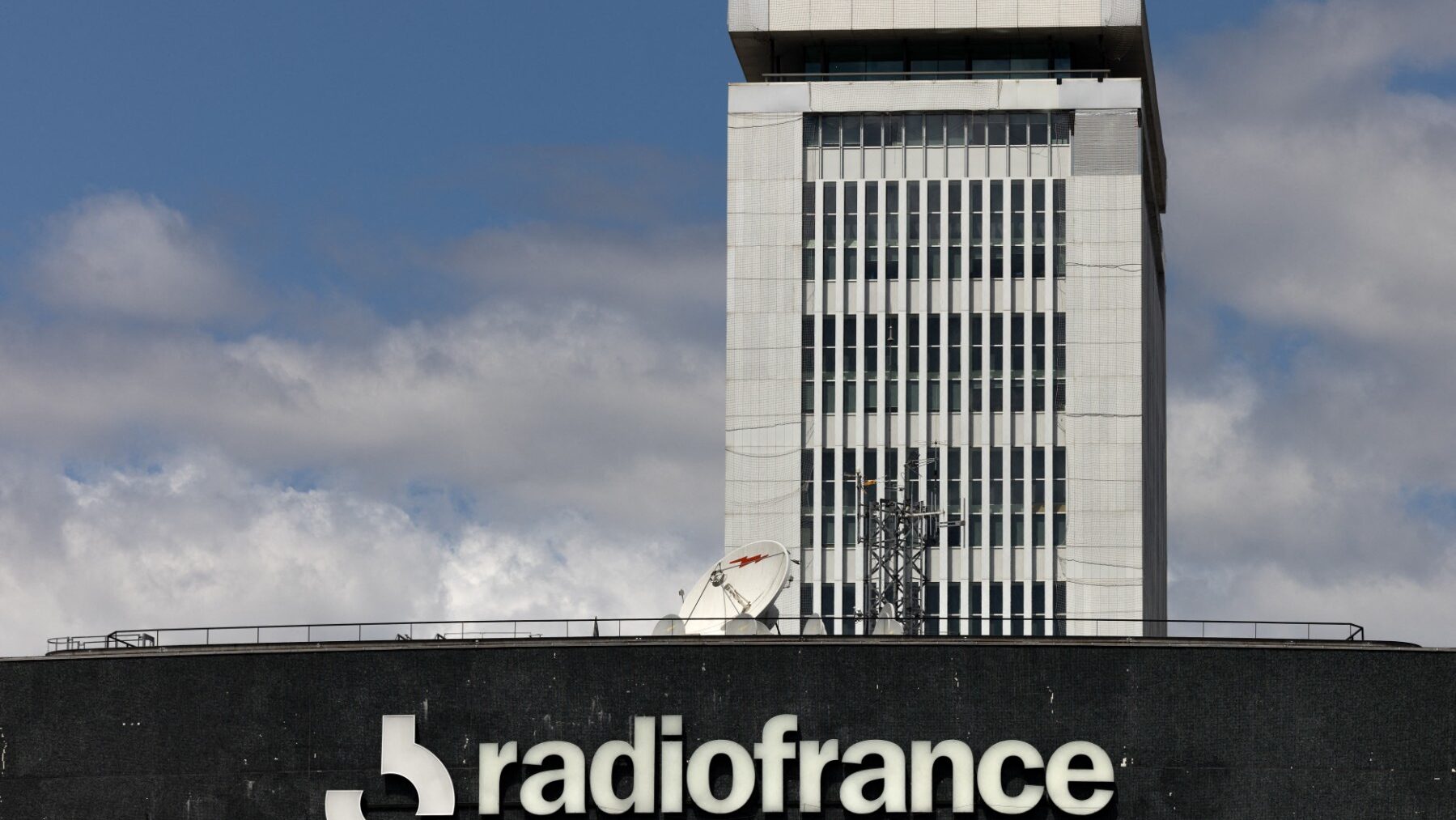
After months of intense battle, the work of the parliamentary commission of inquiry into French public media has come to an end. Right up until the last minute, the Left fought tooth and nail to preserve its turf and deny its stranglehold over the entire news, radio, and television system, going so far as to threaten to censor the commission’s report to prevent its publication—or even to destroy it. The truth ultimately prevailed, which sets a major political precedent, demonstrating the tenacity of a segment of the conservative Right in defending it with rigour and method.
Following a scandal revealed by the conservative magazine L’Incorrect, which had access to a conversation between public service journalists openly admitting to using their airtime and media influence to promote their candidates and their political agenda—a left-wing one—an investigation was launched at the initiative of the UDR (Union of the Right for the Republic, allied with the Rassemblement National) to determine the extent to which public radio and television journalists had been compromised.
The four-month investigation was punctuated by crises and incidents, revealing the reluctance of journalists and officials from public entities to cooperate and expose their system of financial abuse and ideological corruption. Responsibility for the outbursts and clashes was placed squarely on the shoulders of the commission’s rapporteur, MP Charles Alloncle, who proved to be exceptionally tenacious in this titanic struggle.
The commission’s work concluded on April 8th, but a major uncertainty remained: would the deputies choose to make its findings public, or would they bow to the demand for silence made by the left? A closed-door vote by the commission was held on this matter on Monday, April 27th, following a debate lasting more than four hours.
The commission members voted 12 in favour, 10 against, with eight abstentions. The nearly 400-page report “will be made public on May 4,” announced the committee chair, Horizons MP Jérémie Patrier-Leitus. The transcripts and videos of the approximately 70 hearings, which have already been published, will remain accessible online and available for everyone to view.
Left-wing lawmakers have been pressing in recent weeks to ensure the report is not published and that all documents collected as part of the parliamentary inquiry are destroyed. The legal option existed but would have constituted a massive democratic scandal. This is undoubtedly what prompted the pro-Macron members of the committee to abstain in the final vote: voting for censorship alongside the Left would have exposed them to inevitable unpopularity and would have made them ostensibly complicit in a public scandal.
The committee chair, who belongs to the presidential camp, thus justified his abstention by citing his love of free speech and his rejection of methods he deems “far-right”—even though, in this instance, the call for censorship came from the Left. Socialists, Greens, and members of La France Insoumise (LFI) denounced the report as “deceptive,” “biased,” “malicious,” and “contradictory” and intend to dismantle the document “line by line” in upcoming proceedings, including by publishing a “counter-report”—a sign that the final vote by no means marks the end of the clashes.
The final document includes 80 recommendations. Among them are proposals to merge channels and to scrap certain controversial and costly projects funded by public money, such as the station Mouv’, a radio station dedicated to hip-hop.
MP Alloncle also proposes subjecting public television and radio figures to a commitment to neutrality and impartiality, including public statements and behaviour outside their official duties—a response to the scandal revealed by L’Incorrect, which involved a semi-public conversation held in a café. He also wishes to return to the practice of having the heads of France Télévisions and Radio France appointed by the president of the republic. Alloncle proposes a comprehensive set of budget cuts aimed at generating over one billion euros in annual savings, representing a quarter of the funds allocated by the state to public broadcasting. He would like to use this sum for heritage preservation and to reduce the national debt.
The report is not binding but could lead to a bill that would be presented to lawmakers at the end of June, during the UDR group’s parliamentary initiative day.