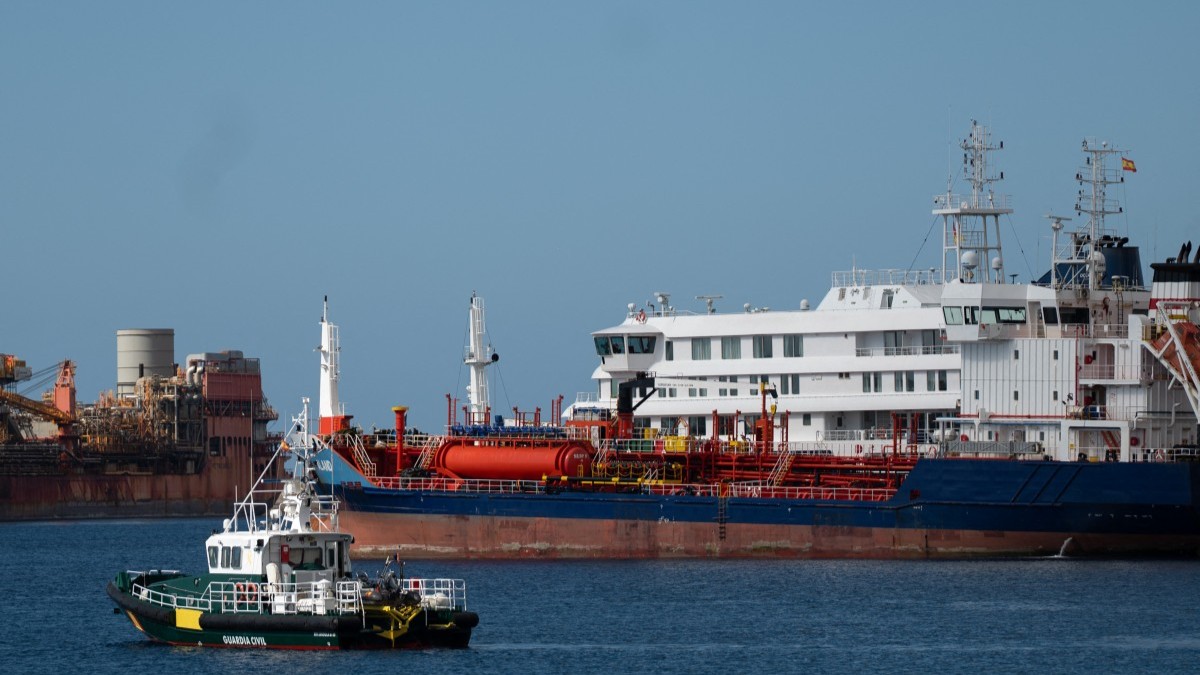
The Dutch-flagged hantavirus-stricken cruise ship MV Hondius sails next to a tanker during a refueling operation in the port of Granadilla de Abona on the island of Tenerife in Spain’s Canary Islands on May 11, 2026.
JORGE GUERRERO / AFP
The evacuation of the passengers of the hantavirus-stricken cruise ship MV Hondius has triggered quarantine orders and ongoing monitoring across multiple countries.
Hantaviruses are a family of viruses typically transmitted from rodents to humans. Infection usually occurs through contact with contaminated urine, droppings, or saliva, often when particles become airborne and are inhaled. This typically occurs when people inhale airborne particles containing the virus, often stirred up from dried rodent urine and droppings. In most cases, there is no human-to-human transmission, although the Andes strain identified in this outbreak is one of the few exceptions where such transmission has been observed, albeit very rarely.
The disease can cause severe illness. Hantavirus Pulmonary Syndrome (HPS), one of the most serious forms, begins with flu-like symptoms such as fever, fatigue, and muscle aches, but can rapidly progress to severe respiratory failure. According to health authorities, this form has a mortality rate of approximately 20–40%. Another form, Hemorrhagic Fever with Renal Syndrome, can lead to kidney failure and internal bleeding.
Regarding the current outbreak, the WHO believes the first infection may have occurred before the voyage of the cruise ship began, with further spread possibly happening on board. Dr. Maria Van Kerkhove of the WHO stated “We’re not talking about casual contact from very far away from one another,” emphasising that transmission requires close and prolonged exposure.
The outbreak on the ship that departed from Argentina has so far been linked to multiple confirmed and suspected cases among passengers and crew. Three deaths have been confirmed, the victims including a Dutch woman and a Swiss passenger. A British passenger remains in intensive care in South Africa while several others are being treated or isolated in Europe and elsewhere.
The cruise ship’s voyage was scheduled to end in Praia, Cape Verde on May 4, but after the outbreak, it headed towards the Canaries. The Spanish government agreed with the World Health Organization (WHO) that the passengers of the hantavirus-stricken cruise ship should be allowed to disembark, with Pedro Sánchez’s Socialist government designating the port of Tenerife as its docking place, in spite of angry protests from the local population and initial resistance from the president of the Canary Islands, Fernando Clavijo.
WHO Director-General Dr. Tedros Adhanom Ghebreyesus addressed the residents of Tenerife in an attempt to dissipate concerns, stating: “This is not another COVID.The current public health risk from hantavirus remains low.” The WHO chief urged international cooperation, saying “Viruses do not care about politics, and they do not respect borders. The best immunity any of us has is solidarity.”
Despite the reassurances, it remains a fact that several passengers evacuated from the ship in Tenerife on Sunday may have caught the disease. Countries receiving their nationals have implemented strict containment measures. Australia announced that six passengers will be placed in a dedicated quarantine facility north of Perth for at least three weeks. Health Minister Mark Butler said, “Those six people will be transferred immediately to that quarantine facility directly next door to the RAAF base,” noting that Australia is applying a “stronger response” due to long-distance travel risks and potential incubation periods.
France reported new cases among evacuees, with Health Minister Stéphanie Rist confirming, “Tests came back positive,” after symptoms developed during isolation.
The United States also confirmed infections among the evacuated passengers, while Spain stated that “all measures for prevention and control of transmission have been applied” to prevent further spread.