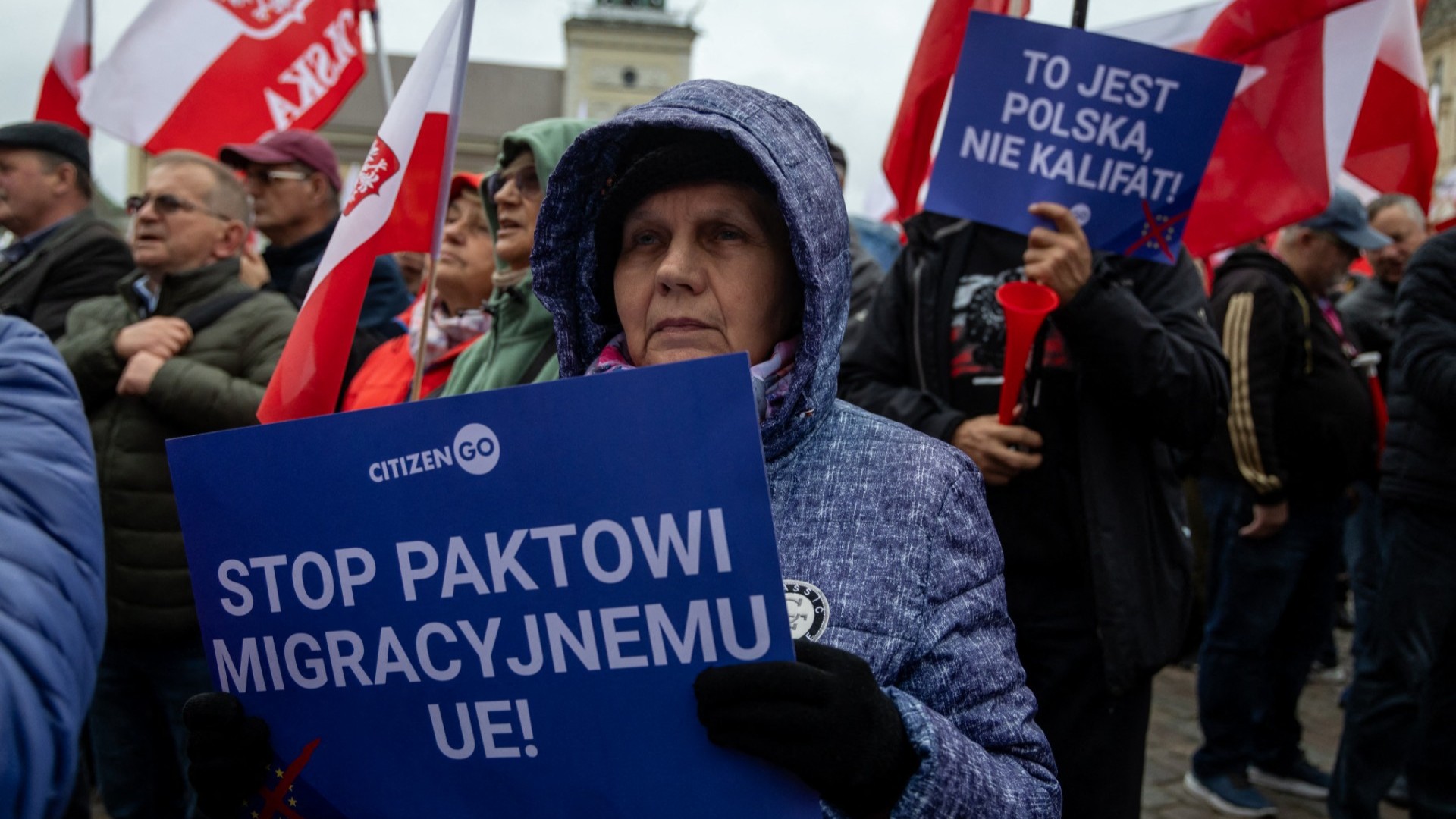
On June 12, the European Union’s new Pact on Migration and Asylum will fully enter into force. After two years of transition (and many revisions) since its approval in 2024, Brussels believes the time has come to implement the most ambitious reform of Europe’s migration system since the 2015 crisis.
The European Commission presents it as a balanced response that combines stronger border controls, faster procedures, and a solidarity mechanism among member states. Apart from the official version, this pact means the consolidation of a model that accepts mass immigration as a permanent phenomenon and progressively shifts national competences toward European institutions.
The debate has divided the Union for years. And, in many ways, the final text reflects that tension.
For much of the past decade, Brussels defended an approach focused almost exclusively on reception and humanitarian management. However, the rise of patriotic and sovereigntist parties in countries such as Italy, Hungary, the Netherlands, Austria, and France forced the inclusion of elements that would have been politically unthinkable only a few years ago: accelerated border procedures, mandatory pre-entry screening, and faster mechanisms for rejecting manifestly unfounded applications.
The problem is that these changes arrive within a system whose primary logic remains the redistribution of responsibilities rather than the reduction of migration flows. In other words, it merely tries to plug the holes in the ship’s hull instead of redesigning the vessel to prevent it from sinking.
What exactly is changing?
The pact introduces a common screening system for migrants arriving at the EU’s external borders. Before formally entering European territory, they will undergo identity, security, and health checks.
In addition, certain asylum seekers coming from countries with low recognition rates will be subject to accelerated border procedures. The official objective is to resolve cases more quickly and prevent individuals with little chance of obtaining international protection from remaining within the Union for years.
Brussels argues that this will increase returns and reduce pressure on national asylum systems. However, the most controversial element remains the so-called mandatory solidarity mechanism.
When a member state faces what is considered excessive migratory pressure, the Commission may activate a system under which other countries must either accept asylum seekers relocated from the affected state or make alternative financial contributions.
For many governments in Central and Eastern Europe, the problem remains exactly the same as it was during the 2015 migration crisis: the Union is not solving the migration phenomenon—it is distributing it.