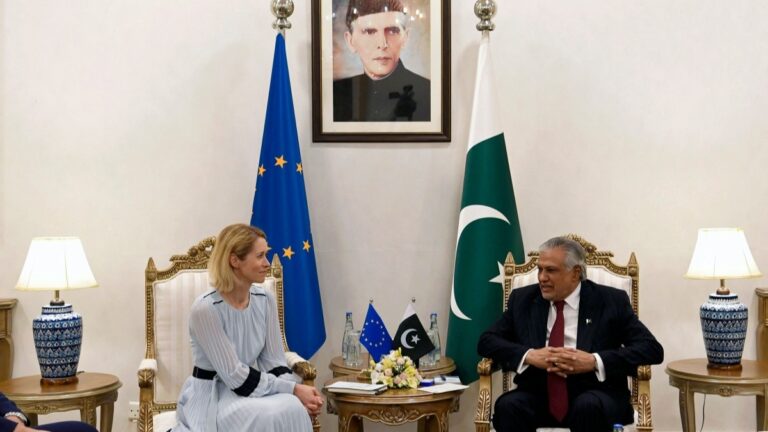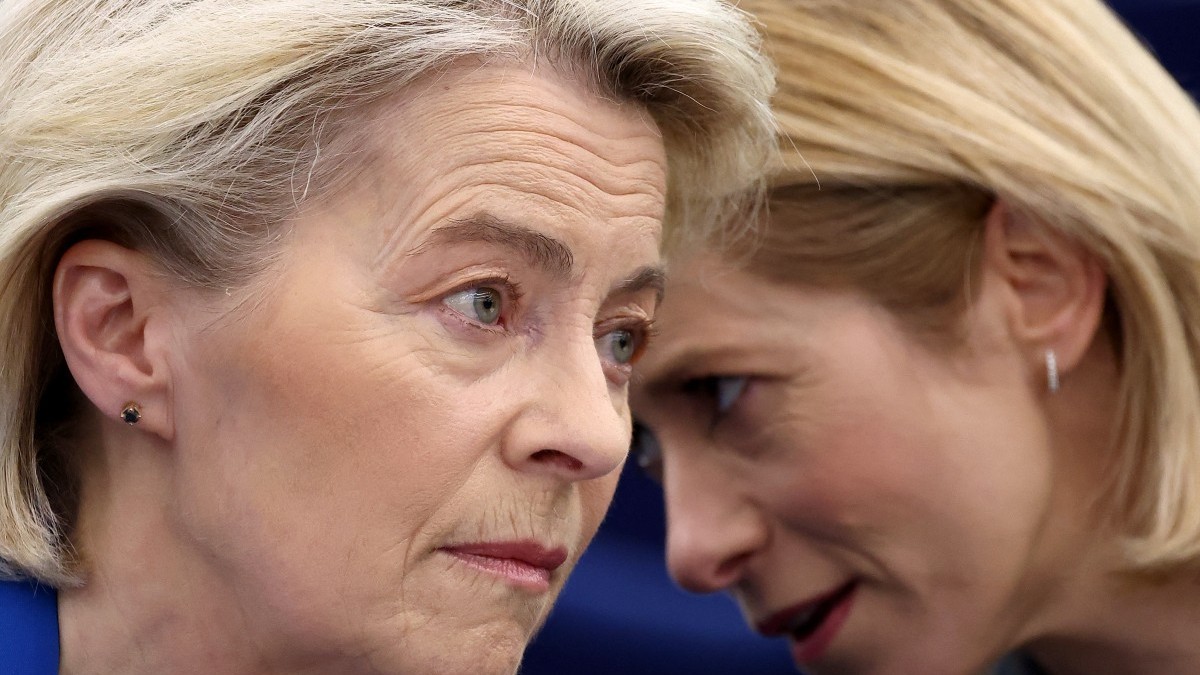
The battle few expected between Ursula von der Leyen and Kaja Kallas has moved out of the corridors of Brussels and into the open. The debate over possible restrictions on trade with Israeli settlements has turned a relationship strained for months into an overt dispute over control of European foreign policy.
European Union foreign ministers are examining a Commission paper on Monday, July 13th that sets out three possible routes: tightening import licensing, imposing prohibitive tariffs, or introducing a complete ban on goods originating from the settlements. France, Spain, Belgium, Sweden, Ireland, and the Netherlands are among the countries that have pressed for action.
The commercial issue, however, is only one part of the conflict. For months, the European External Action Service, led by Kallas, has accused the Commission of delaying the legal assessment requested by several governments. The EU’s High Representative even publicly criticised her own colleagues in the European executive for obstructing the work.
The dispute reveals von der Leyen’s method: extending the Commission presidency’s control into areas that do not fall under her institutional authority alone. Foreign policy remains, at least on paper, a field constrained by the member states and coordinated by the High Representative. Yet the small presidential circle that controls documents, timing, and political communication has turned the Berlaymont into the operational centre of decisions that should be more widely shared.
The issue is no longer simply who proposes a measure, but who decides which proposals are even allowed onto the table.
Kallas was chosen as a figure expected to remain aligned with von der Leyen, particularly on Ukraine, Russia, and security. She has, however, shown more autonomy than anticipated. Her pressure on the Commission to present options on the settlements, together with her internal clashes over the Middle East, has broken the image of a subordinate High Representative.
Kallas’ apparent independent-mindedness is not proof of her good judgement, however. Combined with her hawkish stance on Ukraine, is her off-message treatment of Israel as an apartheid state during confidential meetings with Mexican officials. While this might titillate the increasingly antisemitic governments of Ireland and Spain, it also reveals her naivete, to say the least.
The debate over unanimity has widened the conflict. Countries supporting a ban want it treated as a trade measure, which a qualified majority could approve. The Commission argues that its political dimension would require the agreement of all 27 member states, allowing Germany or the Czech Republic to block it.
The dispute between Kallas and von der Leyen therefore exposes the real institutional argument inside the European Union: a Commission accumulating power, a diplomatic service trying to preserve its role, and national governments whose votes are interpreted differently depending on the desired result. Israel is the excuse; power is the motivation.