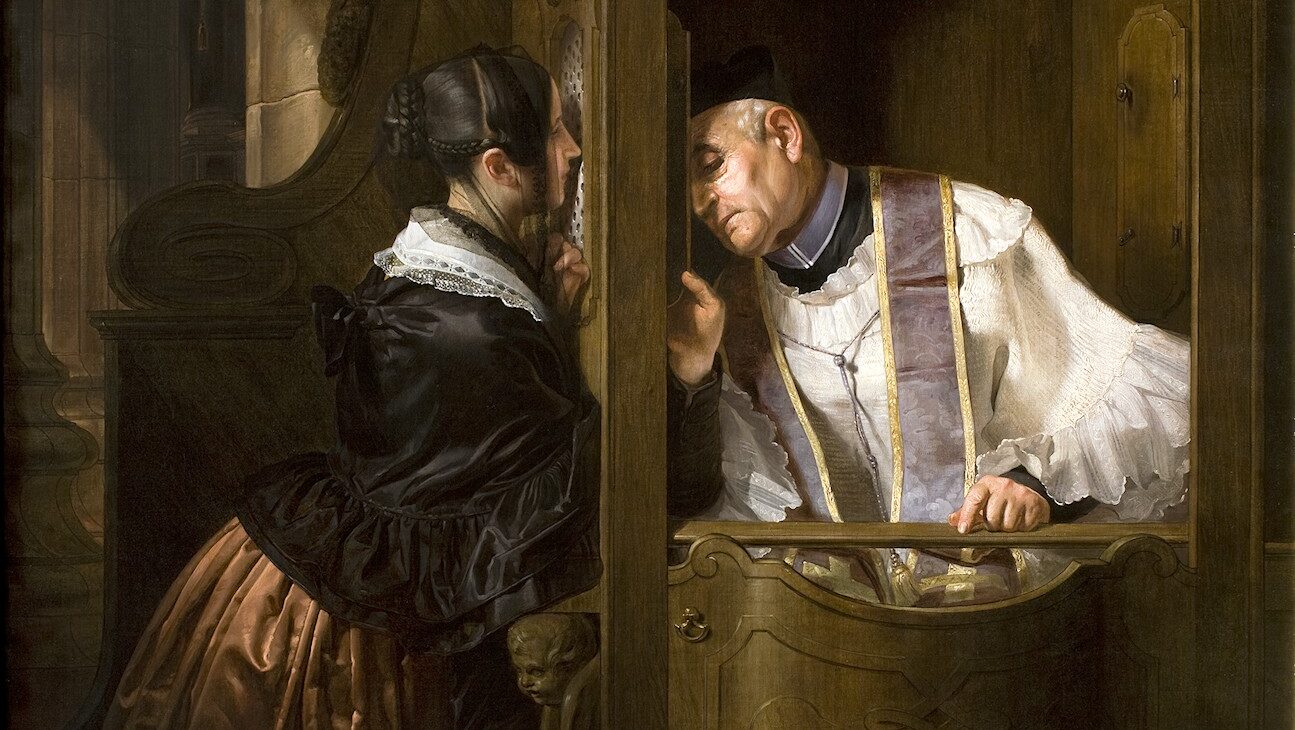
The Catholic Church in France has voiced strong opposition to a controversial bill scheduled for debate on Monday, June 1, 2026, in the National Assembly, which includes provisions to lift the centuries-old secrecy of confession in cases involving minors. The bill would make Catholic priests (and other ministers of religion) ‘mandatory reporters’ on cases of violence or abuse against minors, with no exception for confessional secrecy.
Paragraph 9 of the bill states, “Ministers of religion are not exempt with regard to information which they have become aware of in the exercise of their ministry,” and the introductory Statement of Reasons says the paragraph
explicitly stipulates that ministers of religion are subject to the obligation to report acts of violence against minors, even if they became aware of them in the course of their duties: no “seal of confession” can prevent them from doing so.
The bill is a cross-party initiative, primarily driven by Macronist Violette Spillebout with support from Paul Vannier (La France Insoumise). It is strongly supported by the presidential majority and reflects a broader push by secularist and left-leaning lawmakers to strengthen child protection measures, even at the expense of traditional religious exemptions.
The Conference of Bishops of France (CEF) has raised the alarm, describing the measure as a direct threat to religious freedom and the fundamental rights of worship. In a strongly worded statement, Church leaders argue in Le Figaro that the confidentiality of confession is a cornerstone of Catholic practice and cannot be compromised without undermining the very nature of the sacrament.
According to the bill’s supporters, lifting the seal of confession in cases where minors are at risk would help authorities prevent and prosecute abuse more effectively. However, the Church maintains that priests already encourage victims to report crimes outside the confessional and that breaking the seal would erode trust in the sacrament.
Jean-Marc Eychenne, Bishop of Grenoble, stated that “the secrecy of confession is not a privilege for priests, but a right for the faithful.” The CEF has called on lawmakers to reject the provision, warning that it sets a dangerous precedent for state interference in religious matters.
The seal of confession as an absolute, inviolable duty has been part of Catholic practice since at least the early Middle Ages, with strong formal enforcement dating back at least 800 years, to The Fourth Lateran Council in 1215.