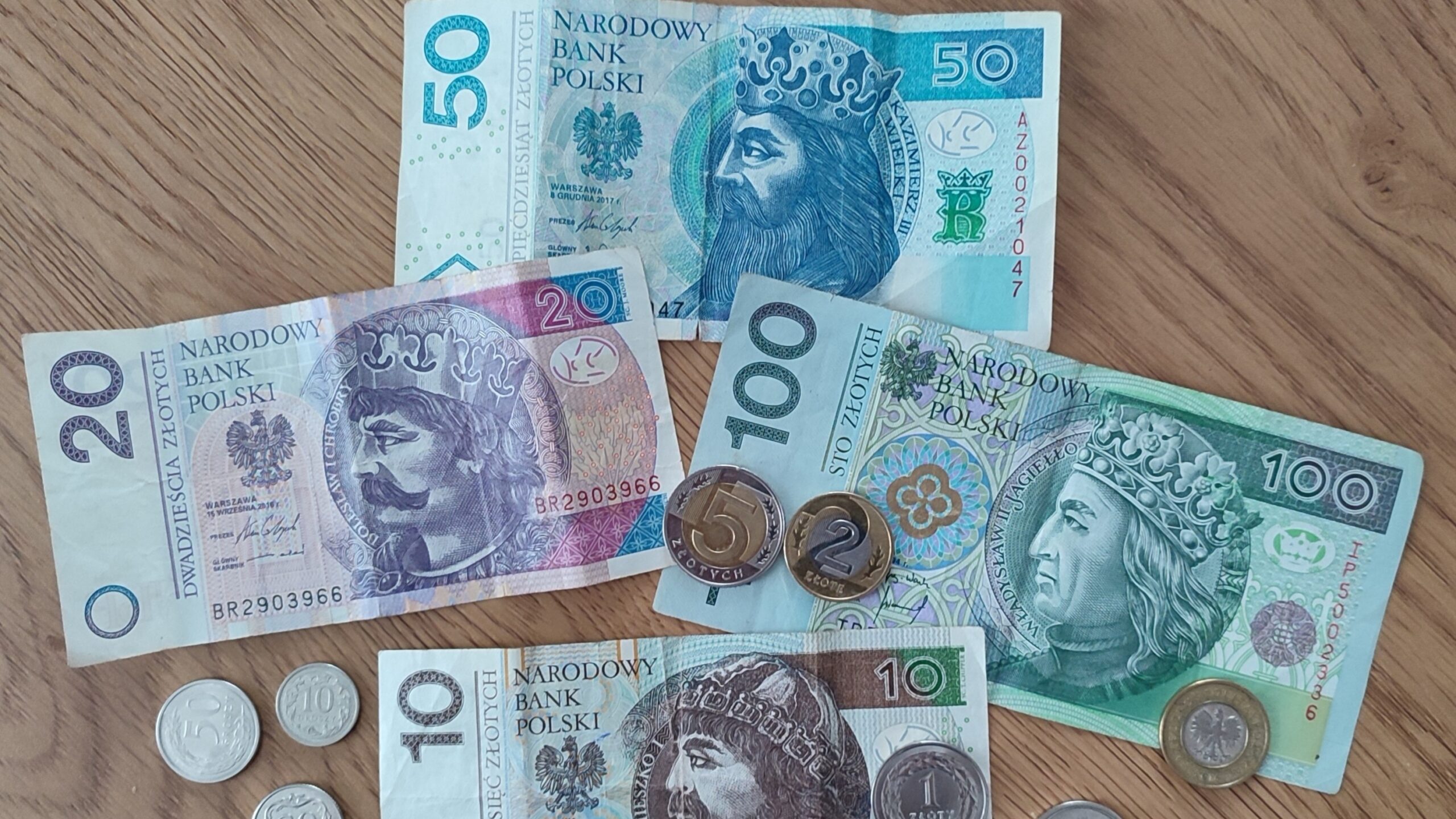
Polish złoty banknotes and groszy coins
By Lalpino – Own work, CC BY 4.0, https://commons.wikimedia.org/w/index.php?curid=150165012
A clear majority of Poles oppose replacing the national currency, the złoty, with the euro within the next decade, according to the latest SW Research poll.
The survey found that only 22.1% of respondents are supporting adopting the euro, down from 23.3% last year, marking the lowest ever score for support since joining the EU. At the time of Poland’s EU accession in 2004, about 60% supported switching to the euro, but in the past two decades, Poles have been steadily losing enthusiasm for the centralized currency.
The Polish economy has been outperforming euro zone ones in past years, so switching to the common European currency would only bring slower growth, a loss of financial freedom, and surrendering sovereignty to Brussels.
Back in December 2025, a similar poll was conducted by the IBRiS research institute. The poll exposed a significant political divide over the issue. Among supporters of Prime Minister Donald Tusk’s ruling coalition, led by the centrist Civic Coalition, 66% supported introducing the euro within the next decade. Meanwhile, opposition voters were overwhelmingly against the proposal. Among supporters of the conservative Law and Justice (PiS) party and the right-wing Confederation (Konfederacja), 87% opposed adopting the euro, with only 8% supporting it.
Now the prospect of Poland joining the euro zone seems further than ever, with no apparent political will pointing to the contrary. Finance Minister Andrzej Domański reiterated the government position in December, telling private broadcaster Polsat News that the government “has no plans to adopt the euro” and is not actively pursuing membership in the euro zone.
This year, Bulgaria joined the euro zone, despite vehement opposition by large swaths of the population, who took to the streets to protest the decision at the end of last year. Since January, price hikes and inflation have hit the Bulgarian economy.
Poland remains one of the few European Union countries that have so far opted to stay outside the euro zone, alongside the Czech Republic, Denmark, Romania, Sweden, and Hungary—the last two of which are considering introducing the common currency.