Europe is supposed to have the world’s strictest food safety regulations, and rightly so. Consumers expect the food they put on their tables to be not only of quality, but also safe to eat. Europeans are “increasingly looking to buy commercial products capable of minimizing damage to their health,” as a 2022 study puts it. Not to mention they also prefer to know what it is they are eating—which is not an outlandish thing to expect, one might think.
Recent news from continental Europe and Britain, however, show that the requirement of traceability in the production cycle is not always enforced, which results in consumers ending up sick, deceived, or both.
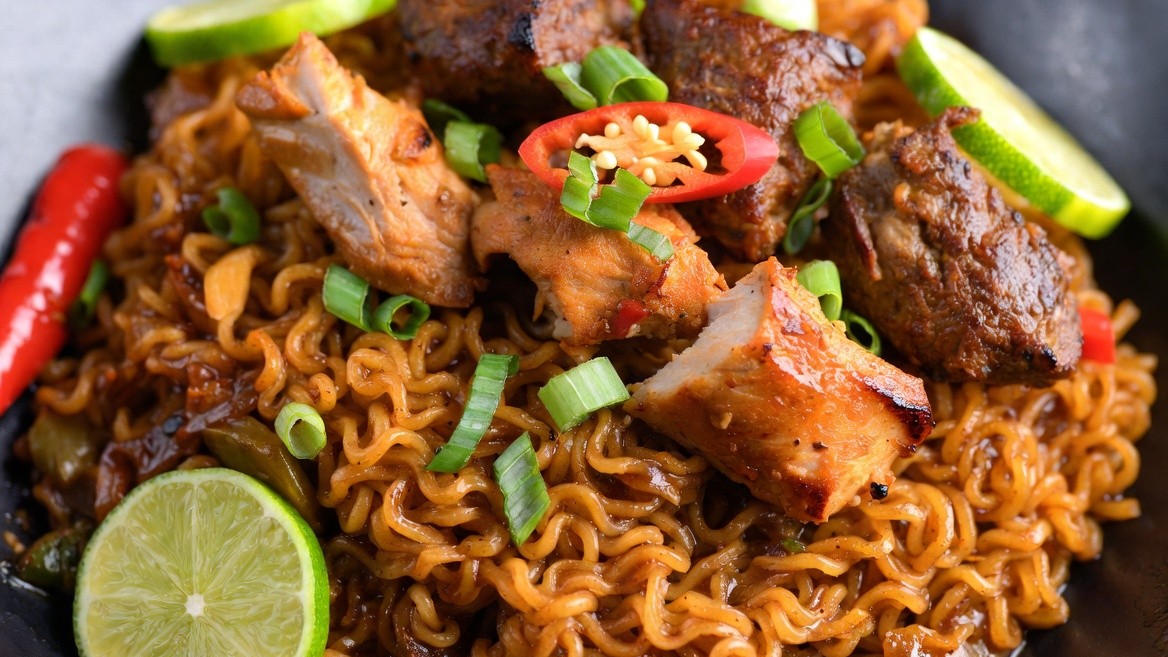
According to a Euronews report, flavoured instant noodles have been identified as the likely source of a minor salmonella epidemic, involving more than 100 cases across 14 countries. European health authorities said the outbreak has sickened at least 106 people across 14 countries.
The European Food Safety Agency and the European Centre for Disease Prevention and Control said the outbreak affected mostly children and young adults, with at least 49 people requiring hospitalization. The agencies found that the cases were linked to items from the same brand, with cases reported in Austria, Britain, Czechia, Denmark, Estonia, France, Germany, Hungary, Latvia, Lithuania, the Netherlands, Norway, Poland and Sweden.
The food safety authorities did not specify the vendor, but shared that the cases linked to specific strains of the salmonella bacterium were connected to a Ukrainian producer. Reeva, a brand owned by Vietnamese company Uniben, came forward last week as the culprit, saying there was an “alleged detection” of Salmonella Stanley in a batch of its instant noodles distributed in the Baltic market and produced by Euro Food Service—a Ukrainian manufacturer of Reeva products. The batches have since been withdrawn and steps have been taken, the company claims, to make sure people do not have to worry about their noodles—to paraphrase the corporation’s statement.
A Vietnamese company outsources its production to Ukraine, a country currently at war, which is a non-EU state: why not, you may say. But neither of these countries need to comply with the strict standards that European producers must meet, and the food products they sell end up on the table of European consumers who, in good faith, believe that whatever is put on the shelves of local supermarkets is safe to eat.
All the while Brussels is intent on signing agreements like Mercosur that allow the influx of agricultural products from countries where they are produced under environmental and sanitary standards different from those of the EU, threatening the viability of thousands of European farms. This is coupled with what critics describe as a suffocation of one of the EU’s core policies, CAP, with farmers denouncing the combination of agricultural budget cuts and an overload of environmental rules.
The EU aside: in other news, reported by the BBC, one learns that Kismet Kebabs, which describes itself as one of the UK’s largest doner kebab makers, has been deceiving consumers for years.
Random DNA testing by trading standards officers in 2020 and 2021 revealed that the kebabs meant to be “70% lamb” were actually showing “less than 10% sheep.” Most of the kebabs were in fact made largely from skin, fat, and goat. Investigators raided the Kismet factory in May 2021 to find out what was in the kebabs, and it became clear that no lamb was being delivered to the factory.
“There were pallets of goat, pallets of trim, offcuts with high fat content, boxes of fat, boxes of skin, bits of mutton … It all goes into a massive mincer and comes out looking like Play-Doh,” one of the investigators told the BBC.
The firm was fined £500,000 last month after admitting to a fraud that dates back to 2021.
Well, what can we say? Bon appetit!