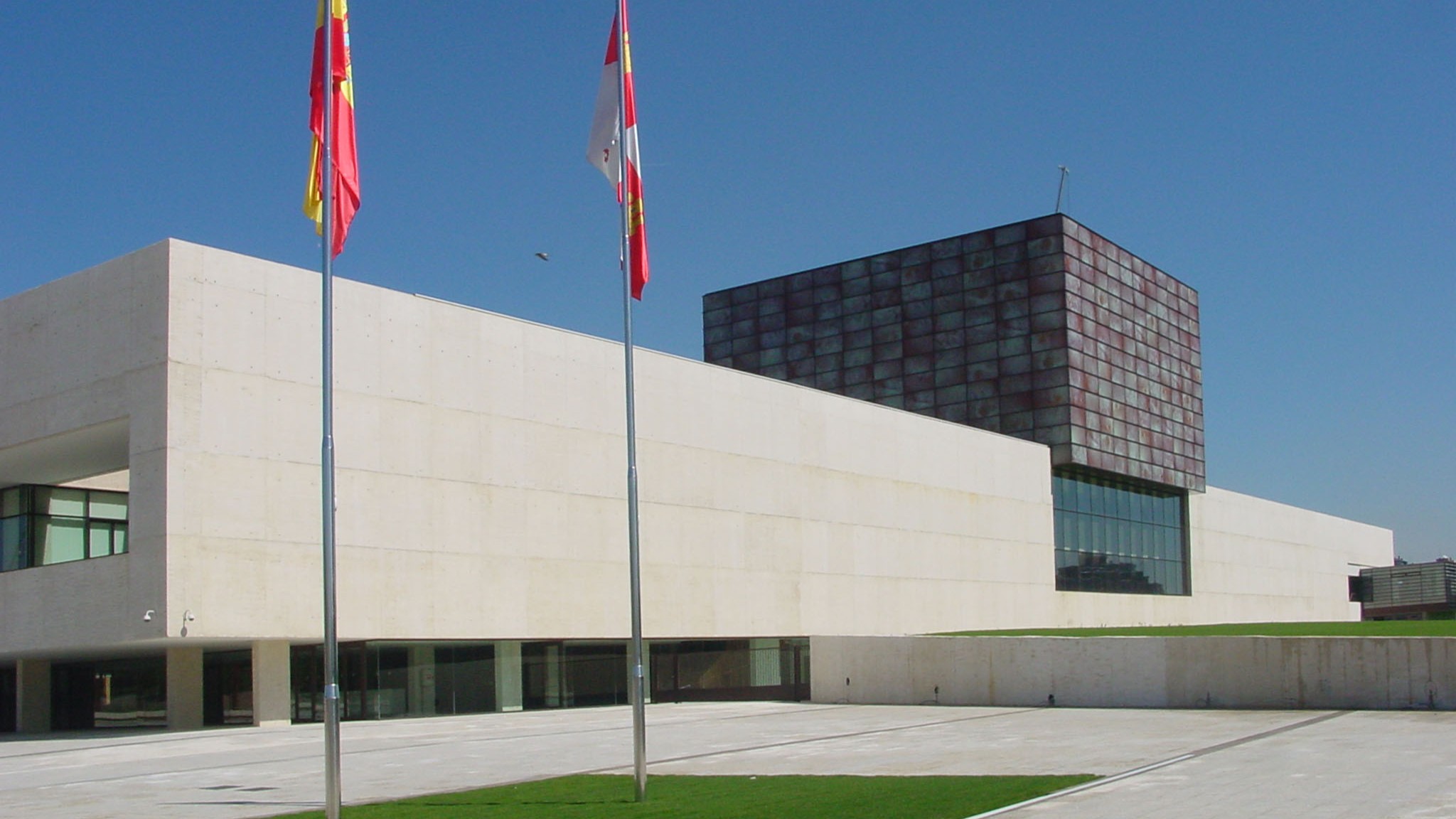
The Cortes, building of the Castile and León Parliament in Valladolid
By Nicolás Pérez – Own work, CC BY-SA 3.0, https://commons.wikimedia.org/w/index.php?curid=2291218
This Sunday’s regional elections in Castile and León have confirmed a trend that has now been repeated for the third time in just a few months: the steady growth of VOX and the consolidation of Santiago Abascal’s party as the third political force nationwide, a guaranteed ally of the People’s Party in forming governments and shifting to the right–if the conservatives stop trying to move closer to the Socialists.
Far from altering the political balance, the results strengthen the centre-right bloc and clear the way for a new coalition government between the PP and VOX, as is already the case in other regions.
PP has obtained 35.5% of the vote, winning 33 seats, two more than in 2022, which means that the acting president and PP candidate, representing a party that has governed the region for 39 years, Alfonso Fernández Mañueco, is the only one with real possibilities of forming a government.
The Popular Party’s victory was strong enough to dispel two expectations that had marked the campaign: that the socialists could become the most-voted force and that VOX would break the 20% barrier for the first time. Neither happened.
The People’s Party comes out strengthened, but without an absolute majority, which makes an agreement with VOX unavoidable. “We continue to make progress election after election. We haven’t come here to play second fiddle to anyone, but to be the guarantee of change,” Abascal stated last night.
Enhorabuena a Carlos Pollán, que ha batido el récord de voto a VOX.
— Santiago Abascal 🇪🇸 (@Santi_ABASCAL) March 15, 2026
No tenemos techo.
Paso a paso. Medida a medida.
España lo merece. pic.twitter.com/4rTZKdx5YR
After the results were known, Fernández Mañueco made it clear that a pact with the Socialists was ruled out, insisting that any government agreement must take place within the right-wing bloc.
For Vox, the election represents another increase, although a moderate one. Santiago Abascal’s party obtained 14 seats, one more than in the previous election, confirming a trend of constant but contained growth.
The party once again remains below 20% of the vote, a ceiling that already seemed within reach in previous elections and that, for the third consecutive time, it fails to surpass.
This result consolidates VOX as the third political force in Spain and as an essential partner for the People’s Party in several territories. After Extremadura and Aragon, Castile and León join the list of regions where the government depends on an agreement between both parties.
One of the most striking data points of the night was the PSOE result. The Socialists won 30 seats, two more than in 2022, despite losing votes in absolute terms.
The explanation lies in the concentration of the left-wing vote, which allowed the PSOE to absorb support from other parties and leave several minor candidates out of the regional parliament.
The result is significant because it comes in a national context marked by the wear of Pedro Sánchez’s government and by the numerous political scandals that have surrounded the executive in recent months. Despite this, the PSOE managed to maintain a strong position in Castile and León, although without any real chance of governing.
The disappearance of the far left from the regional parliament facilitated this result. The fragmentation that had harmed the PSOE in previous elections was reduced this time, allowing the Socialists to concentrate the progressive vote and improve their representation without significantly increasing their electoral support.
The results also have a national reading. After Extremadura, Aragon and now Castile and León, the next major electoral test will be Andalusia, where the same pattern is expected to repeat itself. The People’s Party starts as the favourite, but everything indicates that it will once again need VOX’s support to govern.