Spain’s governing Socialist Party (PSOE) is facing a political crisis that is increasingly difficult to frame as a domestic affair.
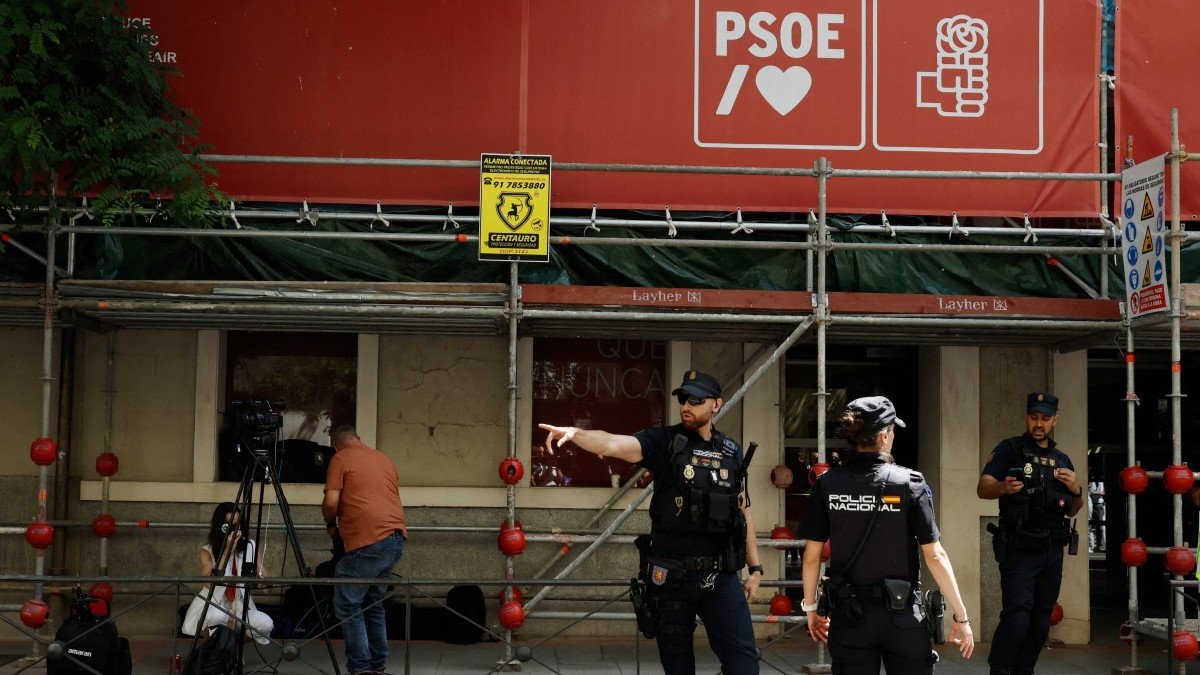
On the morning of Wednesday, May 27th, Spain’s elite Guardia Civil investigative unit, known as the UCO, entered the party’s national headquarters on Madrid’s Ferraz street alongside several other locations linked to senior Socialist figures and institutions associated with the party.
The operation is part of a broader judicial investigation into alleged illegal financing, influence-peddling, false invoicing, and the use of parallel structures operating around the ruling party.
The PSOE is not merely one of Spain’s traditional parties. It currently governs the country under Prime Minister Pedro Sánchez and remains one of the largest parties in the European socialist family. Sánchez has become an important actor in European politics, maintaining a visible role on issues ranging from Ukraine and migration to EU institutional reforms.
The investigation itself is being directed by National Court judge Santiago Pedraz and is backed by Spain’s Anti-Corruption Prosecutor’s Office. While parts of the case remain under judicial secrecy, investigators are reportedly examining nine possible offenses, including being part of a criminal organization, bribery, influence trafficking, falsification of documents, disclosure of confidential information, and offenses against state institutions.
According to information emerging from Spanish media and judicial sources, investigators suspect the existence of a network built around political figures, businessmen, and intermediaries that allegedly operated through influence inside public institutions and state-owned entities.
One of the areas under scrutiny involves Spain’s public holding company SEPI. This state-owned corporation oversees strategic public investments and has played a major role in managing large financial operations, including corporate rescue packages.
Investigators are examining whether public resources and administrative decisions may have been manipulated in exchange for irregular commissions.
Among the individuals under investigation is Santos Cerdán, former secretary of organization of the PSOE and, until recently, one of Sánchez’s closest political allies. Inside Spanish politics, the secretary of organization is one of the most powerful positions in the party structure, responsible for territorial coordination and internal operations.
Socialist former senator Gaspar Zarrías has also been implicated. Authorities are also investigating businessman Javier Pérez Dolset along with Leire Díez, a controversial figure described by parts of the Spanish press as a political operative linked to informal party structures. Prosecutors reportedly suspect that several operations generated approximately €700,000 in irregular commissions through arrangements involving public institutions and entities linked to SEPI.
The investigation goes further than financial allegations. According to reports surrounding the case, authorities also searched documentation inside Spain’s Guardia Civil headquarters itself. Investigators are reportedly seeking information linked to allegations that individuals associated with the network may have attempted to obtain sensitive information concerning members of the UCO—the same investigative unit leading several corruption cases affecting the government.
Corruption allegations involving contracts or commissions are familiar across European politics. Allegations that individuals close to governing structures may have sought information on investigators, judges, or state institutions move the case into a more sensitive territory involving institutional integrity itself.
PSOE has publicly rejected the accusations and insists it is cooperating fully with investigators. Party representatives argue that the operation forms part of a broader campaign of political and media pressure against the government.
For now, no conclusions can be drawn regarding criminal responsibility. The investigation remains active, and judicial secrecy still limits public access to evidence.
But politically, the scale of the operation is already difficult to ignore. Police searches at the headquarters of a governing party, investigations into senior figures close to the prime minister, and allegations involving possible parallel networks operating around state institutions would normally trigger intense debate across Europe.
So far, however, Brussels has remained notably cautious. That silence may reflect judicial prudence. Or it may show the usual incoherence inside the European Union: whether concerns over democratic standards generate the same urgency when they affect governments politically aligned with the European mainstream.