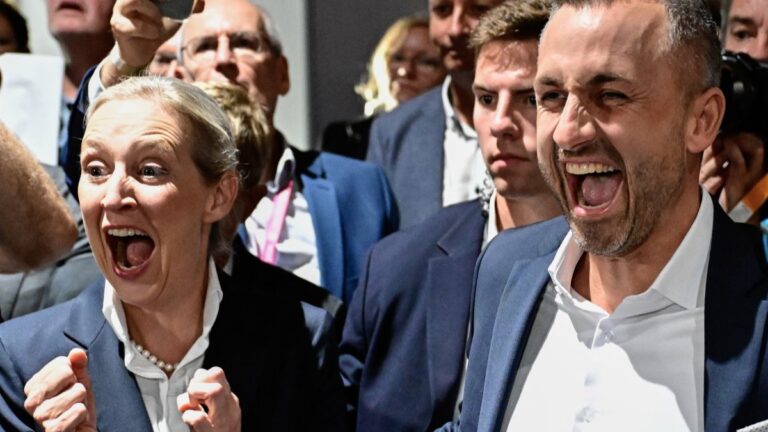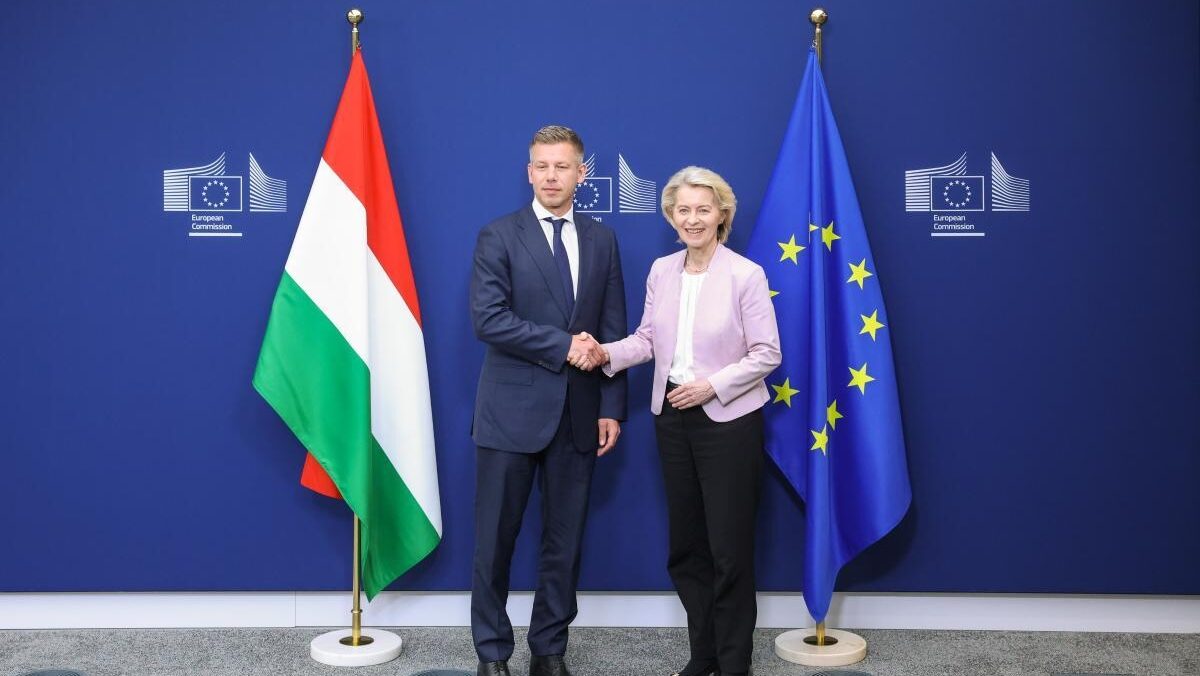
Saturday marked the 31st Budapest Pride march, the first one since Viktor Orbán’s conservative government was ousted two months ago by PM Péter’s Magyar pro-EU Tisza party. EU officials, including Commission president Ursula von der Leyen, wasted no time celebrating the event as if it were the fall of the Berlin Wall.
“I am so glad that the LGBTIQ+ community in Hungary can finally march without fear,” von der Leyen posted, along with images of Pride participants carrying giant LGBT and EU flags—an unmistakable signal of what the Commission’s so-called “European values” truly are.
Adopting the language of the Cult of the Self, she said that participants had come to celebrate “freedom and the right to be—or to become—yourself.”
“Today, all Europe is büszke,” she added, using the Hungarian word for “proud.”
Today the streets of Budapest are filled with joy and pride.
— Ursula von der Leyen (@vonderleyen) June 27, 2026
Thousands came together to celebrate freedom and the right to be – or to become – yourself.
I am so glad that the LGBTIQ+ community in Hungary can finally march without fear.
Today, all Europe is büszke. pic.twitter.com/lbvTWdiIf7
While posts like this make it look like Pride marches weren’t a thing in Orbán’s ‘oppressive’ Hungary, the truth is that Budapest Pride had been organized uninterrupted since 1997, including under Viktor Orbán’s sixteen years of conservative governance. Orbán did try to ban the public parade part of the week-long festival last year, but absolutely no harm was done to participants when organizers went ahead with the march anyway. In fact, authorities did their best to actively protect participants from counter-protesters.
Still, according to von der Leyen, the LGBT community could not march “without fear” in Hungary until Orbán was gone. “In Budapest, sexual minorities walk without fear 24/7, 365 days per year, unlike Berlin, Brussels or Amsterdam. And you know why,” commented Rodrigo Ballester, the head of European Studies of MCC Budapest, pointing out the absurdity of supporting both LGBT rights and mass immigration from Islamic countries.
And nothing signals the arrival of freedom and democracy more than the unprecedented three-year sentence, along with an €7,300 fine, faced by the man who decided to remove LGBT flags from one of Budapest’s iconic bridges. Everyone knows this is not punishment for simple vandalism—this is an attempt to send a message that progressive ‘values’ have now become untouchable in Magyar’s Hungary.
PM Magyar is certainly moving fast to appease his Brussels allies by reversing many of Orbán’s conservative social policies.
One of the first things the new government decided to scrap was the 2022 Child Protection Act, which removed gender propaganda from schools and children’s media. They are also moving to reverse the ‘Heartbeat Act,’ Orbán’s only piece of pro-life legislation, which mandated that mothers listen to the heartbeat of their fetuses before getting an otherwise freely accessible abortion. The Magyar government sees this law as cruel, unnecessary, and archaic, despite it reportedly having saved thousands of lives.
What’s more, PM Magyar also stated that he was open to discussing the implementation of same-sex marriage and strongly argued for allowing homosexual couples to adopt children, drawing strong criticism from both national conservative opposition parties.
🏳️🌈🏳️⚧️ Magyar Péter miniszterelnök szerint hamarosan ők is örökbefogadhatnak gyermeket, hiszen ők is egy teljesen normális család⤵️
— Toroczkai László (@ToroczkaiLaszlo) June 28, 2026
(A kép a tegnapi budapesti "Pride"-on készült.) pic.twitter.com/LP5uyIoc5K