The result of yesterday’s Makerfield by-election is a bitter blow to the British Right. Andy Burnham’s decisive victory for Labour with 55% of the vote, beating Reform UK’s Rob Kenyon by 20 points, was much bigger than expected.
It was always going to be an unusual contest: Burnham was not simply defending a Labour seat but running as a potential challenger to the increasingly unpopular prime minister, Keir Starmer, in a future leadership contest. This may have boosted his vote, but the 20-point margin will shock Reform UK, who had previously briefed that internal polling showed them just five points behind.
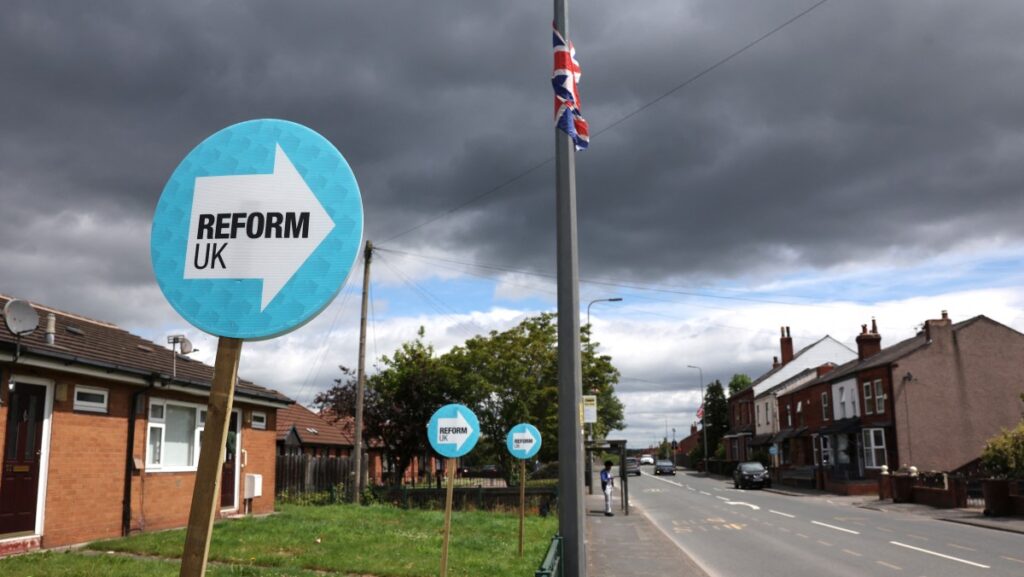
The constituency also sits in an area where Reform had performed strongly in recent local elections and where Labour strategists privately feared they could be vulnerable. The seat’s overwhelmingly white, working-class demographic should also have favoured the party.
Instead, Burham’s supporters are now saying that the margin of his victory is “proof of concept” that the Labour Party under his leadership could still defeat Reform in former industrial heartlands.
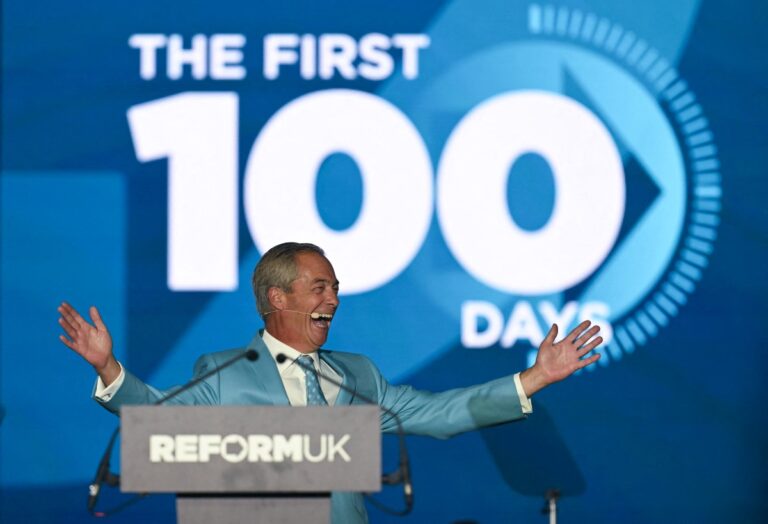
Reform UK’s defenders argue, with some justification, that a second-place finish at 35% would once have been regarded as a major achievement. Matt Goodwin noted that the party is now so strong that increasing its vote and finishing second is treated as a poor result.
But the problem is not the raw vote share. The problem is perception. Reform has spent much of the past year presenting itself as a government-in-waiting. A party with those ambitions cannot be satisfied with respectable defeats forever.
The result will inevitably strengthen claims that Reform’s rise may be slowing and that it has yet to demonstrate an ability to translate national polling support into decisive victories.
The result is also disappointing for Restore Britain. It did manage to finish in third place, with 3,111 votes and a 7% vote share, and thus kept its deposit—a respectable result for a minor party. However, it was still a long way behind Reform UK, falling well short of the breakthrough many of its supporters had boasted of.
The outcome also undermines claims that Restore Britain poses a major challenge to Reform by splitting the right-wing vote. Even if every Restore voter had backed Reform, Labour would still have won comfortably.
Instead, the result suggests that Restore still has much work to do to translate its largely online support into real votes.
The big question now is what happens next.
Burnham’s victory has immediately intensified speculation about his plans to replace Keir Starmer as Labour leader and prime minister.
That prospect should concern anyone on the Right.
Unlike Starmer, whose leadership has been defined by a mixture of incompetence and managerialism, Burnham has consistently advocated a more ambitious programme of political and economic change. He has supported greater state intervention in the economy, expanded public spending, stronger regional government, and a significant redistribution of power away from Westminster.
Perhaps most importantly, Burnham has long been sympathetic to electoral reform and the introduction of proportional representation.
For many conservatives, that issue matters more than any individual policy proposal. Across Europe, proportional systems have often allowed broad left-wing alliances to retain power by combining the votes of social democrats, greens, and liberal parties after elections. A fragmented Right can find itself permanently disadvantaged even when public dissatisfaction with the government is high.
A Burnham leadership would not guarantee such reforms. But his growing influence inside Labour means ideas that once sat on the fringes of the party are increasingly entering the mainstream.
Makerfield therefore should be a warning to the British Right. The battle ahead may be far harder than many had assumed.
Reform must now prove it can convert polling strength into victories and start increasing its vote share to the high 30s and low 40s if it wants to win power. The wider Right must decide whether fragmentation and internal feuding are helping or hindering its cause.
And all of them must prepare for the possibility that Keir Starmer could soon be replaced by a politician whose instinct is to pull Britain further Left while changing the electoral rules in ways that could make future Conservative or right-wing governments far harder to achieve.