Wolfgang Blume
Courtesy of Wolfgang Blume
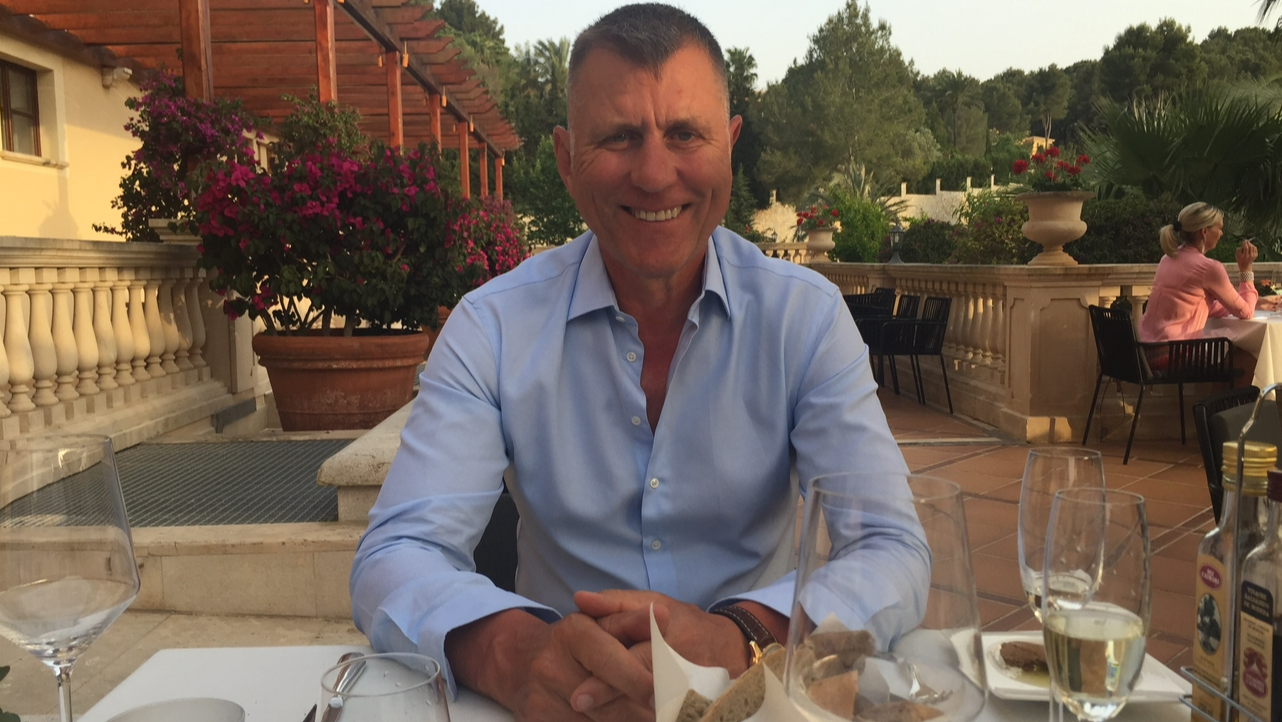
Wolfgang Blume is not easily intimidated—and ex-boxers rarely are. That is why he will not be cowed by the establishment’s dire warnings and scaremongering about what an AfD victory in Saxony-Anhalt would mean for Germany.
With just under three months to go before the crucial state election in early September, the right-populist AfD is leading in the polls with around 41% of the vote. For the first time in German history, a federal state could be governed by an AfD minister-president. The establishment is nervous—and it shows.
A recent report by public broadcaster MDR claimed that an AfD victory would pose a security risk across the whole of Germany, since new appointees in sensitive positions could not be trusted with classified information. Brandenburg’s Interior Minister Jan Redmann (CDU) spoke of a “concrete danger.” His Hessian colleague Roman Poseck (CDU) warned that the rest of the republic needed to brace for a “worst-case scenario.” Saxony-Anhalt, went the message, would find itself isolated.
Blume, born in 1955 in the small town of Calbe, has long concluded that the AfD is the only party that might be able to save Germany—and he is convinced that many share his view. “People have had enough of unjust economic and social policies,” he says. Enough of what he calls the unacceptable.
His life has been anything but ordinary. Growing up in the German Democratic Republic—former East Germany—in modest circumstances, he supplemented his meagre pocket money as a child by helping elderly women carry their potatoes home. He took up boxing at eight and went on to compete in the Spartakiade—the GDR’s talent-development sports competition—becoming district champion in the light heavyweight class (81 kg) in Magdeburg on several occasions.
He trained as a physiotherapist and accompanied the East German boxing team to the 1980 Moscow Olympics. Then, aged 33, on 27 January 1989, he fled to West Berlin, hidden in the boot of a Swiss embassy official’s car. The irony: no one yet knew that the Berlin Wall would fall just months later. The dramatic events in Hungary and Czechoslovakia would not come until September. But something was already in the air—a sense that the system was weakening, that the moment was approaching.
Once in the West, Blume never looked back. He opened a physiotherapy practice that became highly successful, bringing him wealth and the freedom to travel. Today, he spends several months a year on the golf courses of Florida.
Yet he never lost touch with Calbe, where family and friends still live. And for him, everything that has gone wrong with Germany can be seen in that town.
Calbe is a handsome small town on the river Saale. It once had around 16,000 inhabitants and a solid industrial base—coking, coal mining, and lightweight metal construction. As happened across the former East, those industries were largely wound up after reunification by the Treuhand, the government agency tasked with privatising GDR state enterprises. Today, only around 8,000 people live there, with jobs mostly in the public sector, care, and some light industry—the largest employer being Doppstadt Umwelttechnik, a recycling machinery manufacturer with around 400 staff members.
For Blume, the primary driver of AfD support is mass migration. Since 2015, tens of thousands of refugees have been allocated to Saxony-Anhalt through the national distribution system. Even small Calbe has received its share. By the end of 2025, the number of foreign nationals in the state had reached a record high of 192,155.
It is not individual migrants he objects to, he insists—it is the associated problems and what he sees as their preferential treatment over long-standing residents. He points to free housing for refugees—entire 1950s residential blocks now occupied exclusively by asylum seekers—and generous healthcare provision, even as health insurance costs for locals continue to climb.
The financial pressure on municipalities is real enough. At the end of the first half of 2025, the debt of core municipal budgets in Saxony-Anhalt stood at €3.574 billion—up €416 million, or 13.2%, over the previous year. One commentator has described the state’s municipalities as “dirt-poor,” and the federal state itself carries an overall debt of nearly €25 billion. It shows. The local hospital, Blume says, was once reasonably well-funded; it has effectively been reduced to a geriatric facility.
Critics of the costs borne by taxpayers for refugee healthcare are routinely dismissed as prejudiced or racist, despite the sums involved being very significant. Germany spent €28 billion on refugee and migration-related services in 2024 and a lower, but still significant, €24.8 billion in 2025. In 2023, before becoming chancellor, Friedrich Merz caused a storm by pointing out that even rejected asylum seekers were entitled to dental treatment—while many Germans waited months for an appointment.
Given all this, Blume argues, it is not just understandable but inevitable that many locals feel they have become second-class citizens. The security situation has also deteriorated, he says: “We have so many knife attacks that the mainstream press doesn’t even bother to report them anymore.” The statistics bear him out: according to official police figures, there were around 29,000 knife-related offences in 2025, with foreign nationals described as “statistically overrepresented.” For Blume, the 2024 terrorist attack on the Magdeburg Christmas market—carried out by a man who had been granted asylum and was even licensed to practise as a psychiatrist, despite known aggressive behaviour and open threats—is only the most visible example.
Dual citizenship adds another layer of grievance. Under current German law, migrants can apply for citizenship after just five years in the country and keep their original passport. In 2025, 332,500 people were naturalised in Germany—14% more than the year before—with Syrians being the largest group, most retaining their home country’s passports. “How do we know these people genuinely identify with the country they’re living in?” Blume asks.
Trust in the old establishment has long since collapsed. Blume never believed Friedrich Merz could fix Germany’s problems. “The man has no charisma,” he says. “He only wants power.”
It was not always this way. In the first elections after the Wall fell, in 1990, the three main West German parties—the CDU, SPD and the Liberals—together took 78% of the vote in Saxony-Anhalt, with the CDU leading at 39%. By 2021, that combined share had fallen to 51.9%. The direction of travel is unmistakable.
Distrust, once ignited, spreads quickly. In Calbe, there are those who claim the last mayoral election, five years ago, was not entirely above board. The result was challenged after reports of irregularities—including allegations that postal ballots submitted on election day were left in an open cardboard box. The city council dismissed the objections and refused a rerun. Whether or not the allegations had merit, the episode left a residue of suspicion that has not fully dissipated.
The relentless warnings from establishment politicians about the AfD do nothing to restore confidence—quite the opposite. Blume is also irritated by the party’s classification as a right-wing extremist organisation by the Office for the Protection of the Constitution. He challenges the authorities to identify precisely what makes it extremist. Isolated, foolish remarks by individual politicians cannot be held against an entire party, he argues.
His view of where the real danger lies is the mirror image of the AfD’s critics. Germany is in increasingly poor shape—and the fault, he believes, lies squarely with those currently in power.
Asked to summarise his position, he is direct: “I want borders protected against illegal migration, and those here without legal status required to leave. All state subsidies need to be reviewed. And policymakers need to re-engage with Russia immediately. If cheaper energy flows into Germany again, everyone’s situation will gradually improve.”
Is it really wise, I asked, to turn to Russia for energy again? Wasn’t one of the gravest mistakes of the Merkel years—a chancellorship Blume regards as the beginning of Germany’s decline—to make Germany increasingly dependent on Russian gas, while pursuing a transition to alternatives? And isn’t the war in Ukraine, at its core, an attack on a sovereign nation? He is unmoved. He knows the Russians, he says—they have no interest in attacking the West. The fear of a Third World War, stoked by politicians and the media, is irresponsible. Shutting down the nuclear plants was a mistake, yes—but this war, too, can ultimately only end through negotiation.
Why, I asked, does the AfD perform so strongly in the former East—even as it makes growing inroads in the West? His answer is immediate: people in the East know what socialist policy looks like. And in recent years, he says, the established parties have grown increasingly socialist. The belief that all the world’s problems can be solved and that money is no object is, in his view, an ideological delusion. He invokes current government ministers—Bärbel Bas at Labour, Lars Klingbeil at Finance—as examples of a politics that rewards idleness. In the GDR, he notes, that philosophy meant waiting eighteen years for a car as wretched as a Trabant. Now, he says, Germany is heading towards deindustrialisation all over again.
Is he happy with everything the AfD does? No—no politician is without fault. But the direction matters. And he is certain that in his old home region, many share his view that German politics is heading the wrong way.
He hopes the AfD will win.