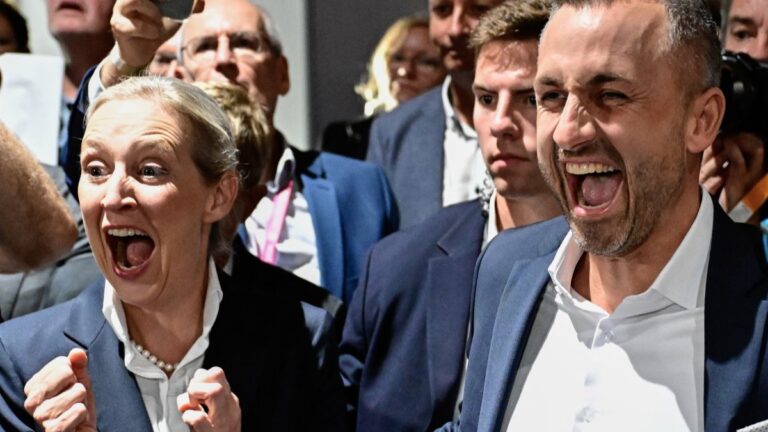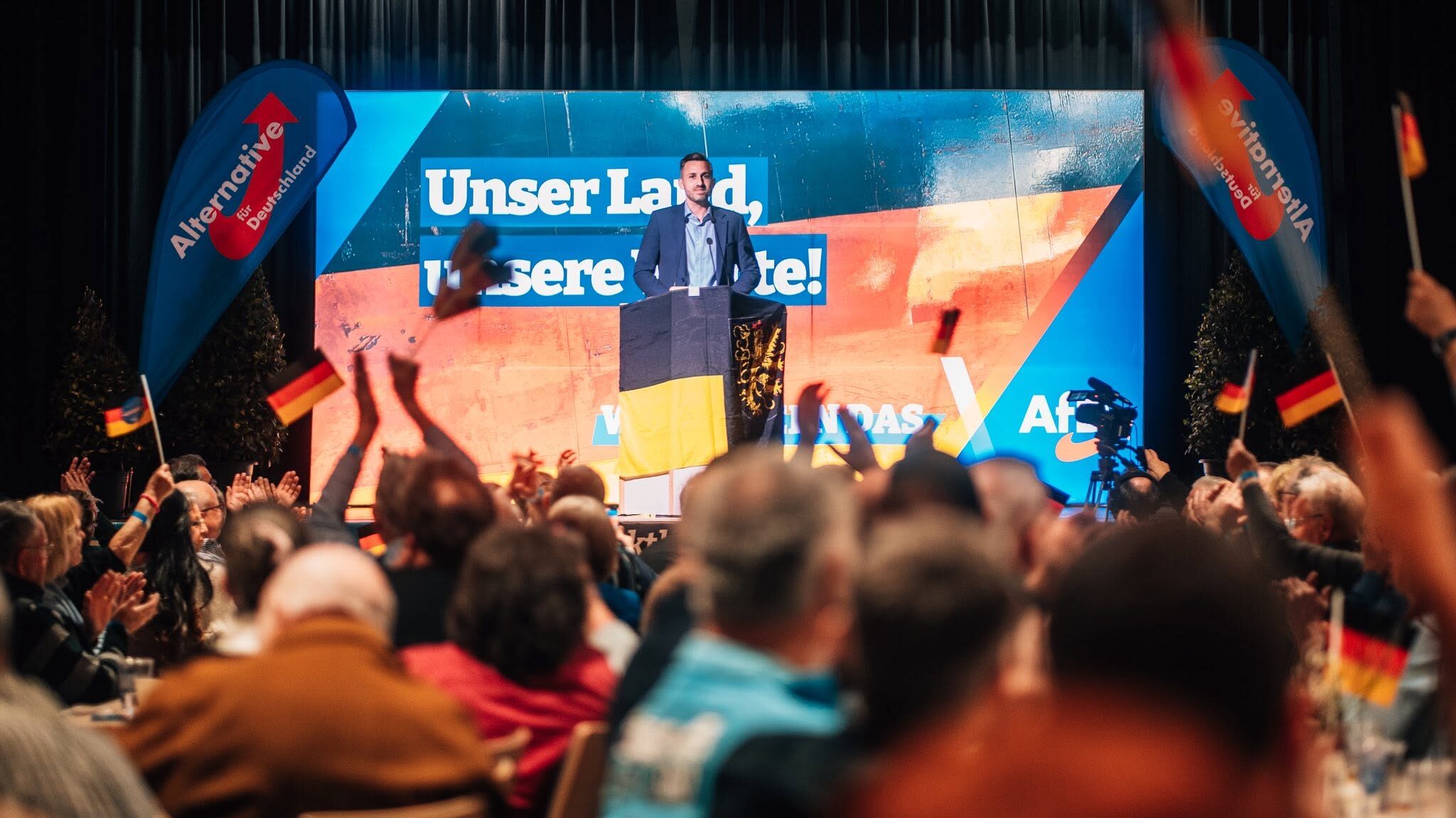
During its state party congress in Saxony-Anhalt over the weekend, AfD unveiled its government program for the first hundred days after the September election, with polls suggesting that it could form a single-party government at the state level for the first time.
In line with voter expectations, migration is among the most important points that AfD wants to tackle head-on. The 100-day program includes “deportations from minute one,” and pledges that “all available options” will be used to deport as many illegal migrants as possible, something that both the CDU’s local and federal governments have failed to deliver on for years.
AfD also promised to require unemployed asylum seekers to perform community service in exchange for access to social benefits, and to put an end to the widespread benefit fraud across the state.
“While other parties are only concerned with the AfD, we are addressing the real problems of this country and tackling them,” lead candidate and Saxony-Anhalt’s likely next Minister-President Ulrich Siegmynd said.
Da ist es – unser 100 Tage Programm.
— Ulrich Siegmund (@UlrichSiegmund) July 11, 2026
Während sich andere Parteien nur noch mit der AfD beschäftigen, kümmern wir uns um die wirklichen Probleme dieses Landes und packen es an!
Grüße aus Magdeburg! pic.twitter.com/22YHBznFX3
Another major point is significantly cutting state funds for party foundations and NGOs, especially those that promote cultural and gender diversity. Likewise, the party wants to shift public schools’ focus on promoting the traditional family image in the future, in an effort to raise birth rates. The AfD government will also deploy security guards in schools with a history of violence, and plans to co-finance driver’s licenses to help young people get them more easily.
But even before these, the AfD pledged to quit the state from the Interstate Broadcasting Treaty as its “first official act” and create a “genuine pressure for reform” in the state’s public broadcasting to put an end to the federally administered “woke, anti-German, and manipulative propaganda.”
Furthermore, AfD wants to reduce the number of ministries to make governance more efficient, remove gender pronouns from state-employed authorities such as the police, and establish a COVID-19 investigation committee to uncover any fraud, neglect, corruption, and coverups linked to pandemic procurement and vaccination programs.
What’s more, the party will end Saxony-Anhalt’s image campaign #moderndenken (‘modern thinking’) that highlighted its innovative cultural heritage as the birthplace of the Bauhaus architectural school—and replace it with #deutschdenken to promote historical cultural heritage instead.
For the first time ever, the national conservative party does have a real chance of trying its hand at governance and implementing all these plans, using the state level as a trial run before it can eventually come to power at the federal level.
According to the latest INSA poll, conducted on the last week of June, AfD stands at 41%, close to being able to form a government alone, depending on how many parties get into the parliament. In contrast, the combined support of the current ruling coalition barely reaches 33%, spread across CDU (23%), SPD (6%), and FDP (4%).
As we wrote before, the mainstream parties are so afraid of AfD being elected in Saxony-Anhalt that they began making preparations to remove the state from federal intelligence sharing structures and thereby keep the local justice minister in the blind regarding federal investigations, like the one against AfD itself, which is likely illegal in the first place.
Another plan to entirely ban the party across the country is also gaining traction, although such a move—banning Germany’s most popular party—might provoke unprecedented unrest, as it would rightly be seen as the end of German democracy.