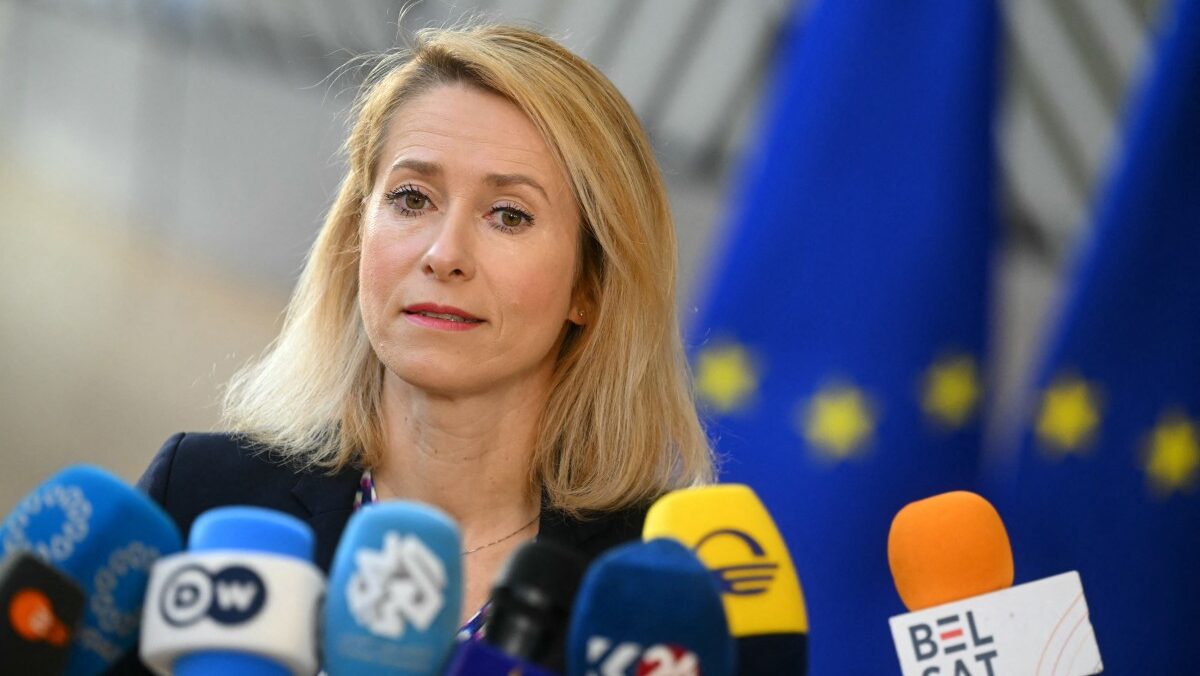
EU High Representative and Vice-President for Foreign Affairs and Security Policy, Kaja Kallas
NICOLAS TUCAT / AFP
Finnish President Alexander Stubb on Wednesday urged Europe to open direct diplomatic discussions with Russian President Vladimir Putin, adding to growing signs that European governments are beginning to prepare for a future negotiating phase in the Ukraine war.
The remarks come as several European capitals appear increasingly willing to explore diplomatic channels with Russia, while reports from Brussels suggest growing unease with the EU’s current foreign-policy leadership.
“I believe it is now time for Europe to step forward and engage in diplomatic discussions with Russia’s leadership, and more specifically with President Putin,” Stubb said during a joint appearance with Kenyan President William Ruto.
His comments reflect a broader recognition among some European leaders that any eventual agreement to end the conflict will require direct engagement with Moscow.
Stubb also argued that any future European representation should primarily be entrusted to Germany, France, and the United Kingdom. The proposal is significant because it places Europe’s leading powers at the centre of any future negotiations while relegating EU institutions to a secondary role.
His remarks coincide with other signals coming from Berlin. German Chancellor Friedrich Merz has also expressed support in recent weeks for exploring diplomatic avenues once the necessary conditions are in place.
From Moscow, Russian Foreign Minister Sergey Lavrov has likewise claimed that the ambassadors of Germany, France, and the United Kingdom have sought to resume contacts with Russian diplomats.
Although those claims have not been officially confirmed by the governments concerned, they point to an increasingly visible reality: after more than four years of war, the question is no longer whether diplomacy will eventually be required, but who will lead it when the time comes.
The shift towards diplomacy comes as Brussels faces its own debate over who should shape Europe’s foreign policy.
Several international media outlets have reported that a number of member states are examining possible reforms to the European External Action Service (EEAS), the diplomatic body established under the Lisbon Treaty to coordinate the European Union’s foreign policy.
The discussions reportedly range from internal restructuring to reducing the influence of the High Representative for Foreign Affairs, a position currently held by Kaja Kallas.
No formal proposal has yet been presented. Nevertheless, the fact that Europe’s largest capitals are debating changes to one of the EU’s key foreign-policy institutions points to growing dissatisfaction with the current approach.
Since taking office, Kallas has maintained one of the toughest positions on Russia within the EU institutions. While that approach enjoys strong support in the Baltic states and parts of Eastern Europe, other governments believe future negotiations will require greater diplomatic flexibility.
The issue, however, extends beyond Kallas herself.
The debate also reflects a broader power struggle within the EU institutions. A reform of the EEAS could indirectly strengthen the European Commission. Over recent years, Commission President Ursula von der Leyen has steadily expanded her international role, becoming directly involved in issues related to Ukraine, sanctions, energy, and defence.
This growing influence has not always been welcomed within Brussels. It contributed to repeated tensions with former European Council President Charles Michel over who should represent the European Union on the international stage.
As a result, any reduction in the influence of the EU diplomatic service would not necessarily mean an automatic transfer of power back to member states. Some responsibilities could instead become more closely integrated into the Commission’s structure.
Stubb’s proposal highlights a broader reality: foreign policy remains one of the areas where national capitals retain the greatest authority. By suggesting that France, Germany, and the United Kingdom should represent Europe in any future talks with Moscow, he implicitly places the continent’s major powers ahead of Brussels in shaping the diplomatic process.
None of this suggests that Europe is preparing to abandon support for Ukraine. Rather, after years focused on military aid and sanctions, some governments appear to be preparing for a phase in which diplomacy once again becomes part of the equation. The growing question is not whether diplomacy will eventually return, but whether it will be directed from Brussels or from Europe’s major capitals.