A new candidate has entered the race for the 2027 presidential election: Gabriel Attal, Emmanuel Macron’s short-lived former prime minister, who was once touted as his heir apparent and is now a rival within the presidential majority to another former prime minister, Édouard Philippe. Aged 37, he is banking not on his manifesto but on his personal appeal. Young and gay, he openly admits that, if elected, he intends to change French law to authorise surrogacy, a service he would like to use with his ‘husband’.
The legalisation of surrogacy—which, despite the many loopholes it benefits from in the courts, remains illegal in France today—is a long-standing cause championed by Attal. By late August 2025, he had already announced his intention to open a debate on its potential legalisation within the Macronist party, Renaissance—where the idea does not enjoy unanimous support. The announcement of his campaign launch gave him the opportunity to return to the fray on this issue.
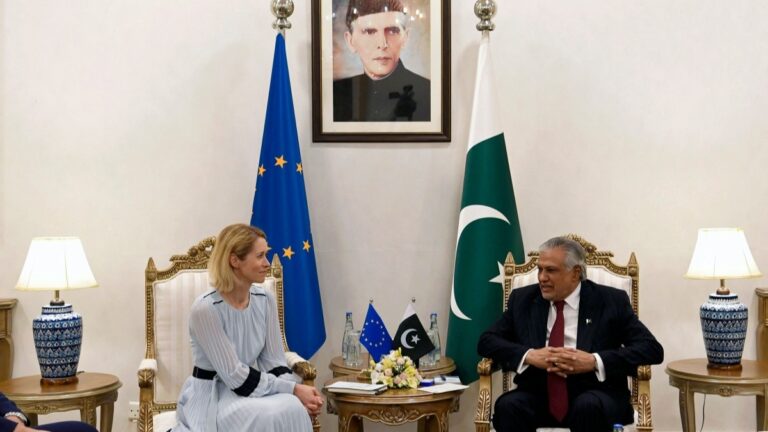
This time, he has given it a more personal slant: he has spoken to the media about his “desire to have a child” with his ‘husband,’ former Foreign Minister Stéphane Séjourné, now a European Commissioner. This media spotlight on his relationship is not to everyone’s taste, but for Attal it fulfils an obligation of “transparency.” Whereas, during his time in government, Attal remained discreet about his private life, he now intends to turn it into a campaign weapon, not without a certain form of gay activism: he denounces the “double standard” which, in his view, affects male couples.
As for double standards, there are others to be denounced. While a full-blown media smear campaign is currently being mounted against Charles Alloncle, a Conservative MP who distinguished himself as rapporteur for the committee of inquiry into public broadcasting, because he is in a relationship with his parliamentary assistant, no one was alarmed, at the time, by the pairing of Prime Minister Attal and Foreign Secretary Séjourné. Same sex, different surnames: from the outside, nothing was apparent about their relationship—which made things much more convenient and the blurring of gender roles harder to attack.
Government spokeswoman Maud Brégeon spoke out against the legalisation bill in strong and unequivocal terms: she said she was “extremely unfavourable” and “in total disagreement” with the very idea of surrogacy. “This runs counter to the feminism we must champion in 2026. Motherhood and parenthood are deeply personal matters, and I cannot understand how anyone could conceive of making women’s wombs available, whether for payment or not,” Brégeon explained on the national channel France 3. In this regard, Brégeon is consistent with the line defended by Macron, who, while in favour of euthanasia, has always regarded surrogacy as a “red line.”
This highly sensitive and symbolic debate highlights a fault line within the presidential camp itself. For now, two potential candidates are vying for Emmanuel Macron’s legacy ahead of the 2027 election. Coming from the Les Républicains (LR) party, Édouard Philippe embodies “old France” and the right wing, whilst Gabriel Attal aims to rally the left wing behind him. He is sending signals to progressives by positioning himself very early in the campaign on a divisive issue: a way for him to signal a desire for “change,” while seeking to succeed a president who is highly unpopular, yet from his own camp. Nicolas Sarkozy also played this card when he stood in 2007, following in the footsteps of Jacques Chirac after having served in his teams. It is not certain that this is the best strategy for convincing a majority of the French public of his ability to become the next president.