Brussels and Beijing emerged from Monday’s trade meeting with a minimal agreement: to keep talking.
That is not insignificant in a relationship marked by investigations, tariffs, technological restrictions and mutual threats. But neither does it correct the imbalance that worries the European Union.
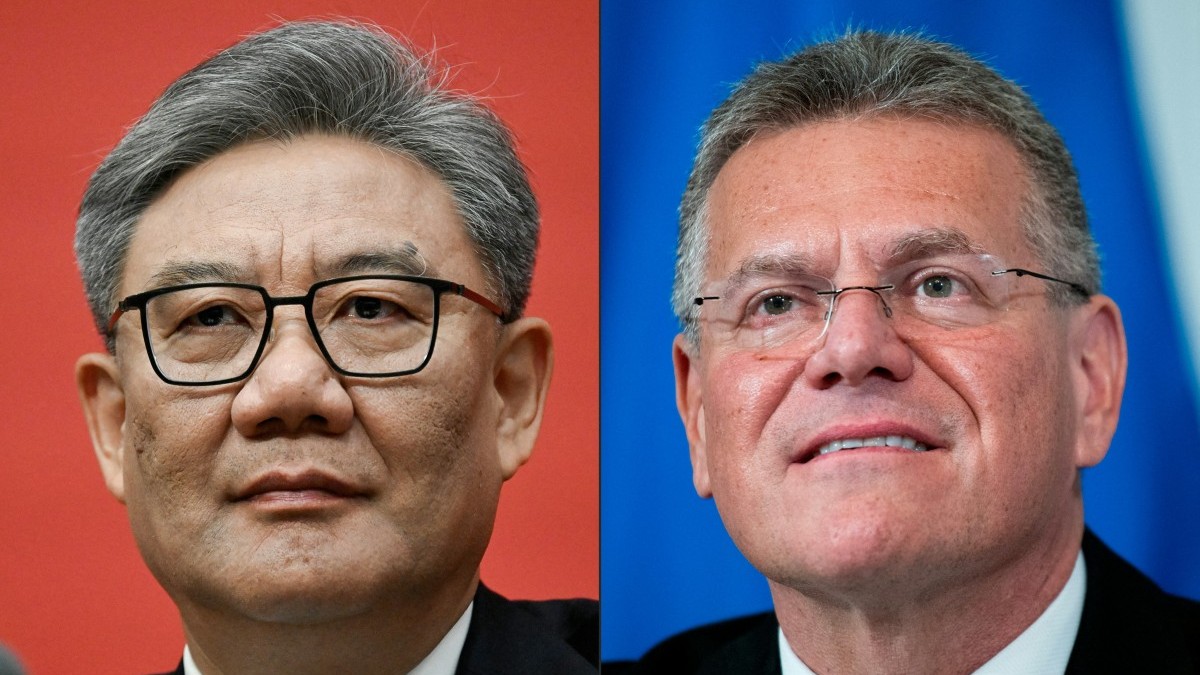
European Trade Commissioner Maroš Šefčovič and Chinese Commerce Minister Wang Wentao launched the new EU-China Trade and Investment Consultations in Brussels, a framework expected to produce results before October, when the European official will travel to Beijing.
The main points were set out in four areas: trade and investment rebalancing, export controls, intellectual property, and reform of the World Trade Organization.
The practical outcome, for now, is a calendar. There will be technical contacts, monitoring of trade flows, and political discussion if sharp increases in exports or imports are detected. Brussels presents it as a mechanism to avoid a trade war. Beijing sees it as a way to lower tensions without altering the foundations of its export model.
The EU comes to the table with an annual trade deficit with China of around €360 billion and with industrial sectors increasingly exposed to low-cost Chinese imports, from technological components to goods linked to the energy transition. China arrives with industrial capacity, control over critical raw materials, and room to pace its concessions. For now, Brussels is not the one conducting the orchestra.
Pressure from the United States has accelerated the European move. Washington is pushing its allies to reduce their technological and strategic dependence on China, especially in semiconductors, artificial intelligence, critical minerals, and sensitive supply chains.
The EU is trying to follow that shift under the language of “de-risking,” but without breaking with a partner on which it depends to produce, import and contain prices. It is an uncomfortable position: Brussels wants to look firm without yet paying the price of being firm.
Beijing knows it. After the meeting, China’s response was calculated. Foreign Ministry spokesman Guo Jiakun said that China and the EU are “partners, not rivals,” and added that Europe’s economic problems do not originate in China. The phrase sums up Beijing’s position: accept dialogue, deny blame, and shift responsibility onto Europe’s internal weaknesses.
Šefčovič tried to project progress with a post on X: “Progress is built one conversation at a time.”
But the key point lies elsewhere: China has not promised to reduce its overcapacity, substantially open its market, or correct its surplus. Brussels has secured a table. Beijing has secured time.