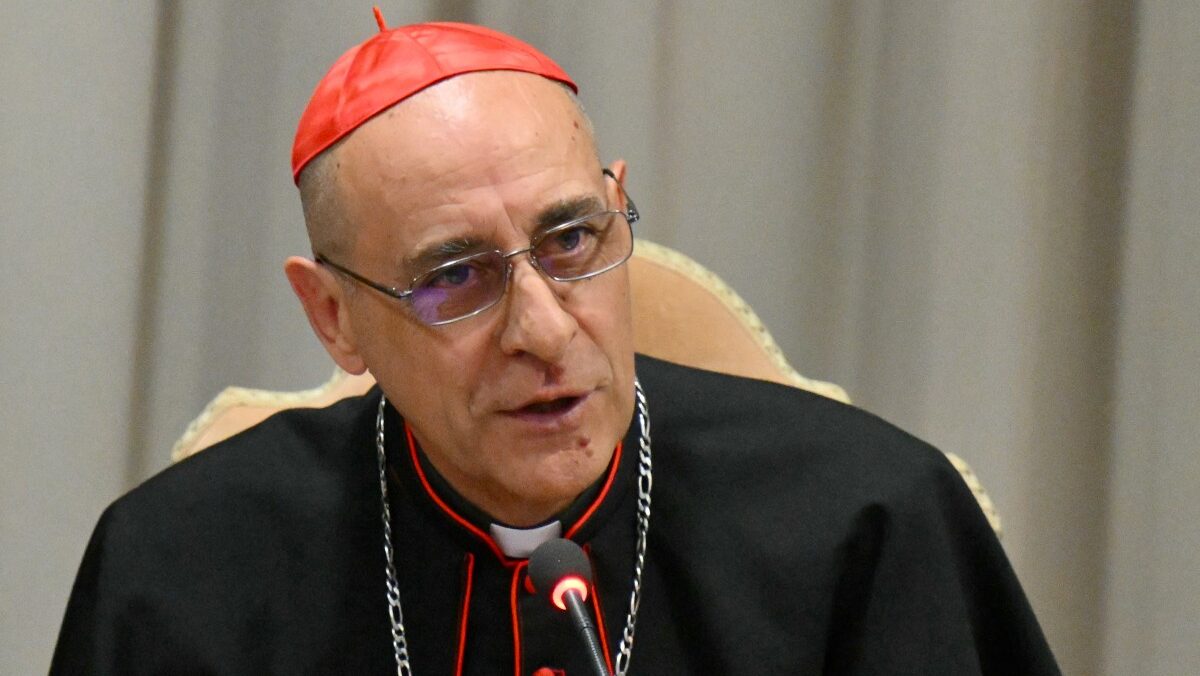
Cardinal Víctor Manuel Fernández
Alberto PIZZOLI / AFP
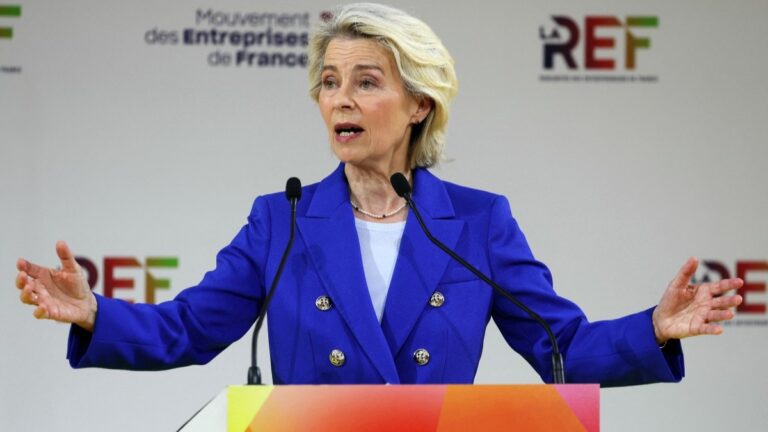
The European Commission brushed aside an extraordinary accusation from the Vatican this week after the Catholic Church’s top doctrinal official accused Brussels of applying international law selectively to advance its own geopolitical interests.
When asked to respond, Commission chief spokesperson Paula Pinho simply replied: “We do not usually comment on comments.”
For an institution that regularly presents itself as a global defender of human rights, democracy, and the rules-based international order, the refusal to engage with one of the most senior voices in the Catholic Church was striking.
The EU’s increasingly powerless foreign policy office, the External Action Service (EEAS), did try to salvage the situation by reiterating the bloc’s standard position that it “calls for respect for international law, and this at all times and under all circumstances.”
Yet the reply sidestepped the issue. Rather than addressing the Vatican’s accusation of double standards, Brussels simply repeated its usual commitment to international law.
The remarks came on the opening day of Pope Leo XIV’s closed-door conference of cardinals, convened to examine what the pontiff has described as a global “culture of power” that is fuelling modern conflicts and normalising war.
During his opening remarks, Cardinal Víctor Manuel Fernández, prefect of the Dicastery for the Doctrine of the Faith, talked about countries increasingly using moral and legal arguments not as universal standards but as a means to advance their political agenda.
“If a country is an enemy, it is condemned as undemocratic and sanctioned in various ways; but if it is an ally, the fact that it lacks freedom of expression, human rights, or democracy is ignored,” Fernández said, before singling out the EU, specifically.
“The European Union, in fact, imposes economic sanctions on one country, and sends financial aid and weapons to another; yet fails to do the same in the face of other, even more serious invasions with even more brutal consequences for entire populations,” the cardinal explained.
His meaning was clear enough. Fernández was contrasting the EU’s uncompromising response to Russia’s invasion of Ukraine with what he sees as Brussels’ much more restrained reaction to Israel’s military campaigns in Gaza and elsewhere in the Middle East, arguing that geopolitical interests—not universal principles—too often determine which wars receive sanctions, weapons, or diplomatic support.
“These contradictions […] suggest that, in practice, concerns boil down to the political and economic interests of different regions of the globe,” Fernández added. “There is no longer a real and stable framework of truth and values.”
In addition, Fernández said that countries are even abusing the Catholic teaching on “just war,” which traditionally permits war only as a last resort, when peaceful means have failed, the cause is one of legitimate self-defense, and the use of force is proportionate. “Instead of stopping wars, it helps to justify them,” he said.
During the conference, many of the cardinals reportedly agreed with his position that the Catholic concepts of “just war” and “legitimate self-defense” must be reinterpreted “in the strictest sense.”
Closing the gathering on Saturday, Pope Leo pledged to re-examine the Church’s teaching “in light of the profound changes in the nature of contemporary conflicts” and said the issue would receive “the necessary theological and pastoral rigor.”