India is no longer a distant partner for Europe, useful only as an emerging market or an Asian counterweight. New Delhi has become an increasingly important piece in the commercial, industrial, and diplomatic strategy of the main Western capitals.
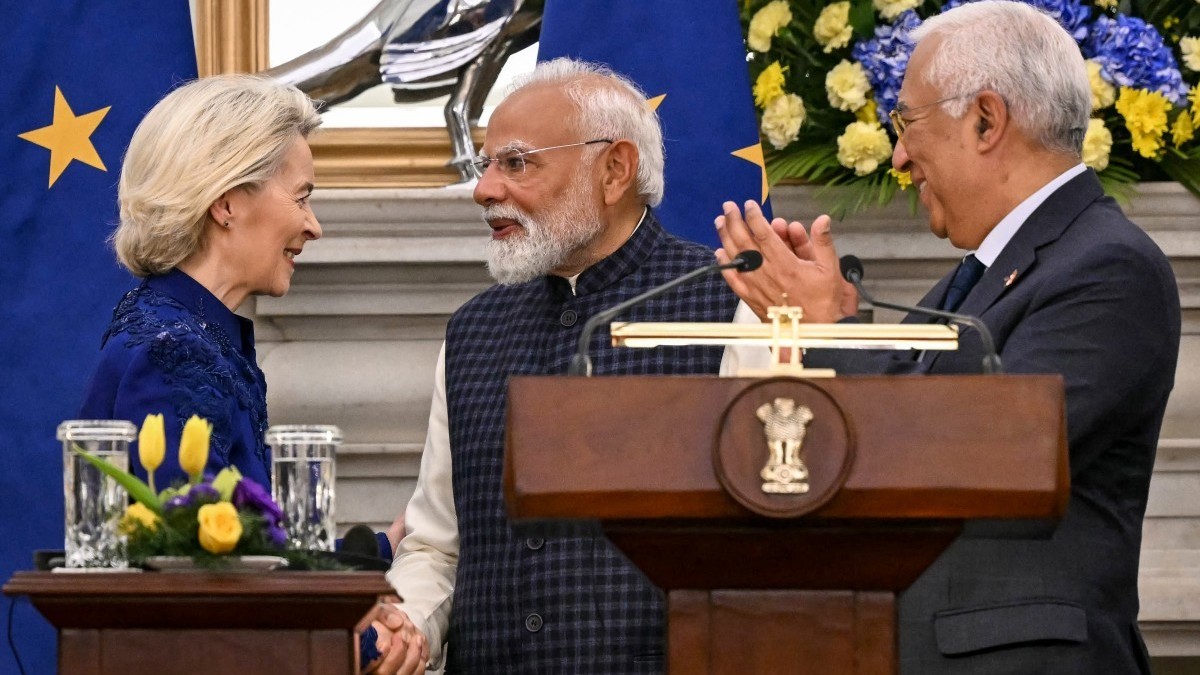
The trade agreement concluded with the European Union in early 2026 has accelerated that shift. After years of negotiations, the pact is not only intended to reduce tariffs and facilitate bilateral trade. It also seeks to insert India into the economic architecture that Brussels needs to build in order to diversify supply chains, reduce critical dependencies, and sustain its position in a more fragmented world.
The difference is that India is not passively waiting for Brussels to set the pace. The Indian government has begun working to implement the commitments made in the pact as quickly as possible and to protect the economic benefits of the agreement from its initial phase. That attitude turns the pact into more than a diplomatic photo opportunity: it turns it into a stress test.
The EU presents its relationship with India as one of its major geo-economic bets. Bilateral trade in goods and services already exceeds €180 billion annually, and Brussels estimates that the agreement could save European exporters around €4 billion a year in tariffs. For the Commission, India is an indispensable partner because of the size of its market, its demographic weight, its industrial capacity, and its strategic position in the Indo-Pacific.
But the relationship is not limited to Brussels. France, Germany, Italy, and Spain have intensified their political and economic contacts with New Delhi in recent years. Paris sees India as a central partner in defence, technology, and maritime security. Berlin wants to strengthen industrial ties and reduce exposure to China. Rome and Madrid see the Indian market as an opportunity for investment, infrastructure, energy, and business cooperation.
The shift is structural. India is moving skilfully between the United States, Europe, Russia, and Asia, without accepting automatic subordination to any bloc. That autonomy sometimes unsettles a Brussels absorbed by its own ideology, but it also explains India’s value. Amid tensions with Moscow and pressure on global supply chains, Europe needs partners capable of producing, buying, innovating, and sustaining alternative trade routes.
Now New Delhi has asked Brussels for guarantees against future European restrictions that could affect exports of certain recyclable materials, including metal scrap used by the steel and aluminium industries. The issue is technical, but it serves to test the extent to which the EU can reconcile its internal rules with the trade commitments it signs with strategic partners. In other words,: one thing is what is sold to the domestic public, and another is the hard reality.
The EU-India pact comes at a particularly sensitive moment. The war in Ukraine, the escalation with Russia, competition with China, and uncertainty over Washington are forcing Europe to seek more reliable partners and less vulnerable supply chains. India fits into that equation, but not as a secondary actor.
India and Western Europe will continue to tighten their ties. What remains to be seen is whether the European Union will be able to act as a credible trading bloc, or whether it will once again show that its geopolitical ambition moves faster than its capacity for execution.