The NATO summit that begins July 7 in Ankara is far more than just another date on the Alliance’s calendar. Held in Turkey amid the war in Ukraine, with Donald Trump back at the centre of the transatlantic agenda, it unfolds under the shadow of a familiar but increasingly urgent question: who should pay for Europe’s security?
NATO Secretary-General Mark Rutte put it this way on the eve of the meeting: it is not sustainable for a country of 350 million people, located an eight-hour flight away, to continue bearing the burden of defending a Europe of 600 million—the wealthiest region within the Alliance. The remark sums up the political message hanging over the Ankara summit: the United States is not leaving NATO, but it is demanding that Europeans stop behaving like strategic dependents.
The 32 allied leaders have three main issues on the table. The first is spending. The commitment made by NATO leaders at the 2025 Hague summit to raise defence spending to 5% of GDP by 2035 now has to be translated into concrete capabilities: drones, air defence, ammunition, interceptors, military mobility, industrial production, and joint procurement. Rutte wants to move “from money to missiles.” It is not enough to announce budgets if factories do not produce and armed forces do not receive the equipment they need.
The second axis is Ukraine. The Alliance is expected to reaffirm its support for Kyiv and consolidate a European and Canadian military aid package for 2026. The immediate priority is once again air defence in the wake of Russia’s latest attacks on civilian areas. But the formula remains ambiguous: sustaining Ukraine, arming it, and bringing it closer to the Euro-Atlantic architecture without fully resolving the question of its formal entry into NATO.
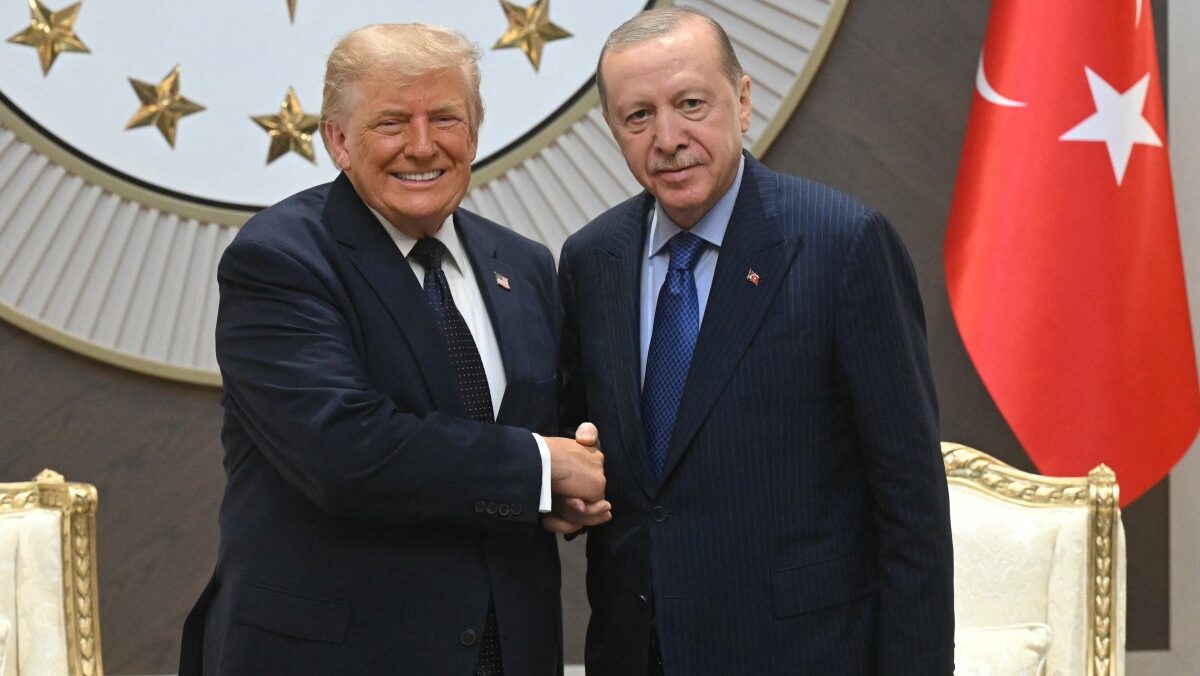
The third element is where the summit is being held. Turkey is not a neutral host. Ankara controls access to the Black Sea, maintains an independent relationship with Moscow, seeks to regain weight within the Western defence industry, and aims to reopen discussions about its exclusion from the F-35 programme. The summit is also taking place as Trump is expected to meet Volodymyr Zelensky and Ahmed al-Sharaa, the Syrian leader formerly known as Abu Mohammed al-Jolani.
The symbolism is hard to ignore: an American president at a NATO summit also negotiating with the new Syrian power born out of war and armed Islamism. It is not the first image of them together, but it is the first on non-American soil.
Europeans are expected to offer something more than applause for Rutte and promises of increased spending. They are expected to present credible plans, accept the budgetary costs, pursue joint procurement, and rebuild a military industrial base that was sacrificed for years in the name of the peace dividend.
That is the current internal tension within the Alliance. Europe talks about strategic autonomy, but it still buys time, protection, and ammunition under the American umbrella.