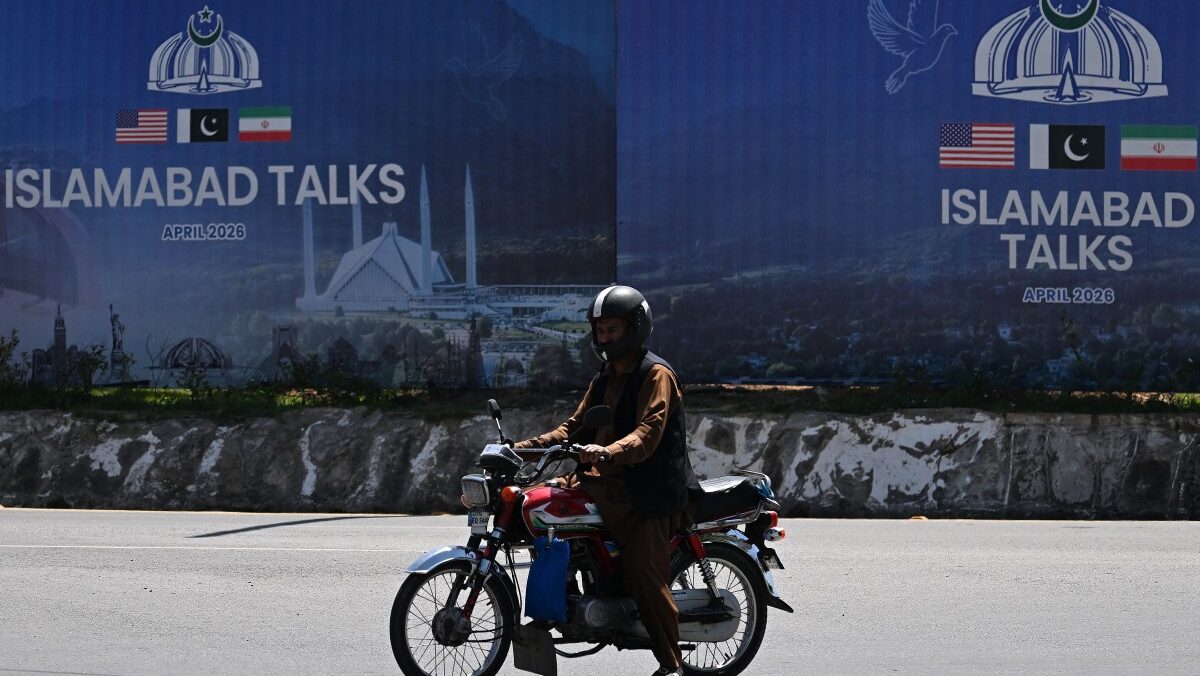
Pakistan is scrambling to revive U.S.–Iran negotiations after 21 hours of high-level talks in Islamabad ended without agreement, as a U.S. naval blockade of Iranian ports raises the risk of a wider escalation in the Gulf.
The blockade, ordered by Donald Trump following the failed weekend talks, came into force on Monday and targets vessels entering or leaving Iranian ports and coastal areas. The move marks a sharp escalation despite a two-week ceasefire agreed days earlier to allow space for diplomacy.
Senior Pakistani officials say efforts are underway to bring both sides back to the table, with a second round of talks potentially taking place before the ceasefire deadline next week. Islamabad remains the preferred venue, although no final arrangements have been confirmed.
The weekend meeting—held just days after the ceasefire announcement—was the highest-level direct encounter between Washington and Tehran in decades. While no agreement was reached, both sides exchanged proposals outlining possible concessions, leaving the door open to further talks.
JD Vance said Washington had presented its “final and best offer,” insisting there is “no flexibility” on preventing Iran from obtaining nuclear weapons capability. Iranian officials, in turn, accused the U.S. of making excessive demands but signalled openness to continued negotiations.
Tensions have been compounded by the situation in the Strait of Hormuz, through which roughly one-fifth of global oil supply passes. Iran has already restricted access to vessels it considers hostile, effectively tightening control over one of the world’s most critical shipping routes.
The U.S. blockade has drawn sharp international criticism. China condemned the move as “dangerous and irresponsible,” while Xi Jinping called for respect for sovereignty and pledged a “constructive role” in promoting talks.
Regional powers have also voiced concern. India stressed the need to ensure “unimpeded freedom of navigation” and the continued flow of global commerce through the strait, while Qatar urged both sides to avoid using maritime routes “as a tool for pressure” and to remain engaged in diplomatic efforts.
Iran has denounced the blockade as a “grave violation” of its sovereignty, warning that further escalation could destabilise the wider region.
“The ball is in the Iranian court,” JD Vance said, signalling that Washington expects Tehran to respond to its proposals if talks are to resume.