Romania’s government has collapsed after a decisive no-confidence vote, throwing the country into political uncertainty and putting billions in EU funding at risk.
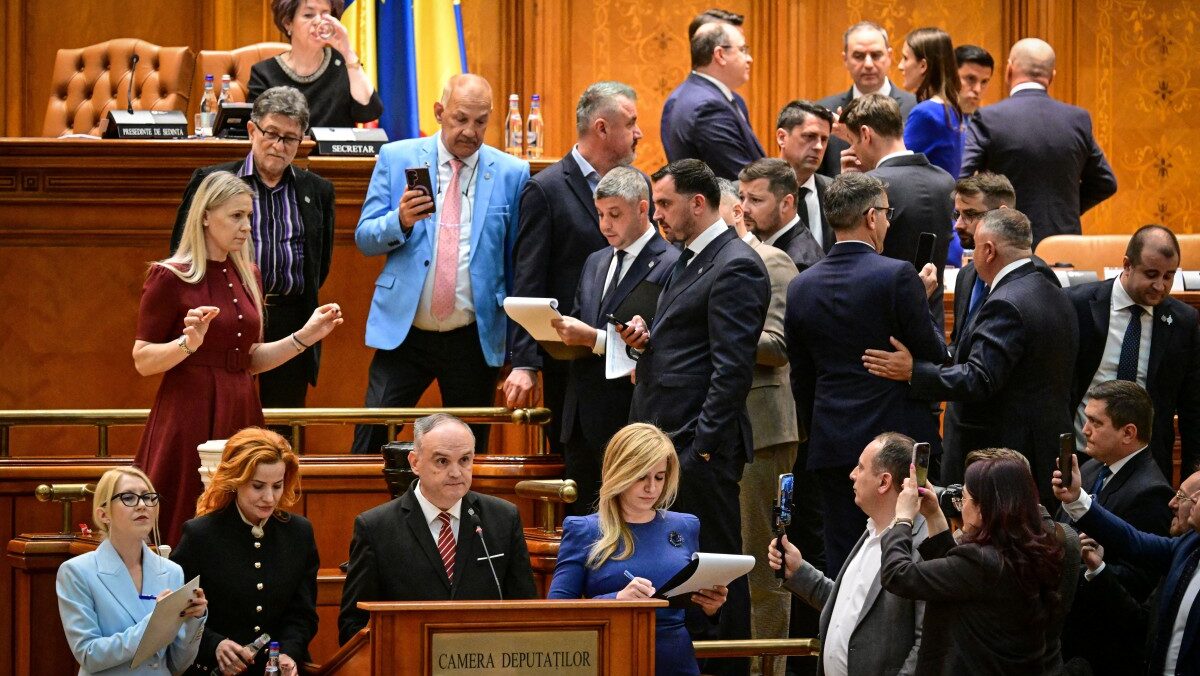
Prime Minister Ilie Bolojan was ousted on Tuesday, May 5th, after 281 MPs backed a motion led by the Social Democratic Party (PSD) and supported by the nationalist Alliance for Uniting Romanians (AUR)—well above the 233 votes needed.
The vote marks a clear shift in Romanian politics. A mainstream party has joined forces with a rising nationalist movement that now leads in the polls, challenging the pro-Brussels direction that has defined recent governments.
The crisis was triggered when PSD pulled out of the coalition, blaming falling living standards, high inflation, and spending cuts aimed at shrinking Romania’s budget deficit—the largest in the EU. Without its support, Bolojan’s government lost its majority and quickly fell.
In parliament, Bolojan defended his record, arguing that the reforms were needed to stabilise the economy and unlock EU recovery funds. Romania faces losing more than €10 billion if it fails to meet key deadlines by August.
Opponents say the government pushed through painful measures that hit ordinary households while failing to rein in spending. They also raised concerns about plans to sell stakes in state-owned companies without proper scrutiny.
AUR leader George Simion welcomed the result, saying “the voice of the people was heard” and calling for “national reconciliation”—a message aimed at broadening the party’s appeal beyond protest voters.
Markets reacted quickly. The leu weakened against the euro ahead of the vote, reflecting investor concern about what comes next.
The government will now remain in a caretaker role with limited powers. President Nicușor Dan must nominate a new prime minister, but no obvious majority has emerged.
Despite assurances that Romania will stay aligned with the West, the numbers in parliament suggest a harder road ahead. With no stable coalition in sight and a nationalist party on the rise, the country could be heading toward prolonged instability—or an early election that reshapes its political direction.