British prime minister Keir Starmer is trying hard to leave a lasting legacy after his departure in three weeks, following his (long-awaited) resignation caused by plummeting support from both the public and his Labour Party.
However, it seems all Starmer will leave behind is a bitter aftertaste and a £4.7 billion hole in the budget that his successor–most likely former Manchester mayor Andy Burnham–will have to fill.
Starmer’s £298 billion Defence Investment Plan (DIP), raising the UK defense spending to £80 billion a year by 2029, needs £15 billion already allocated in the budget repurposed. This means, according to Starmer, that some major road and energy projects will not “go ahead as planned,” as departments’ investment budgets are being cut by 1%.
The problem is that the Treasury has so far managed to identify only £10.3 billion worth of potential cuts. This means that incoming PM Andy Burnham will have to find the rest, a task bound to make him unpopular as soon as Starmer exits the stage.
What’s more, Burnham wasn’t even consulted in advance about this responsibility described by one of his aides as an “unexploded bomb,” set to doom his time in Downing Street before it even began.
It was “madness after all that wrangling to have left a £4.7bn black hole for someone else to fix,” a defense insider told the Guardian, while Tories described the plan as a “delayed-action poison pill.”
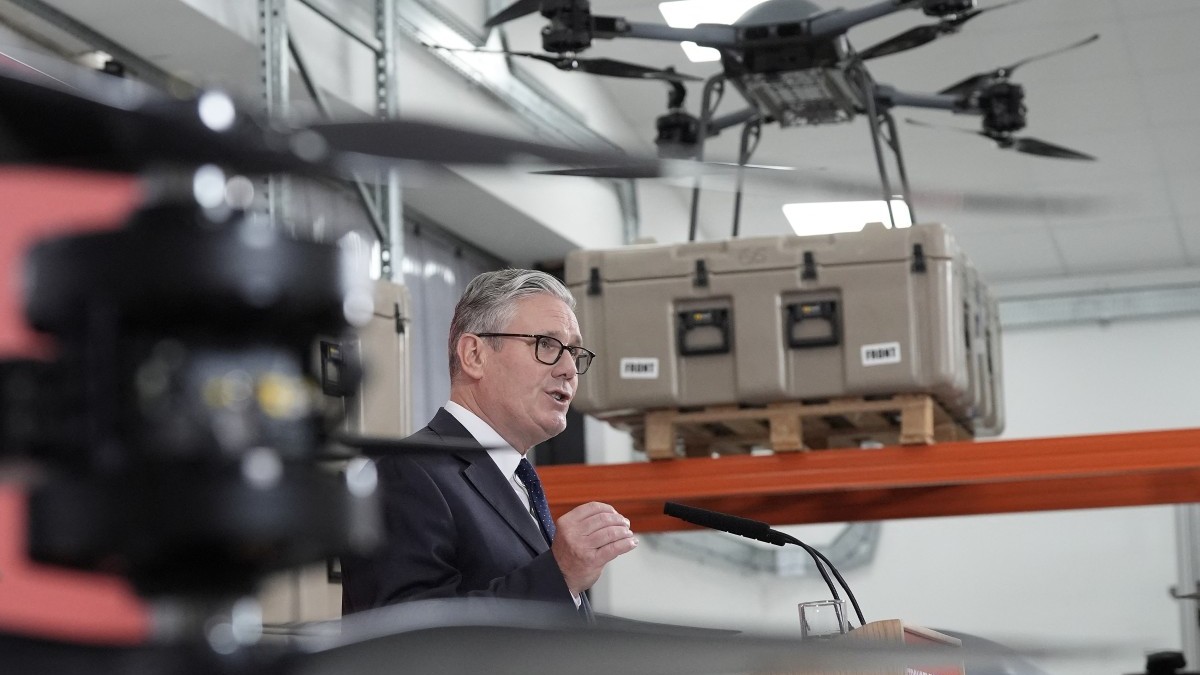
In its current form, DIP involves major upgrades to the UK’s nuclear deterrent capabilities, as well as overhauling the country’s navy and air force, along with a complete “drone transformation” of the armed forces.
“The paradox of peace is that when the world is arming and aggression is rising, the best way to avoid war is to prepare for it,” Starmer said in his address on Tuesday while unveiling the plan.
At the same time, the Labour government is not only being criticized for the massive cuts in other sectors, but also for the fact that DIP still leaves Britain seriously below NATO targets. DIP is expected to only marginally raise spending from the current 2.6% of GDP to just 2.7% by 2029, far below what’s needed to reach the 3.5% target by 2035.
John Healey, who quit as defence secretary in protest at the plan, warned that “Britain will still be spending just 2.7% of GDP in 2030, the date when Nato has warned we could face a Russian attack.”
The opposition Conservative Party is pushing hard to capitalize on the whole scandal and undermine Burnham’s governance before it begins.
“John Healey told us that the defence investment plan was not funded and that he was not able to keep our country safe with the money he was being given,” Tory leader Kemi Badenoch commented, asking for early elections.
“If Andy Burnham signs off on that defence investment plan, or if he does not find the money, then I do think he should call a general election, because we can’t all pretend that John Healey didn’t say what he said,” Badenoch nailed down.
However, if push comes to shove and Burnham ends up calling an early election, the Tories barely stand a chance to regain power after their spectacular fall in 2024. Polls currently favor Nigel Farage’s national conservative Reform UK with 25% nation-wide support, enough to take over the government any moment.
And Farage already knows where to find that extra few billion, a sector that others simply won’t touch.
“34,000 asylum seekers who came to Britain in the last year will cost taxpayers £5 billion over their lifetime,” Farage posted on X. “Britain is being bankrupted by illegal migration. Only Reform will stop it.”