Pedro PARDO / AFP
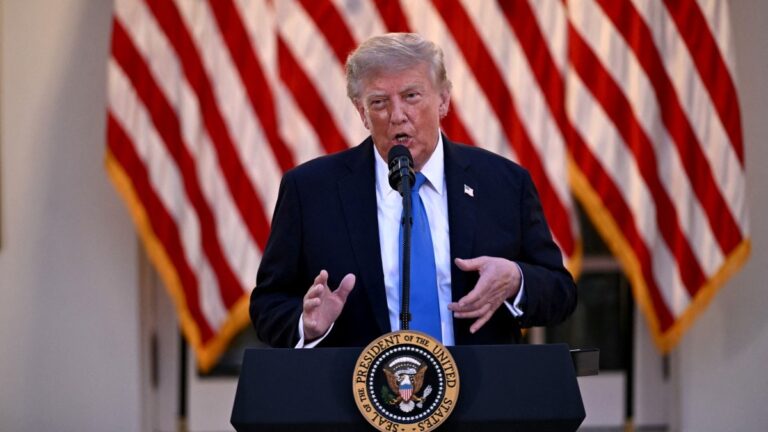
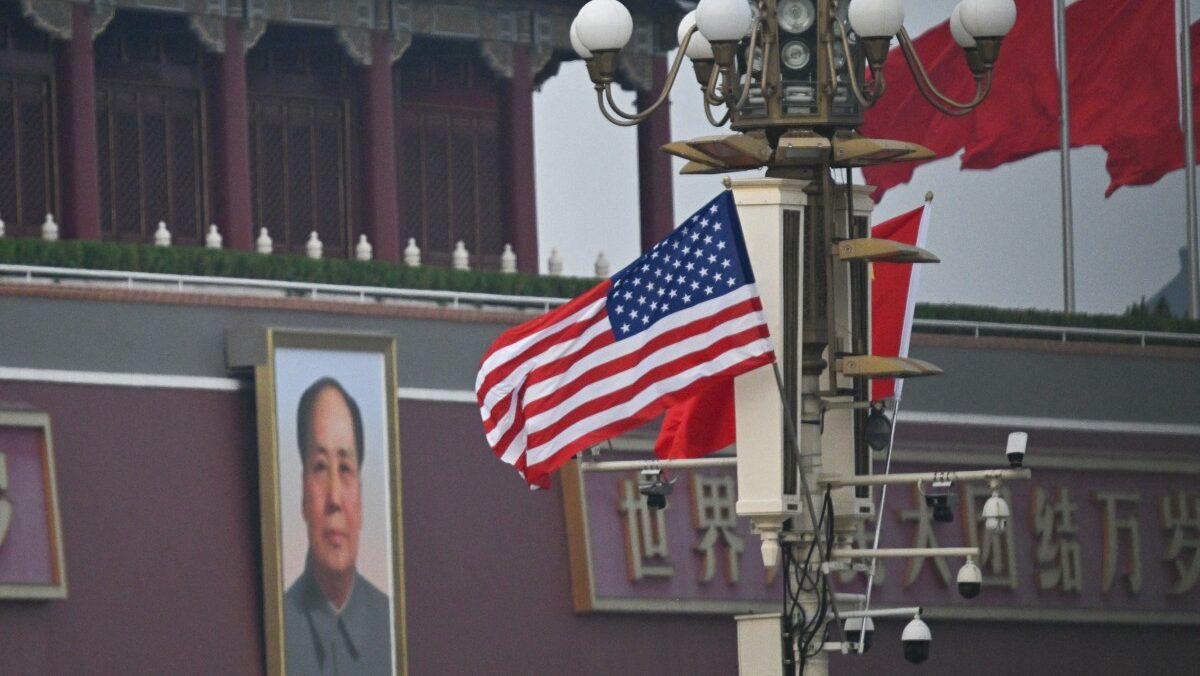
The summit between Donald Trump and Xi Jinping in Beijing may determine far more than the next phase of U.S.-China relations. It could also expose just how little influence Europe has over decisions that will directly shape its economy, security, and industrial future.
While Washington and Beijing negotiate over trade, technology, Taiwan, and energy, the European Union risks once again finding itself caught between two powers with far greater leverage.
The formal agenda is predictable: tariffs, rare earths, artificial intelligence, Iran, and Taiwan. Washington and Beijing may try to extend their fragile rare earths truce, although Chinese export restrictions still affect materials critical for defense, electronics, and green technologies. Germany and Japan remain among the countries most exposed to those supply disruptions.
That highlights one of Europe’s central weaknesses. Brussels has spent years talking about “strategic autonomy,” yet the EU still depends on the United States for security, China for major parts of its industrial supply chain, and foreign powers for many critical raw materials.
The summit therefore comes at a particularly vulnerable moment for Europe, as Brussels struggles to carve out an independent position between two states that negotiate from strength.
The most immediate risk is commercial. If Trump and Xi reach a bilateral deal involving increased Chinese purchases of American goods, tariff reductions or technology agreements, European exporters could be sidelined.
But Europe also loses if the talks collapse. A renewed tariff war between Washington and Beijing could push large volumes of cheap Chinese exports into European markets, putting pressure on industries such as automotive manufacturing, steel, chemicals, and machinery. The European Central Bank has already warned that escalating tensions between the United States and China could damage eurozone growth and trade.
The second front is technological. Any understanding between Washington and Beijing on artificial intelligence, semiconductors, or export controls could directly affect European companies without Europe having any meaningful role in the negotiations. That comes at a difficult time for Brussels, which is already struggling to build a competitive technology sector of its own.
The geopolitical risks are equally serious. Taiwan is expected to be one of China’s main priorities during the summit. Beijing has repeatedly condemned U.S. arms sales to the island, while Trump has reportedly shown willingness to discuss the issue with Xi behind closed doors.
For Europe, a crisis over Taiwan would have enormous consequences. It would disrupt semiconductor supplies, maritime trade, financial markets, and global supply chains. Europe has little control over any of those levers, yet it would still suffer the economic fallout.
The same problem applies to tensions involving Iran. Washington is seeking room to stabilize a conflict that threatens oil supplies, the Strait of Hormuz, and broader regional security. China, as a major buyer of Iranian energy, holds influence in those discussions. Europe, meanwhile, would largely absorb the consequences through higher energy prices, economic pressure, and decisions taken elsewhere.
Yet the growing rivalry between the United States and China also presents an opportunity. If Brussels acted more strategically, it could use the competition between both powers to attract investment, diversify supply chains, strengthen European industry, and negotiate more firmly in its own interests.
That would require Europe to move beyond the assumption that regulation alone is a substitute for economic and geopolitical power—an illusion this summit may expose more clearly than ever.