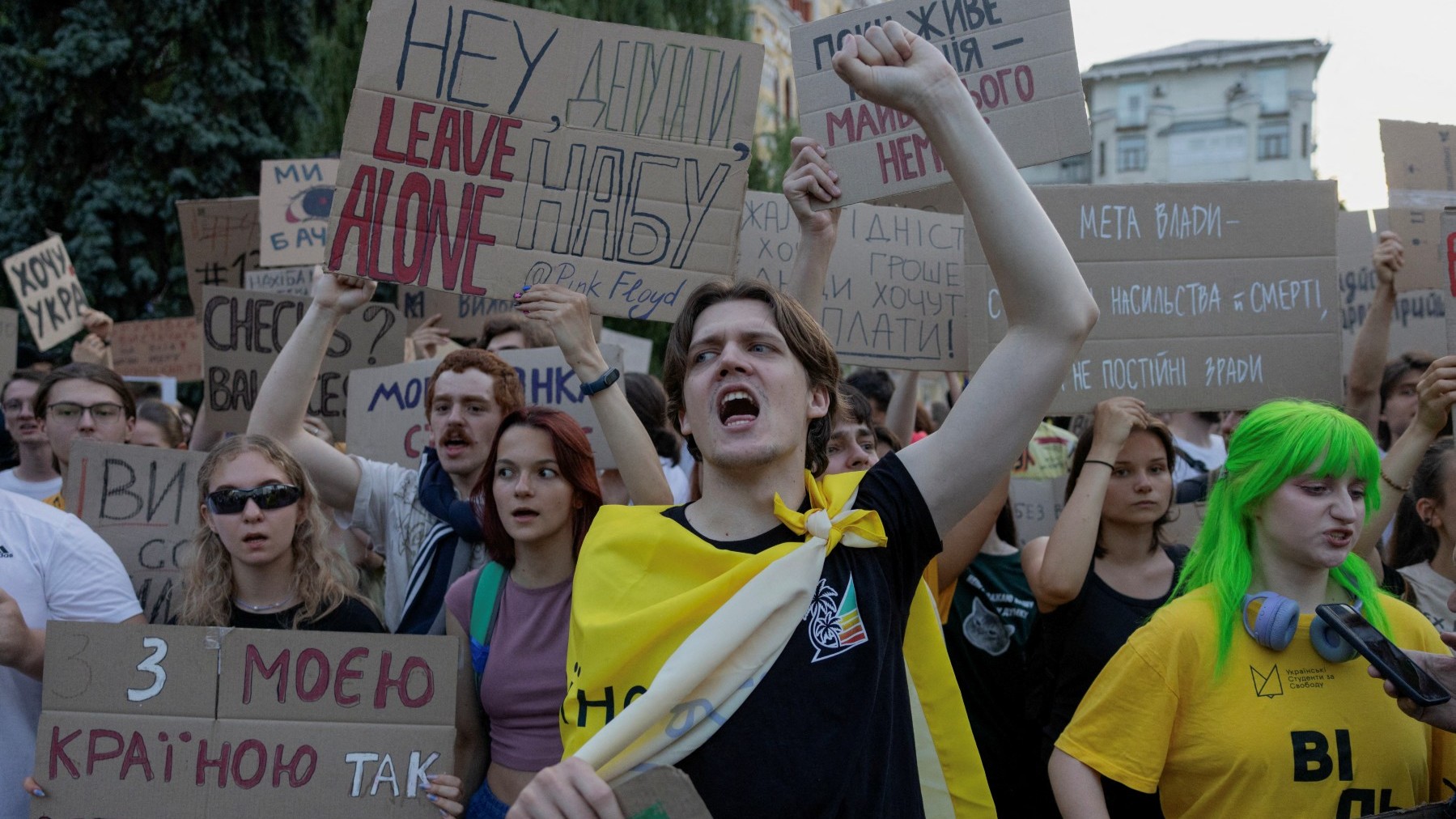
Protesters shout slogans and hold placards during a demonstration against a law (later repealed) that removed the independence of the NABU and SAPO anti-corruption agencies, in Kyiv on July 24, 2025.
TETIANA DZHAFAROVA / AFP
A major corruption scandal has once again engulfed Energoatom, Ukraine’s state-owned energy giant, after anti-corruption investigators uncovered an alleged embezzlement scheme involving nearly UAH170 million (€3.3 million) during the construction of critical infrastructure at the Tashlyk hydroelectric power plant.
The case was exposed by Ukraine’s National Anti-Corruption Bureau (NABU) and the Specialized Anti-Corruption Prosecutor’s Office (SAPO), the same Western-backed agencies that previously uncovered an alleged $100 million extortion operation at Energoatom linked to businessman Timur Mindich, a close associate of President Volodymyr Zelensky.
Mindich, often referred to in media reports as “Zelensky’s wallet,” fled the country in November, shortly before NABU and SAPO announced charges against him and several associates in what investigators dubbed “Operation Midas.” Authorities alleged that the group exerted influence over Ukraine’s state energy sector, particularly Energoatom, and demanded illegal payments amounting to 10-15% of contract values from counterparties seeking business with the company.
The latest allegations add to mounting scrutiny surrounding Energoatom, which remains one of Ukraine’s most strategically important state enterprises. Because nuclear and hydropower facilities have largely avoided direct Russian attacks due to the risk of environmental catastrophe, Energoatom continues to serve as one of Ukraine’s most important sources of energy and revenue.
Timur Mindich is only one of the many figures close to the Ukrainian government being accused of corruption. Andriy Yermak, former presidential chief of staff, has been named as the head of a major money laundering scheme.
President Zelensky himself has been accused of delaying the peace talks to allow corruption to run rampant in the country for personal riches and staying in power. His former press secretary in an interview called out the president as “one of the biggest obstacles towards peace today.”
Despite the many corruption scandals, Brussels continues to fund Ukraine and send billions of European taxpayer money into the country, with little little transparency or follow-up as to how the aid is used.Hungary’s ex-prime minister Viktor Orbán was an outspoken critic of the practice, speaking out time and again about how Brussels is essentially funding Ukrainian oligarchs and perpetuating the war. Hungary’s new prime minister, Péter Magyar, has already announced that he is ready to support Ukrainian EU accession and would not block further EU financing of the war-torn country either.