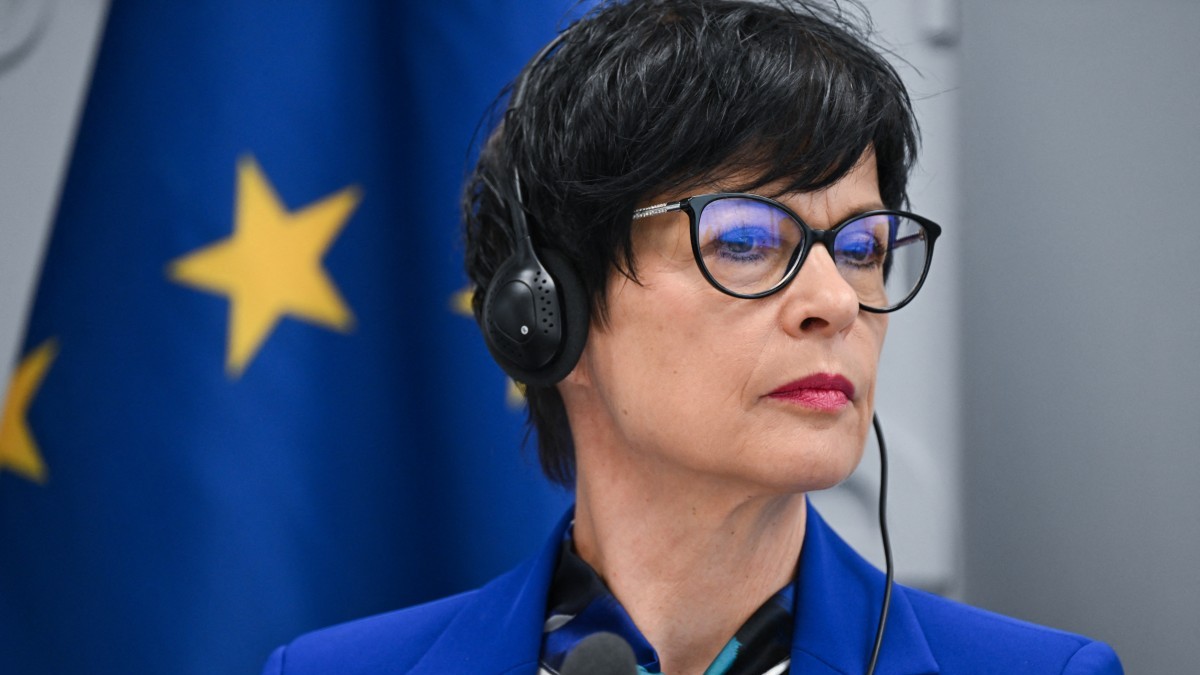
EU Commissioner for Enlargement Marta Kos
ARMEND NIMANI / AFP
EU affairs ministers in the EU Council have approved new chapters of accession negotiations—so-called clusters—for four candidate countries (including Ukraine, Moldova, Albania, and Montenegro) on July 14th, which has been branded by Brussels as the “Super Tuesday” of the EU’s enlargement drive.
Ukraine and Moldova unlocked Cluster 6, titled “External Relations,” which is comprised of two separate negotiation chapters in which Brussels expects to see progress on reforms. Chapter 30 is mostly about international trade and commercial policy, while Chapter 31 is foreign, security, and defense policy.
At the same time, Montenegro and Albania, which already have all six clusters open, have successfully closed two and three new chapters, respectively. Montenegro now only has 13 out of the total of 33 negotiation chapters to close, and is on track to become the EU’s 28th member state by 2028.
Brussels also plans to bring at least Ukraine and Moldova into the bloc through a fast-tracked procedure and parallel reform negotiations by the end of the decade, increasing the number of member states to thirty. Albania could soon follow as the 31st sometime after 2030.
“All four accession frontrunners taking major steps forward on one day,” said Enlargement Commissioner Marta Kos. “That’s why we’re calling it ‘Super Tuesday.’ You have to go back well over 20 years to when so many [cluster ceremonies] were held on the same day.”
“The momentum for enlargement is building. It is now undeniable to see that Ukraine, Moldova, Montenegro, and Albania will soon become EU member states,” Kos added.
On this Super Tuesday for EU enlargement, we opened Cluster 6 with Ukraine, covering security and defence.
— Marta Kos (@MartaKosEU) July 14, 2026
In these areas, the case for Ukraine’s EU membership is especially strong. With its military experience and innovation capacities, Ukraine is indispensable to Europe’s… pic.twitter.com/SHz4WiYMfc
This new momentum was made possible by the departure of the former national conservative Hungarian government, which blocked Ukraine’s fast-tracked accession talks for years out of concern for economic and security issues, as well as Brussels’ planned centralization reforms that the Commission says will have to go hand in hand with enlargement.
Now that former PM Viktor Orbán is gone, his successor, the pro-Brussels Péter Magyar (Tisza/EPP) has opened the door for the process, which will likely see Ukraine becoming a full member by 2030. Although Magyar says he would not give his final approval to Ukraine’s EU membership until 2035 and without a referendum first, the now opposition Fidesz party accuses him of misleading the voters since he wouldn’t have the power to oppose his own political group in Brussels when the time comes in a few years.
To underline the importance of opening the foreign policy cluster, EU Commission President Ursula von der Leyen will personally travel to Kyiv on Wednesday to discuss further steps related to accession and defense.