The French are just over a year away from the next presidential election. Officially, the campaign will not begin until the autumn. Yet there are increasing signs that the race has already begun. Never before have there been so many potential candidates, making the outcome extremely uncertain—and the influence of pollsters all the more significant.
The proliferation of candidates is a direct consequence of the crisis facing traditional political parties on both the Left and the Right.
On the Left, the Socialist Party, which until just a few years ago held the position of the leading and governing party, faces competition from Jean-Luc Mélenchon’s party, La France insoumise (LFI), whose excesses of all kinds—violence, antisemitism, communitarianism—are putting it under severe strain. Given these excesses, reaching agreement on a single candidate has become extremely difficult, as the March local elections demonstrated. Consequently, even though a certain discipline in favour of a single candidate has traditionally prevailed on the Left for a long time, such unity seems an unattainable ideal for the 2027 election. The problem is that, faced with Mélenchon’s thunderous personality, no one really manages to assert themselves, which casts doubt on the potential candidacies of the various contenders. The party’s current first secretary, Olivier Faure, lacks any charisma. MEP Raphaël Glucksmann sees himself as his party’s hope but speaks only to an urban minority. Within the Socialist Party, some are beginning to dream of a return to the political stage by François Hollande, the former President of the Republic replaced by Emmanuel Macron in 2017, though widely discredited in his time—and the main figure responsible for launching his disastrous successor.
On the Right, the Les Républicains (LR) party is suffering from a similar crisis. The party’s current president, former Interior Minister Bruno Retailleau, has just been triumphantly elected by his members as their presidential candidate. His dithering and his murky dealings with the Macronist camp have seriously dented his credibility as a champion of authority and a return to order. His only consistency lies in his stubborn refusal of any alliance with the parties of the national right. In early April, he explained to the press with exasperation that he was “fed up” and clearly rejected any form of union of the right before declaring that Zemmour and Le Pen would undoubtedly be “his opponents.”
He may well promise a “disruptive” project capable of “turning the tables,” but scepticism reigns within his camp, to the point where other figures are beginning to emerge. The mayor of the posh town of Cannes, David Lisnard, who was triumphantly re-elected locally with 80% of the vote, although originally from the ranks of LR, has announced his candidacy at the head of his own political party, Nouvelle Energie, on a classical liberal platform—a niche that is currently in vogue among certain elites inspired by Milei’s experience in Argentina but which, in France, has never managed to attract more than 5–6% of the electorate.
Other historical figures dream of a comeback, harbouring the secret hope of being the saviour whom the French, ever since de Gaulle, feel they so desperately need. Such is the case with Dominique de Villepin, former prime minister under Jacques Chirac and champion of French resistance to the Iraq War, but who today is making a series of blunt statements devoid of any ideological coherence, giving the impression of being completely out of step with current political life.
How can the political offering be made coherent in the face of such a proliferation of candidates, both official and unofficial? The organisation of a primary election in each camp, whether open or closed, is a temptation that may once have given the illusion of efficiency but has now lost its prestige: no one, on either the Right or the Left, is able to agree on its scope or its procedures, and the frontrunners refuse to resort to it.
The emergence of a Macronist centre on the French political scene since 2017 further complicates matters. In what was once known as the ‘swamp’ of centrist opinion, candidates are jostling for position, too. Emmanuel Macron cannot stand again, as the constitution limits him to two consecutive terms. Two of his former prime ministers are vying for his legacy: Édouard Philippe, mayor of Le Havre and the media’s favourite candidate, whom they have been promoting for months as the ‘natural candidate’ of the centre and the right; and Gabriel Attal, who has just—a step often overlooked by any French presidential hopeful—published his programmatic and autobiographical book, En homme libre (A Free Man), and is embarking on a dismal press campaign with this appalling declaration of ill-assumed ambition: “I think I know how to lead France.”
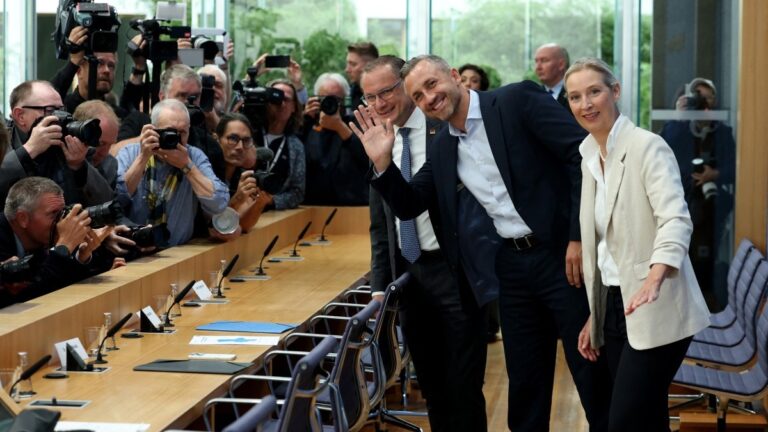
On the national right, the picture is not much more encouraging. The Rassemblement National (RN) can count on an alliance with Éric Ciotti’s Union of the Right for the Republic (UDR) and the Identité-Libertés movement founded by Marion Maréchal, who will rally behind a single candidate who, as is now virtually a foregone conclusion, will be Jordan Bardella. Even if she has not yet admitted it publicly, Marine Le Pen knows that the game is up for her and that the parliamentary assistants’ scandal will block her path to the presidential election. In the meantime, the party is suffering from this latent uncertainty and from the constant display of a Bardella-Le Pen duo that starkly highlights the human fragility of a party that is nevertheless leading in the polls. The Reconquête party will field its own candidate, whether it be Éric Zemmour or his partner, Sarah Knafo, whose public image is far more appealing—further complicating matters.
Against this rather bleak backdrop, as Françoise Fressoz, a columnist at Le Monde, points out, the polls will play a crucial role. The wavering hearts of voters will swing one way or the other with a volatility that will undoubtedly be extreme.
An election survey, the results of which were published in Le Monde on April 13th, reveals the simultaneous coexistence of a powerful desire for change among the French, which benefits both the RN and LFI. Each in its own way, these two political formations have managed to rekindle political engagement, win over a section of the youth, and remobilise a portion of the working-class electorate. On the other side, there is a fear of radicalism and a call for compromise, which all the other parties could capitalise on in an attempt to combat the damaging perception that public action has become ineffective. This fear of radicalism goes by another name: the Republican Front, which has paralysed French political life for nearly forty years by preventing the emergence of any alternative policies.
The country now finds itself in a paradoxical situation: the exasperation simmering beneath the surface could well end, in the voting booth, with a choice for stagnant mediocrity.