Germany’s Authoritarian Liberals Have Gone Berserk
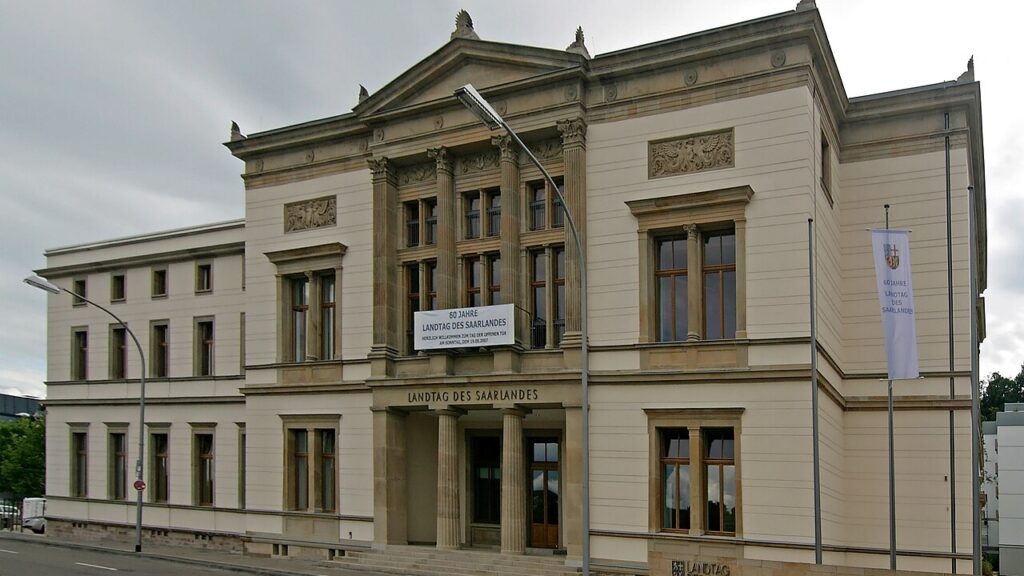
Perfectly legal acts of political opposition to the establishment can lead an individual to suffer real, painful measures of state coercion.

Perfectly legal acts of political opposition to the establishment can lead an individual to suffer real, painful measures of state coercion.

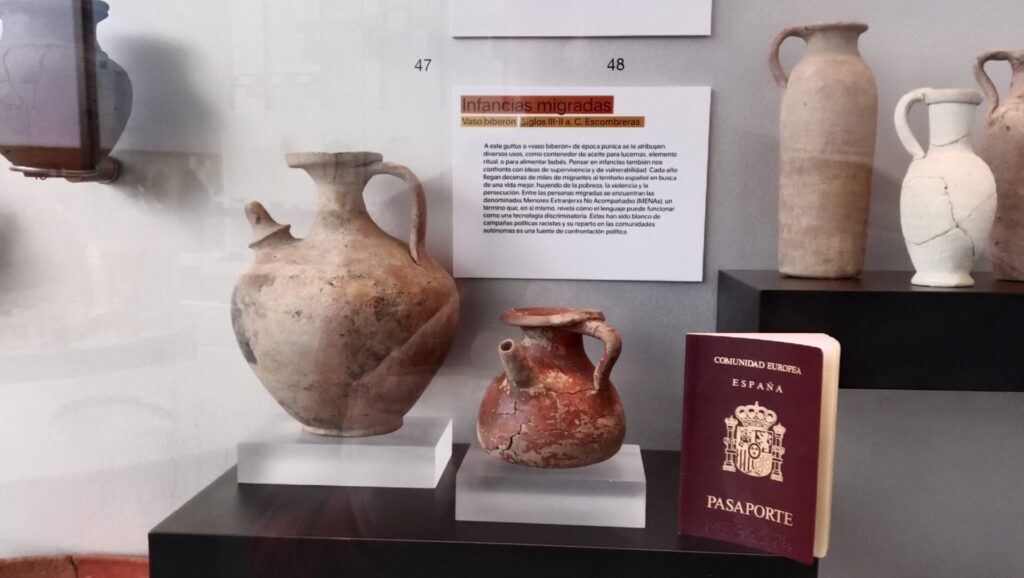
France is becoming entangled in a misguided sense of repentance that is detrimental to cultural works and the preservation of heritage.

It would be a fool’s errand for Hungary to go to Brussels and submit to policies that are directly harmful to Hungary in exchange for an unfreezing of EU funding.

It is a telling sign of our times that a movement claiming to oppose racism relies so heavily on censorship.

Thinking in terms of functional regions with which no one identifies simply doesn’t work: Europe would do well to give this some thought.

EU leadership prioritises enlargement over rule of law in Albania, accepting democratic backsliding in exchange for political stability.

On April 12, Hungarians will be called to choose between adherence to the national interest in governance and the same sort of Brusselian occupation that has led so many other European nations to decay.

The French media have found themselves a new darling—one who merely highlights their racialist obsession.

Where the Dutch government looks at a young woman and sees a taxpayer it cannot afford to lose, the Orbán government looks at her and sees a mother it wants to support.

Another beloved British institution has succumbed to the cult of self-loathing.
The European Right is joining forces in rejecting the abolition of unanimous decision-making in the EU and opposing the use of the rule of law as a political tool, while standing up for energy sovereignty and taking a firm position against mass migration.
There is something decidedly grim beneath the normalisation of the Damascus regime: a tacit acknowledgement that violence, waged successfully enough, will eventually translate into legitimacy.
A succession of inept Conservative and Labour governments have thoroughly demilitarised Britain.
Viktor Orbán’s influence extends far beyond the borders of Hungary: for the international sovereigntist camp, he is proof that patriotic politics is viable not only as a form of protest but as a form of government.
The Vienna discussion revealed something significant about the current European moment. Questions once confined to intellectual circles are increasingly entering the public sphere.
A stable Hungarian government under Orbán—whose political consistency has made him one of the most recognisable advocates of national prerogatives inside the EU—contributes to a more balanced institutional environment.
In the first documented Antifa attack on Portuguese soil, a young activist hurled a Molotov cocktail into a peaceful pro-life march in Lisbon.
The Left uses electoral fraud as a new way to carry out coups d’état without firing a single shot.
It’s not surprising that in times of moral confusion, existential emptiness, and rootlessness, traditional values are once again becoming a refuge.
After more than 30 years as a correspondent for mainstream media, Ulrich Heyden is now seen as suspect by Germany’s financial oversight authority.
The prosecution of Matthew Grech highlights activists’ aim with these bans: to silence Christians, to make it illegal to call LGBT ideology a sin, and to end religious freedom.
Endless self-denunciation might quench a progressive longing, but it does nothing to make the public safer.