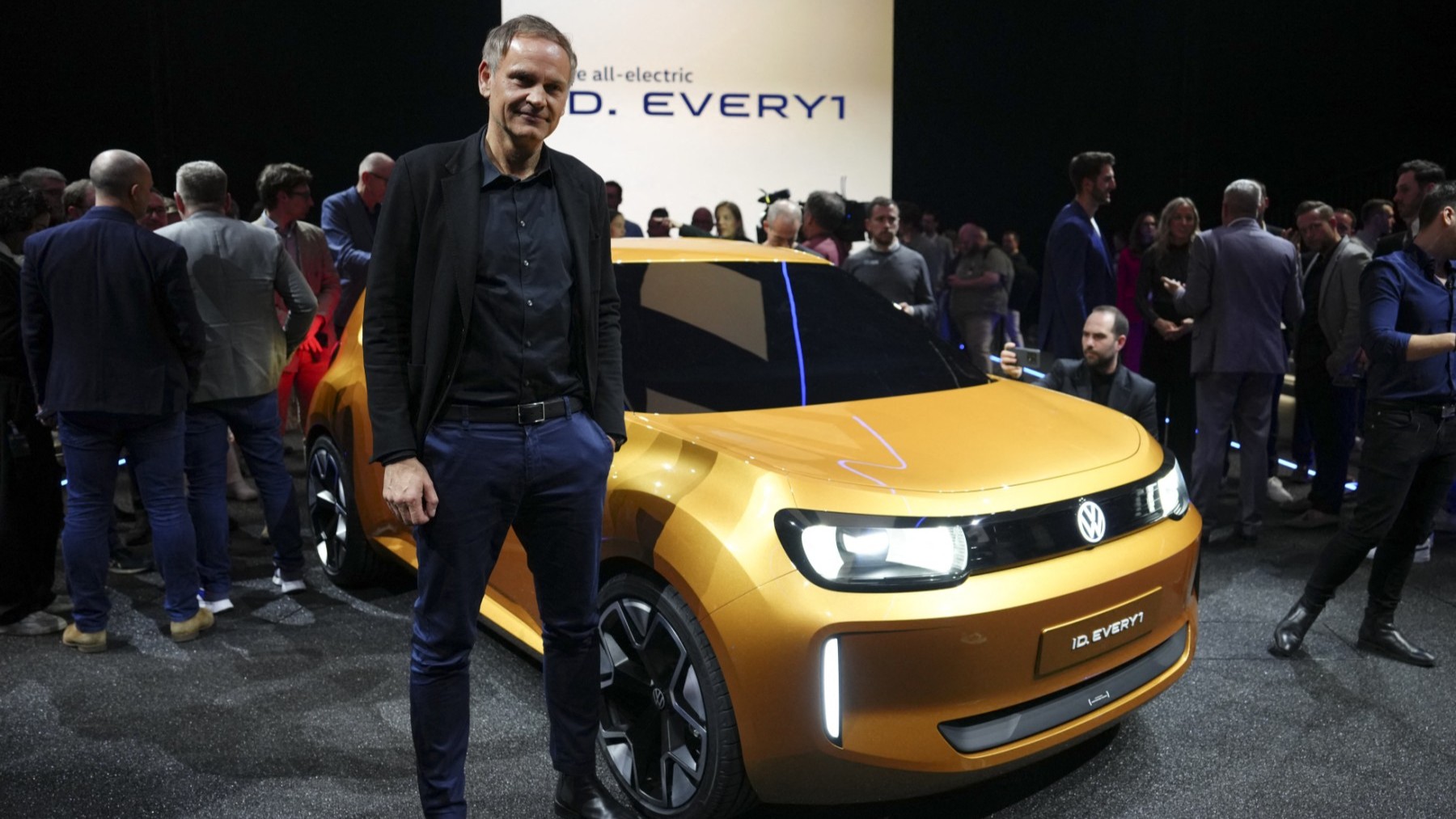
Oliver Blume, CEO of Volkswagen Group of German car manufacturer Volkswagen (VW) presents their new electric vehicle ID. EVERY1 in Düsseldorf on March 5, 2025.
PAU BARRENA / AFP
Q1 of 2026 saw more drivers switch to an electric vehicle (EV) than in any previous business quarter-year, new figures show. However, this is unlikely to be the result of consumer choice in a free market to ‘do the right thing’ in the face of climate change. Instead, government subsidies appear to be a driving factor.
Berlin’s current subsidy programme can trim up to €6,000 off the price of a new car. This scheme was launched prior to EV sales rising to 7.5% in Q1, up from 6.3% the previous quarter. A survey for insurer HUK-COBURG published on Thursday, May 28th flagged these figures—the largest shift to EVs since the polling began in early 2020.
The main influence seems to be German chancellor Friedrich Merz’s ruling coalition, which has introduced €3 billion worth of new purchase and leasing incentives for zero-emission vehicles from the start of 2026 through to 2029.
Despite the latest statistics, the subsidy-driven uptick in EV sales can’t disguise the wider problems facing the European car industry, including China working to more fully incorporate artificial intelligence, both into manufacturing EVs and assisting their drivers.