The meeting between Ursula von der Leyen and Mark Rutte this Thursday in Brussels was not just another appointment about Ukraine. It was, in fact, a discussion about how to transform the European economy for a new stage of rearmament.
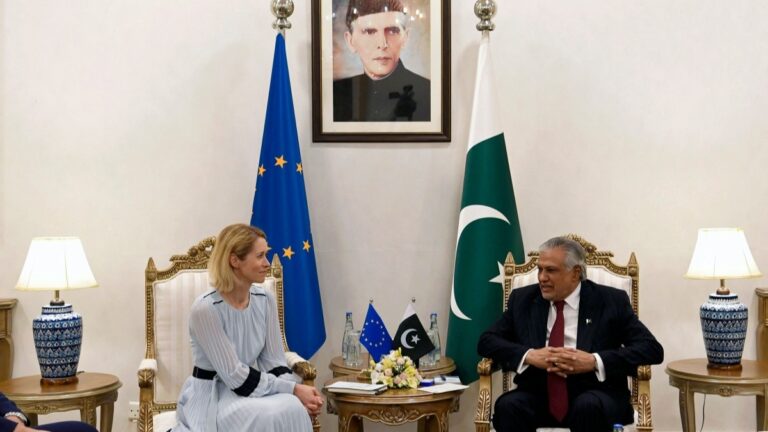
The President of the European Commission and the Secretary General of NATO met at Rutte’s private residence to prepare for the Atlantic summit in Ankara in July. But the focus of the conversation was how to increase industrial defence production in Europe and how to do it quickly. Very quickly.
Great to see @EU_Commission @vonderleyen and discuss how to further strengthen our essential NATO-EU cooperation, including ramping up defence industrial production, continuing vital support to Ukraine, and protecting critical infrastructure
— Mark Rutte (@SecGenNATO) April 16, 2026
A stronger Europe means a stronger… pic.twitter.com/vT0QzoCGto
“We need to invest more, produce more and do it faster,” von der Leyen summed up after the meeting. Rutte used similar language and defended much closer coordination between the EU and NATO to sustain Ukraine and strengthen Europe’s military industry.
The key point behind these statements is that Europe has discovered it does not have enough industrial capacity to sustain a long war, replenish arsenals and continue sending weapons to Ukraine at the same time. A surprise? None at all. It has already been four years of war and everything remains the same.
For years, the European Union built its economic model on the idea that the United States guaranteed security and that heavy industry could be offshored without political cost. The war in Ukraine and the uncertainty surrounding the American commitment have shattered that premise. The Commission now estimates that Europe will need to mobilise up to 800 billion euros in the coming years to rearm and rebuild an industrial base that, to a large extent, no longer exists.
That is why, in several capitals, a possibility is beginning to be raised that would have seemed unthinkable just two years ago: using part of the European car industry to manufacture military equipment.
Germany is the most advanced case. The German group Volkswagen is studying the possibility of reusing the Osnabrück plant, which has been idle since the fall in European car sales, to produce armoured vehicles and components for defence systems alongside Rheinmetall.
France is exploring something similar around Renault and the network of automotive suppliers linked to the French military industry. Italy is looking towards Iveco and its military division. Even contract manufacturers such as Valmet Automotive, in Finland, are already appearing as possible pieces of a future continental “war economy.”
This is not about Volkswagen designing a tank from scratch or Renault replacing the traditional arms industry. The idea is to make use of industrial capacity that is currently underused because of the European car crisis and integrate it into the production chains of Rheinmetall, KNDS or BAE Systems.
The European car industry is going through one of its worst moments in decades. The forced transition to the electric vehicle, rising energy costs and Chinese competition have left plants operating below capacity or directly threatened with closure.
Brussels sees a political and economic opportunity there: saving industrial jobs while at the same time increasing military production. Yes, the same Commission that for years pushed a green conversion that weakened part of Europe’s heavy industry now needs to return to that industry to manufacture weapons.
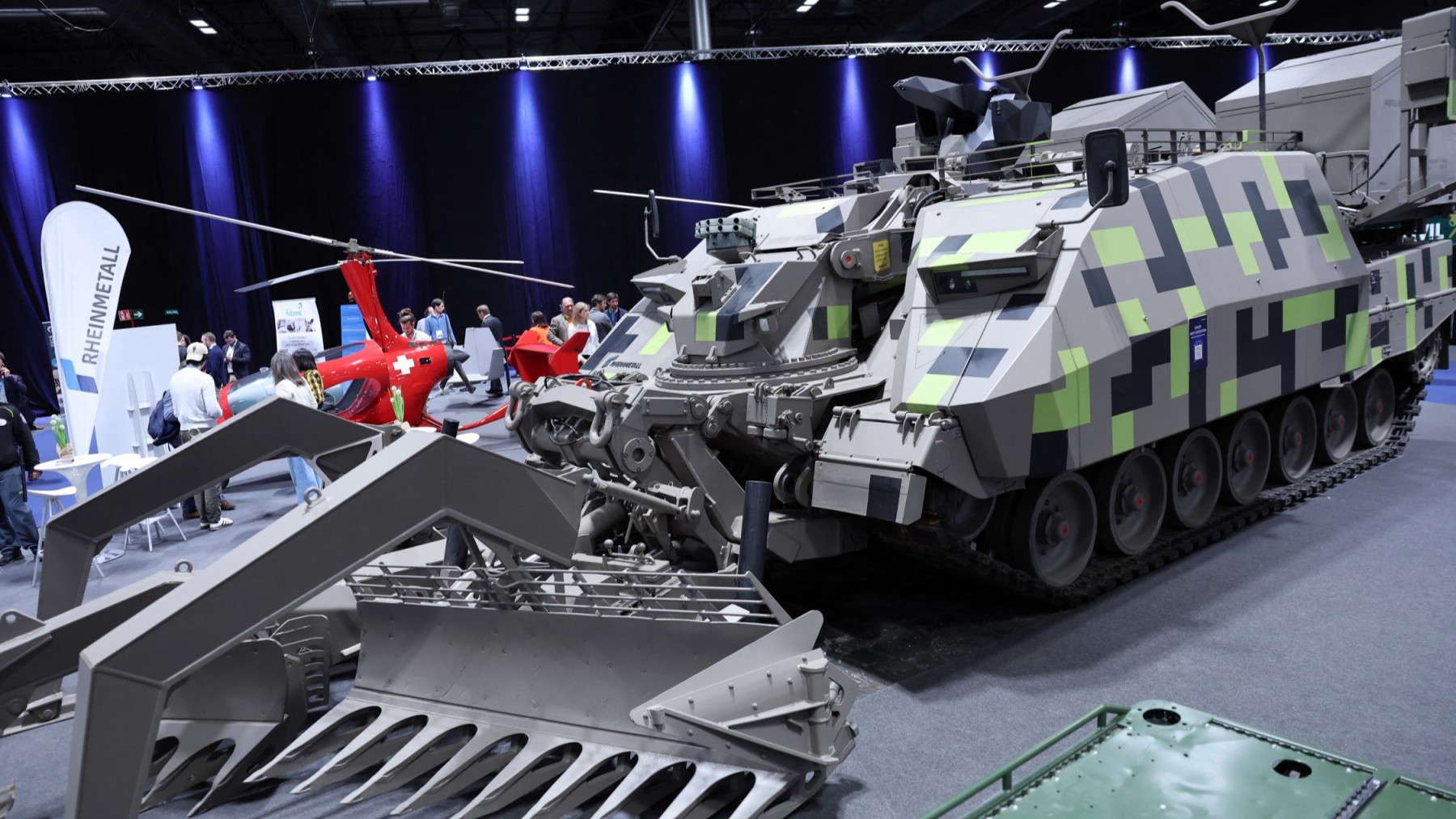
The most frequently cited example in Brussels is Rheinmetall. The German company is already negotiating agreements with factories from the automotive and rail sectors to accelerate the production of Lynx armoured vehicles, parts for the Leopard 2 and ammunition. The company acts as a bridge between traditional arms manufacturers and car plants with spare capacity.
The conversation is not limited to tanks. The EU wants to produce more ammunition, drones, anti-air systems, logistical vehicles, radars and electronic components. A large part of those products can be manufactured partially in plants that until now were making cars, trucks or automotive components.
In Brussels, there is already open talk of a new European industrial policy based on defence. The SAFE programme, the new joint procurement funds and the flexibilisation of deficit rules for military spending are part of that strategy. The Commission wants at least a large part of that money to be spent inside Europe, and also in Ukraine, integrating Ukrainian industry into European production chains.
It is clear that the European Union wants to stop depending on Washington and start producing for itself the material it needs, but that ambition runs up against a more complex reality. Europe remains fragmented into dozens of national industries, with different rules, different interests and governments that continue thinking in domestic terms.
Moreover, rearming costs money. A great deal of money. And it comes at a time when several European states are carrying high deficits, record debt and an industry weakened by years of low growth.